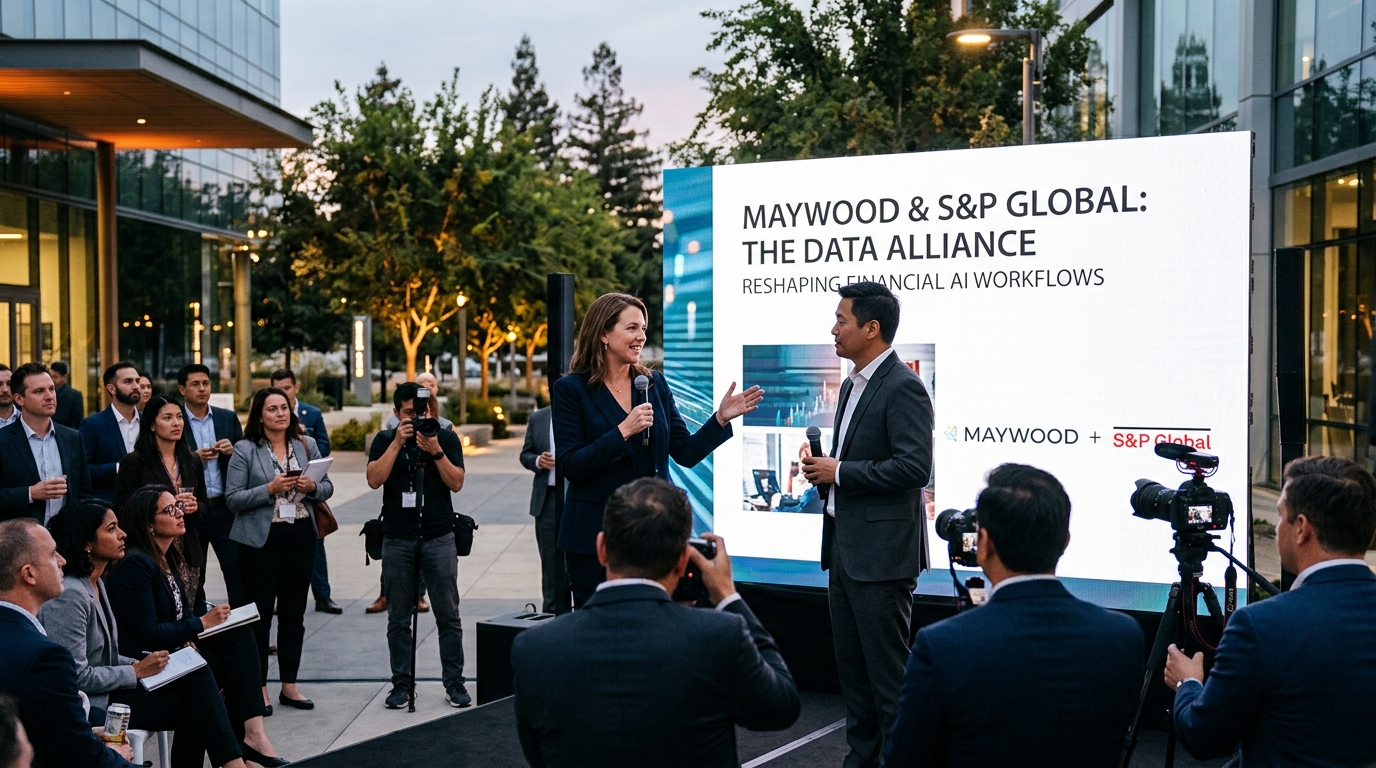
In the rapidly evolving landscape of financial technology, data quality has become the most valuable currency. The recent announcement of a collaboration between Maywood, a pioneer in enterprise AI solutions, and S&P Global Market Intelligence, a global giant in financial information, marks a significant milestone for the industry. This strategic move is not merely a technical integration; it is a response to the critical need for "intelligent" systems grounded in truth rather than probability.
The Rise of Retrieval-Augmented Generation (RAG)
The collaboration focuses on embedding S&P Global’s vast datasets directly into Maywood’s AI workflows. For years, the primary hurdle to the adoption of Large Language Models (LLMs) by financial institutions has been "hallucinations"—the tendency of AI to produce convincing but inaccurate information. By leveraging Retrieval-Augmented Generation (RAG) technology, Maywood enables its models to "reference" S&P’s authoritative data before formulating any analysis or prediction.
This means that an analyst using Maywood’s platform can now receive answers regarding a company's creditworthiness, market trends, or balance sheet details that are backed by real-time S&P Global data. This convergence drastically reduces research time, allowing professionals to focus on decision-making rather than cross-referencing facts.
Strategic Significance and Institutional Adoption
This move comes at a time when institutional investors are demanding greater transparency and precision from AI tools. S&P Global Market Intelligence possesses some of the most comprehensive datasets globally, ranging from fundamental financial data to alternative ESG metrics. Integrating these elements into Maywood’s infrastructure creates a competitive "moat," making its services indispensable for those managing billions in capital.
- Automated Reporting: The ability to automatically generate complex financial reports using precise, verified data.
- Risk Management: Enhanced risk forecasting through the analysis of S&P’s historical data by machine learning algorithms.
- Customization: Tailored workflows for different sectors, from investment banking to insurance.
Challenges and the Future of Financial AI
Despite the obvious opportunities, this collaboration also highlights the challenges of the current era. The concentration of data within a few large players raises questions about competition and the cost of information access. Furthermore, integrating such systems requires firms to invest significantly in staff training, ensuring they can interpret AI outputs with critical thinking.
"Artificial intelligence is only as good as the data that fuels it. With S&P Global by our side, we are not just providing technology; we are providing trust," a Maywood executive stated during the announcement.
In the future, we expect to see more of these "vertical integration" partnerships, where technology providers become inextricably linked with primary information holders. For the global market, which is striving to modernize its investment sectors, such tools could be the catalyst for a new era of efficiency, offering Wall Street-level analytics at the touch of a button.