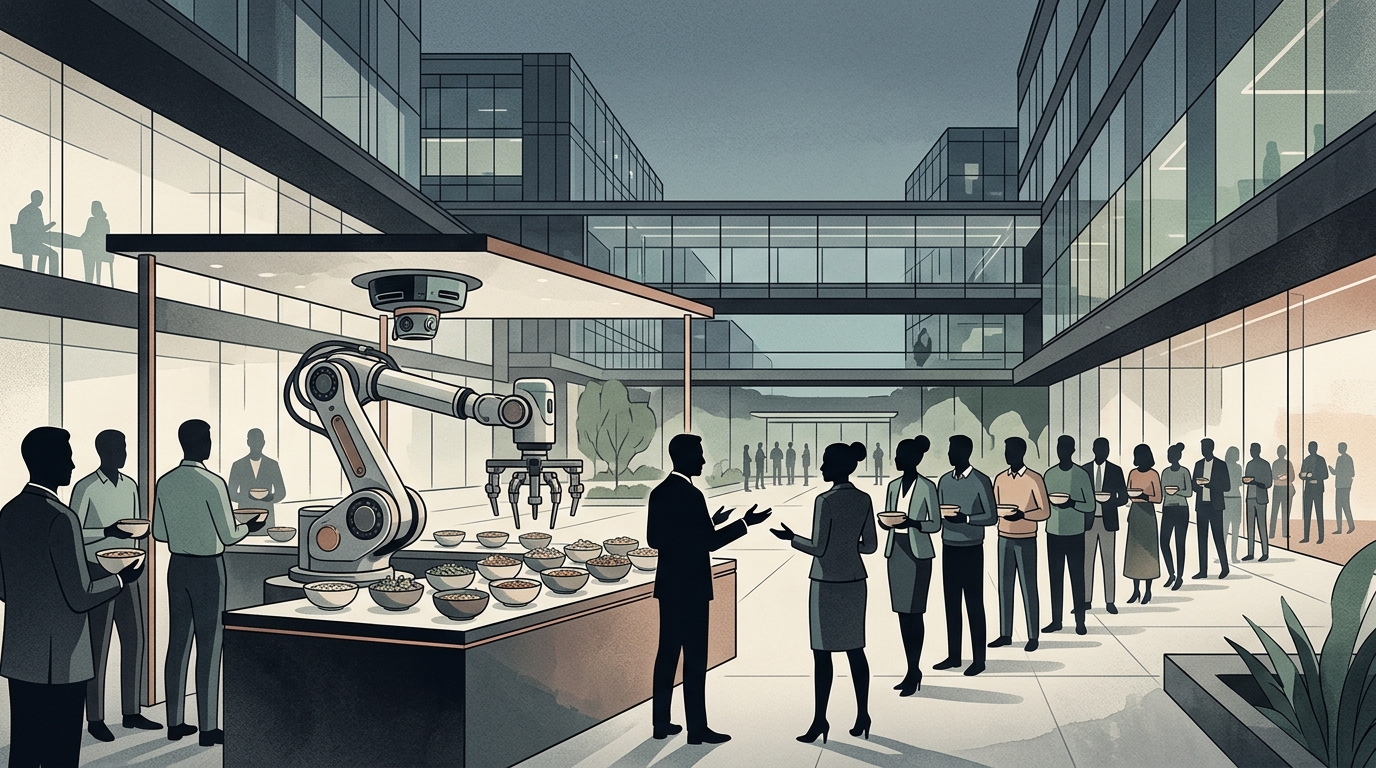
In the heart of Manhattan, in a kitchen that resembles a high-tech laboratory more than a restaurant, the silence is broken only by the rhythmic hum of mechanical arms. Marc Lore, the visionary founder of Jet.com and former Walmart executive, is not just building another restaurant chain. He is constructing a future where human presence in food preparation is optional. His latest venture, Wonder, recently showcased technology that allows robotic systems to produce 500 burrito or salad bowls per hour. To put that in perspective, a skilled human cook can prepare a maximum of 45 bowls in the same timeframe.
The Mathematical Superiority of Automation
The difference in productivity is not merely statistical; it is existential for the hospitality industry. Wonder utilizes sophisticated systems capable of managing dozens of ingredients simultaneously—from the rice base to sauces and toppings—with gram-level precision. This "algorithmic gastronomy" ensures that every dish is identical to the last, eliminating human error and food waste. According to Lore, scaling this technology will allow Wonder to offer high-quality meals at prices traditional restaurants cannot match due to soaring labor costs.
- Speed: 500 bowls per hour vs. 45 by humans.
- Consistency: Zero deviation in ingredient usage and portion sizes.
- Versatility: Ability to produce various cuisines (poke, burritos, salads) from the same machine.
The End of the Kitchen as We Know It?
Lore’s strategy extends far beyond bowls. Wonder is expanding into the automation of sauces, drinks, and grills, aiming to create "ghost kitchens" that operate with minimal staffing. The remaining roles for humans are limited to machine maintenance, quality control, and final packaging. This shift raises serious questions about the future of employment in the fast-casual sector, which has traditionally been a source of income for millions of unskilled workers.
"We aren't just automating a process; we are reinventing the supply chain of flavor," Lore stated in a recent interview.
However, critics argue that removing the human element strips the "soul" from food. In regions where dining is intertwined with social contact and the creativity of the chef, the adoption of such models may face cultural resistance. Nonetheless, the economic pressure from rising rents and raw material costs makes Lore’s proposition highly attractive to investors looking for scalable efficiency in a low-margin industry.
Economic Dimensions and Rapid Expansion
Wonder has already raised hundreds of millions of dollars in funding, attracting giants who see automation as the solution to the restaurant industry's notoriously thin margins. The company is acquiring established brands and integrating them into its technological ecosystem. Instead of opening individual restaurants, Wonder creates "hubs" that serve entire neighborhoods via delivery, utilizing fleets of electric vehicles. It is a model that combines Amazon-like logistics with the kitchen of a top-tier chef, but executed by robots.
The lingering question is whether consumers will embrace this new reality. Experience shows that convenience and price often override tradition. If Wonder can deliver a high-nutritional-value bowl in half the time and at a lower price point, the market will inevitably follow. 2026 appears to be the year when AI and robotics move from the labs directly onto our plates, transforming fast food into a high-precision manufacturing industry.