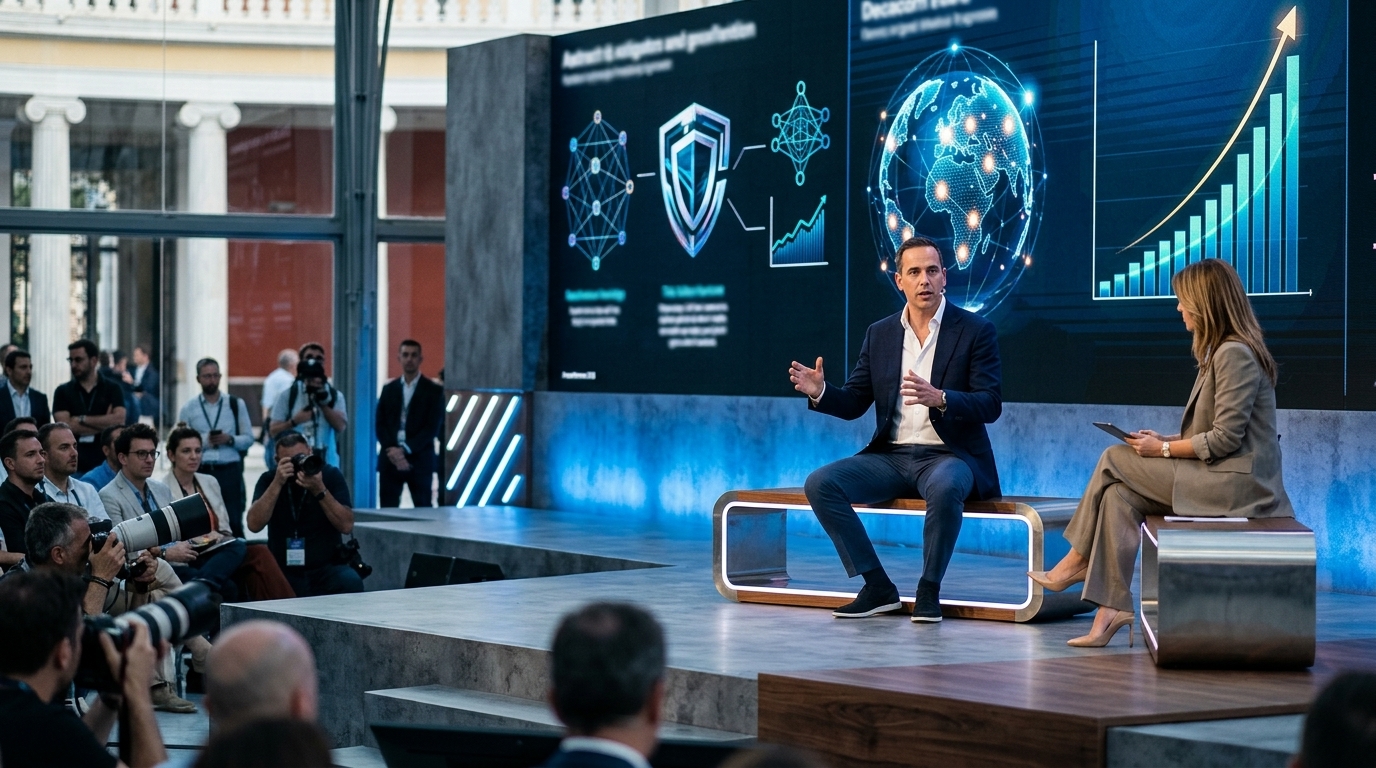
In the heart of Athens, during the Panathēnea 2026 conference, the story of Kaizen Gaming was presented not just as a business success story, but as a roadmap for the rebirth of Greek entrepreneurship. George Daskalakis, founder and CEO of the company, took the stage to describe a journey that many would have considered impossible back in 2012: the transformation of a small Greek startup into a global iGaming giant, now knocking on the door of the 'decacorn' category with a valuation exceeding $10 billion.
Forged in the Fires of Crisis
Daskalakis’ narrative began in the dark days of the economic crisis. Kaizen (then Stoiximan) was born in an environment hostile to business, with Greece on the brink of bankruptcy. "We learned to swim in deep waters with our hands tied," he noted, referring to the capital controls period that nearly strangled the company in its infancy. However, this pressure forged a culture of resilience and agility that became the company's competitive advantage when it expanded internationally.
The strategic decision to invest in in-house technology, rather than relying on third-party platforms, was key. This allowed Kaizen to adapt lightning-fast to the specificities of each market, from Brazil and Romania to Ontario, Canada, and recently Nigeria. The Betano brand is now the group's 'heavy artillery,' sponsoring top-tier events like the Euro and Copa America, placing it on par with traditional industry titans.
Artificial Intelligence and Responsible Gaming
As we move through 2026, Kaizen Gaming no longer defines itself as a betting company, but as a technology and data powerhouse. Daskalakis placed significant emphasis on the role of Artificial Intelligence (AI). "For us, AI is not a tool for profit maximization, but a tool for protection," he emphasized. The company has developed sophisticated algorithms that analyze player behavior in real-time to identify signs of addiction or problematic engagement.
- Automatic access restriction for players exhibiting dangerous behavioral patterns.
- Personalized user experiences based on preferences rather than nudges for excessive wagering.
- Use of AI to combat fraud and money laundering, ensuring transaction integrity.
The investment in the Kaizen Campus in Maroussi, which now houses over 1,000 software engineers and data analysts, is tangible proof of the commitment to 'Brain Gain.' The return of Greek scientists from abroad to work in a global-scale environment is, according to Daskalakis, the company's greatest achievement.
The Road to $10 Billion
The talk of a decacorn valuation is not theoretical. With the upcoming entry into new Latin American markets and consolidation in Africa, Kaizen's revenues are showing exponential growth. Analysts at Panathēnea 2026 estimate that the company's profitability (EBITDA) makes it one of the most attractive targets for an IPO on international exchanges like NASDAQ, although management remains cautious about future moves.
"We don't look at the competition to see what they are doing; we look at the user to see what they need. The top of the world is not a destination; it is a continuous process of improvement," Daskalakis concluded.
The message is clear: Kaizen Gaming represents the model of the 'new Greece' that exports innovation and expertise. In an industry often criticized, the company is attempting to redefine the rules of the game through transparency and technological superiority, aiming to become the first Greek tech giant with a truly global footprint.