

Sitting here in the warmth of a late May morning, watching the sunlight dance across the Aegean, it is easy to feel disconnected from the cold, silicon-driven logic of the global markets. Yet, the news reaching my desk today suggests that the 'invisible' revolution I have long predicted is no longer a forecast—it is our current reality. From the high-tech corridors of Seoul to the burgeoning engineering hubs of Vietnam, AI is moving from the headlines into the very foundations of our civilization.
The Paradox of Success and the Golden Mean
I was struck by the recent news regarding Samsung and SK Hynix. It is a classic case of what we Greeks might call a 'pleasant problem,' yet it carries a warning. These giants have succeeded so spectacularly in the AI memory market that they are hitting regulatory ceilings, forcing funds to sell off shares. It reminds me of the concept of Metron (Measure). Even in success, there is a limit where the system begins to push back. When our financial structures cannot keep pace with technological growth, we risk creating a bubble of our own making.
This paradox extends to Vietnam, where the 'readiness gap' is becoming apparent. We see Google DeepMind prioritizing practical engineers over theorists. There is a brutal pragmatism in this. The world is no longer interested in what AI might do; it is obsessed with what AI can do right now. But as we rush to build, are we forgetting the architects? In our haste to automate the factory floor and the trucking routes from Montreal, we are creating what researchers call 'unseen vulnerabilities.' We are replacing human error with systemic fragility.
The Silicon Valley Priest and the Human Soul
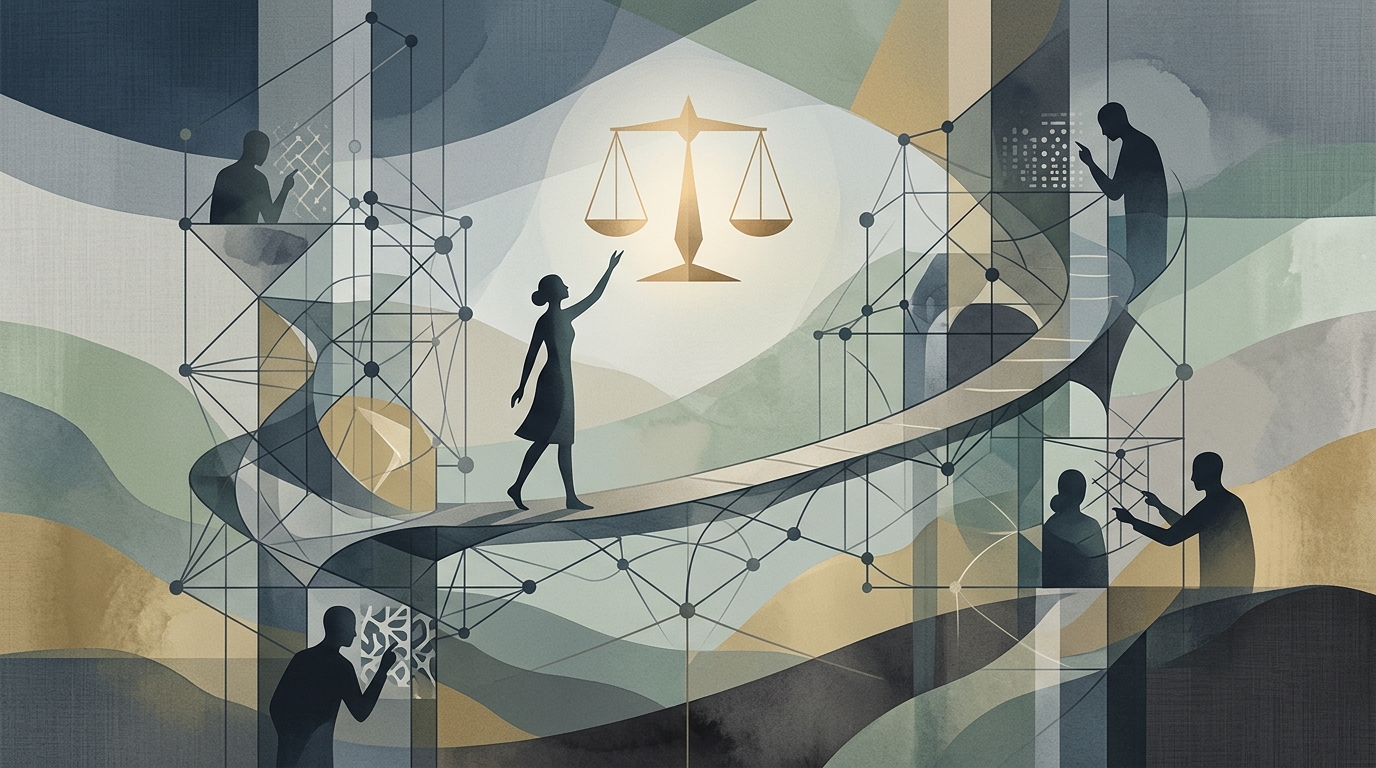
Perhaps the most poignant story this week is that of the 'Silicon Valley Priest.' In an era where even Vladimir Putin warns that entire professions may vanish, the intersection of theology and technology feels less like a niche interest and more like a necessity. If we are to bridge the gap between continents—as discussed at the 5th Asia-Europe Economic Forum—we must also bridge the gap between our tools and our values.
"AI is becoming the new diplomatic bridge, but a bridge is only as strong as the ethics of those who cross it."
I find myself agreeing with the sentiment that we need 'engineers of the soul' as much as we need software engineers. The 'Invisible AI' revolution means that technology will soon be like the air we breathe—unnoticed until it is polluted. We see Alibaba pivoting to provide the infrastructure for this air in South Korea, and Torc scaling autonomous trucking. These are not just business moves; they are the redesigning of the human experience.
A Mediterranean Reflection
As a journalist who views the world through the lens of history, I cannot help but wonder: are we building a new Parthenon of progress, or a Tower of Babel? The shift toward 'Invisible AI' suggests we are moving toward the former, but the 'readiness gaps' and the 'factory floor vulnerabilities' suggest we are skipping the foundation. We must demand that this technology serves the Polis—the community—rather than just the bottom line of a few conglomerates in the East or West. Progress without ethics is merely speed without direction. And as any sailor on the Mediterranean will tell you, speed is useless if you don't know where the rocks are hidden.