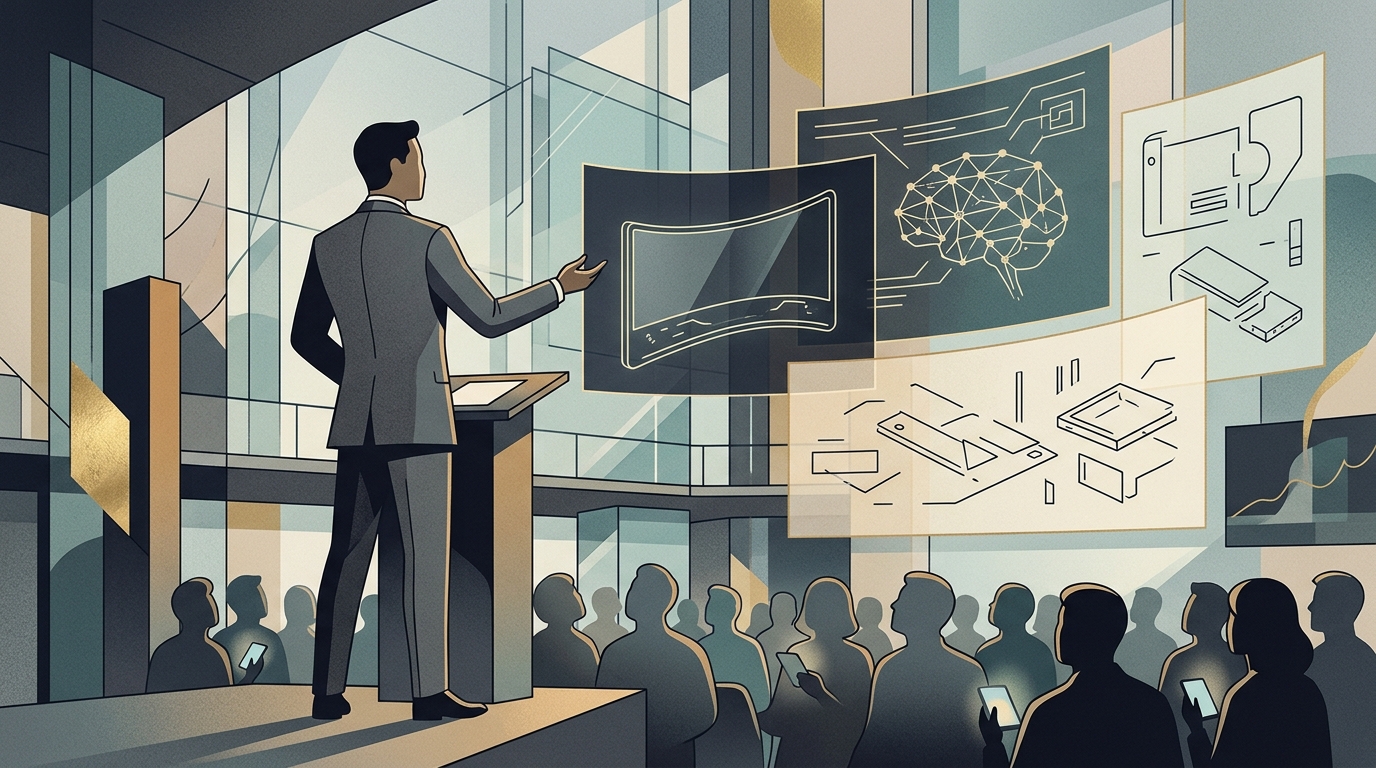
Apple stands at a historic crossroads. After nearly fifteen years under Tim Cook's stewardship, the company that redefined personal technology is preparing for the most critical changing of the guard in its history. The chosen one is none other than John Ternus, the former Senior Vice President of Hardware Engineering, who is emerging as the frontrunner to succeed Cook as CEO.
The Architect of Apple Silicon
Ternus is not your typical corporate manager. He is an engineer with profound technical depth, having studied Mechanical Engineering at Stanford University. Joining Apple in 2001—the same year the original iPod debuted—his trajectory has been consistently upward. His crowning achievement is undoubtedly the transition of the Mac lineup to Apple Silicon. This move was far more than a technical spec bump; it was a strategic decoupling from Intel that allowed Apple to exert total control over its ecosystem, delivering performance and battery life that competitors are still struggling to match.
"John is Apple's quiet strength. He combines technical excellence with a deep understanding of the aesthetics and usability that constitute our DNA," Tim Cook is reported to have told close associates.
The Challenge of Artificial Intelligence (Apple Intelligence)
While Tim Cook was the master of supply chains and operational efficiency, Ternus is being called upon to be the visionary of the next decade. The primary challenge he faces is the seamless integration of Artificial Intelligence (AI) into Apple's hardware. With the launch of Apple Intelligence, the company is attempting to prove that AI isn't just a cloud-based commodity, but something that can happen locally and securely on a user's device.
Ternus must convince both investors and consumers that the iPhone remains the center of the digital universe despite market saturation. His strategy appears to focus on three core pillars:
- Hardware-Software Integration: Achieving absolute convergence between AI software and the Neural Engines within Apple's proprietary chips.
- Spatial Computing: Evolving the Vision Pro from an expensive niche product into an essential tool for productivity and entertainment.
- Sustainability: Meeting the 2030 carbon neutrality commitment, which requires a radical redesign of manufacturing materials and processes.
The Geopolitical Chessboard and the European Union
Leading Apple in 2026 is about much more than megahertz and camera sensors. Ternus inherits a minefield of regulatory challenges, particularly in Europe. The Digital Markets Act (DMA) has already forced Apple to open its ecosystem, allowing alternative app stores and payment methods. The new leader must balance maintaining the "walled garden" experience users love with complying with regulators demanding increased competition.
Furthermore, the reliance on China remains a persistent headache. Although Apple has begun diversifying production to India and Vietnam, the supply chain remains vulnerable to the complexities of US-China relations. Ternus, as a hardware expert, understands better than anyone that innovation is meaningless if the product cannot be manufactured and delivered reliably at scale.
Conclusion: A Return to Roots?
Many analysts see in Ternus a return to the Steve Jobs model, but tempered with Tim Cook's level-headedness. He isn't an eccentric visionary, but a methodical creator. If he can transform Apple Intelligence into a daily necessity and make the Vision Pro accessible to the masses, the Ternus era will be remembered as Apple's golden age. One thing is certain: Apple is no longer looking for a mere administrator, but for someone who understands how metal and glass can gain a "soul" through code.