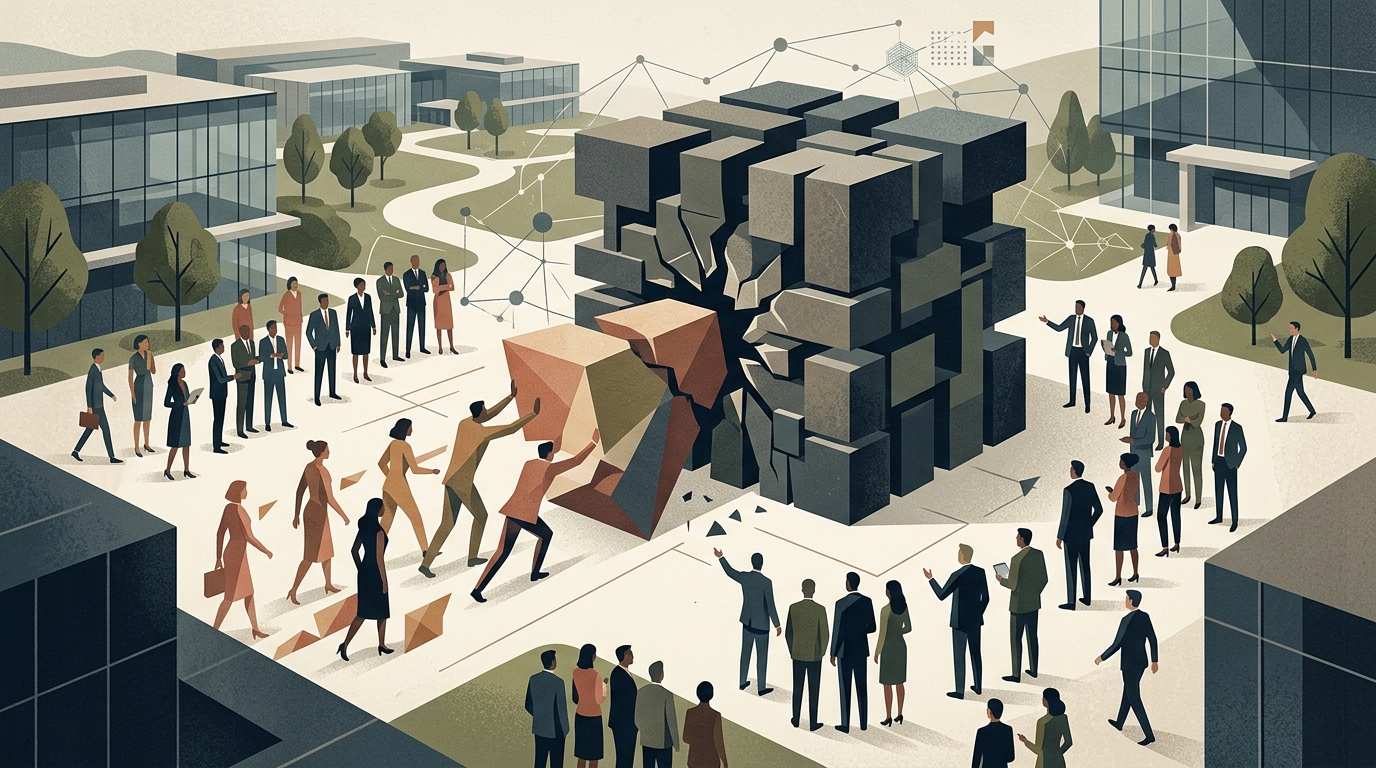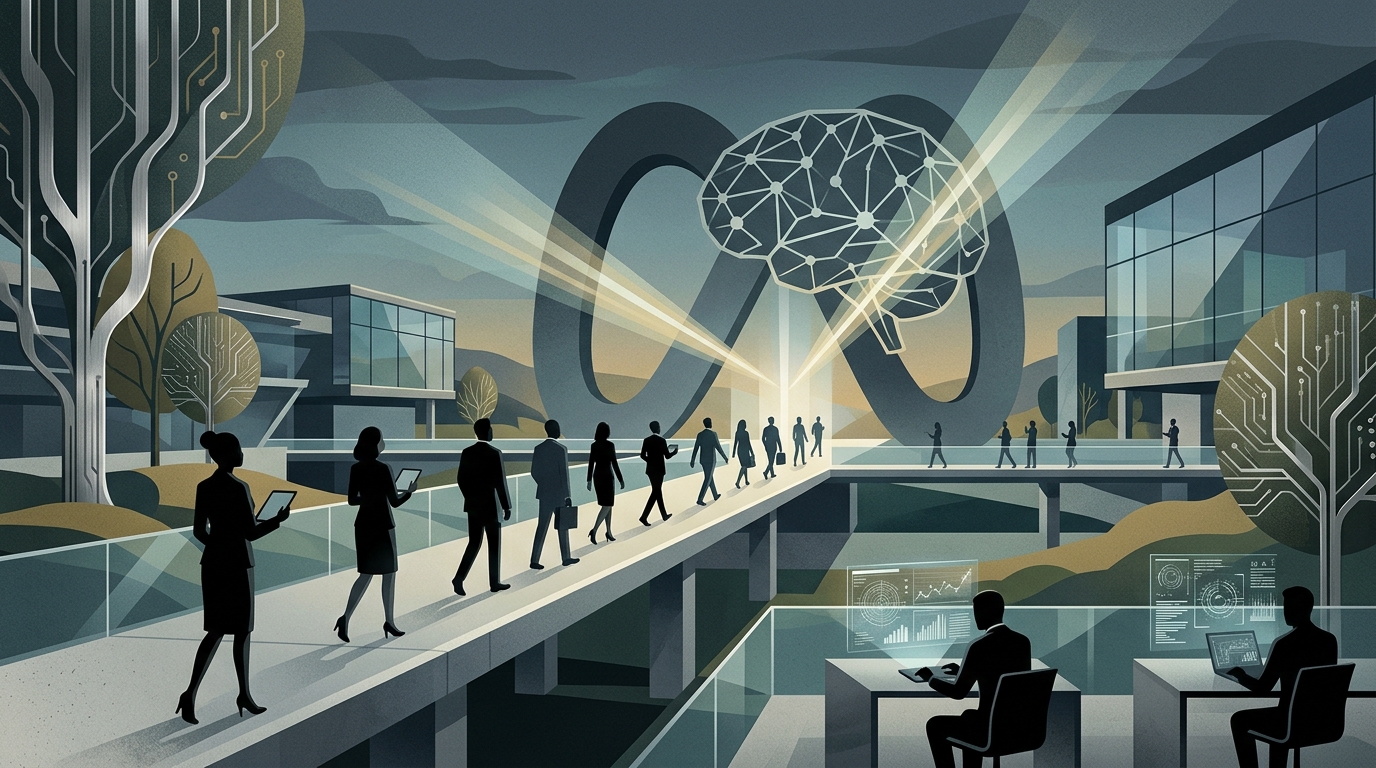
In Silicon Valley, the fate of giants is often decided by their leaders' ability to discard the past before it consumes them. For Mark Zuckerberg, who spent much of 2022 and 2023 trying to convince the world that the future lies in the Metaverse, the pivot to Artificial Intelligence (AI) is not just a strategic shift; it is a violent rebirth accompanied by what many inside the company call a "bloodletting."
Meta, the parent company of Facebook, Instagram, and WhatsApp, is in the midst of a sweeping reorganization. As of May 2026, the picture is clear: resources, capital, and, most importantly, talent are moving at a breakneck pace from social networking and virtual reality divisions toward the development of Llama models and generative AI infrastructure. This transition, however, is not bloodless. Thousands of employees who were once considered the core of the company now find themselves sidelined or out of the organization.
The End of the 'Year of Efficiency' and the Beginning of Acceleration
When Zuckerberg declared 2023 the "Year of Efficiency," many assumed it was a temporary correction after pandemic-era overhiring. Today, we realize it was the preparation for a permanent state of austerity in traditional departments to fund the most expensive arms race in tech history. Meta is now investing tens of billions of dollars annually in Nvidia GPUs and building proprietary data centers capable of supporting the next generation of Large Language Models (LLMs).
According to internal sources, the atmosphere at the Menlo Park headquarters is fraught. Teams working on Facebook Blue—the legacy app—see their budgets slashed, while "star" engineers are summarily transferred to the Generative AI division. "This is no longer a social media company," says a former executive. "It’s an AI lab that maintains a few apps to fund its research."
The Metaverse Conflict: A Silent Retreat?
Despite public assurances that Reality Labs remains a priority, the reality on the ground tells a different story. Meta has begun merging its Metaverse efforts with AI, arguing that "intelligent agents" will be the ones to inhabit the digital world. However, major hardware projects for virtual reality have been delayed or canceled as attention has shifted to smart glasses incorporating multimodal AI technology.
This shift has caused friction within the leadership. The pressure for immediate results in AI has led to a culture of burnout, where the speed of code delivery takes precedence over employee well-being. Zuckerberg seems to have adopted a management style reminiscent of Facebook’s early days—the famous "move fast and break things"—but on a scale that now concerns global geopolitical power rather than just a social site.
The Geopolitics of Compute
Meta’s strategy isn’t just about software. The "bloodletting" also involves the redistribution of physical resources. The company is competing with Google, Microsoft, and OpenAI for access to energy and semiconductors. In Europe, Meta faces additional challenges due to the AI Act, forcing it to rethink where to install its new infrastructure. While the Mediterranean offers opportunities for data centers due to its geographical position, it remains on the periphery of major decisions as Zuckerberg focuses on securing dominance in the US and Asia.
The remaining question is whether shareholders will continue to support this massive Capex (capital expenditure). So far, the market has rewarded Meta, as advertising revenues—now optimized by AI algorithms—remain strong. However, the human cost of the transition and the loss of institutional memory from layoffs may prove to be the biggest risk for the tech giant's future.