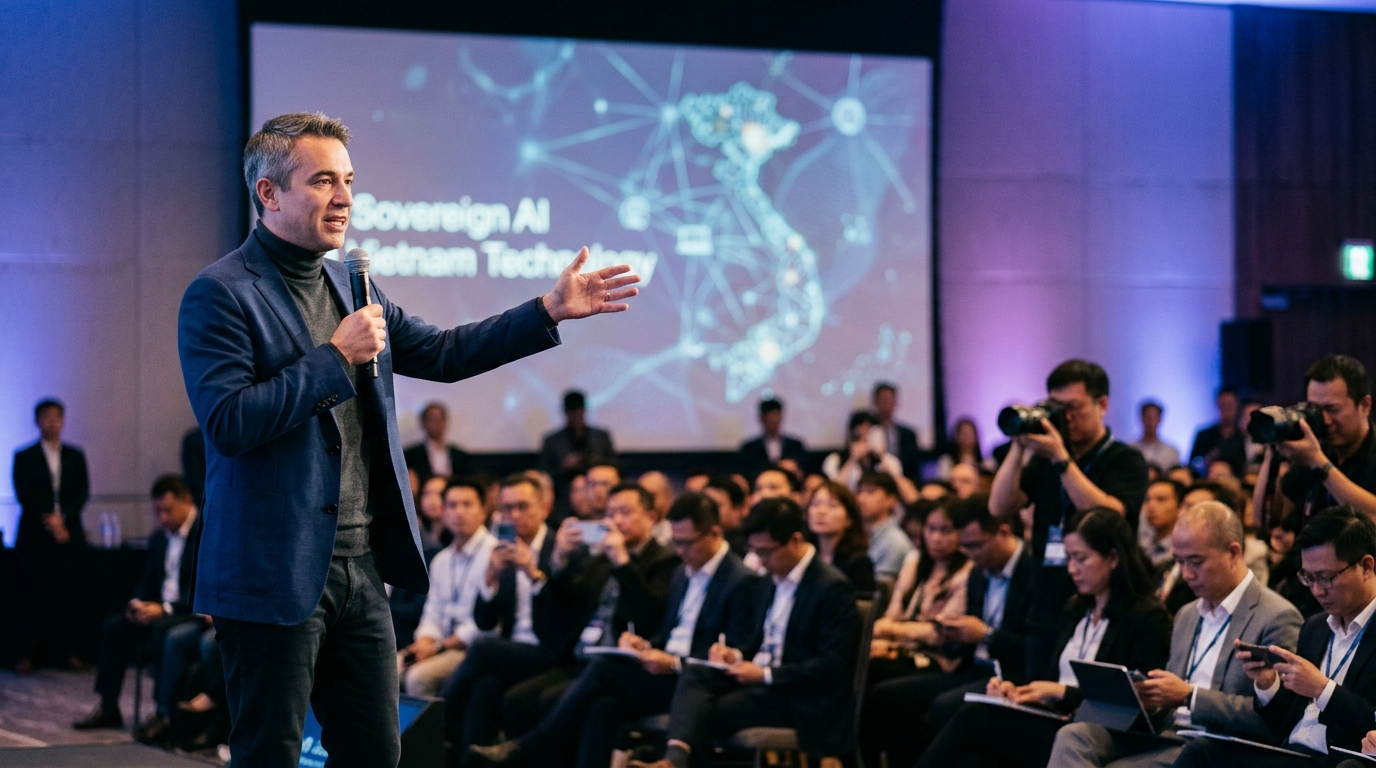
In the corridors of Hanoi’s tech hubs, a quiet revolution is taking place, far from the spotlight of San Francisco or Beijing. 'Group 9,' a specialized unit within the state-owned telecommunications giant Viettel, has taken on a mission many considered impossible: creating a fully autonomous, 'Sovereign AI' tailored exclusively to Vietnam's linguistic, cultural, and bureaucratic needs. This move is not merely a technological upgrade; it is a strategic declaration of national independence in the digital age.
The Necessity of Linguistic and Cultural Precision
Why does Vietnam feel the need to develop its own AI when giants like OpenAI and Google already exist? The answer lies in the nuances of language. Western Large Language Models (LLMs), despite their impressive performance, often fail to capture the tonal complexities and historical context of the Vietnamese language. Group 9 is working on models trained on local data, ensuring that the AI does not 'think' in Western terms translated into Vietnamese, but understands the nation's unique idiosyncrasies.
Furthermore, the Vietnamese government views AI as a tool for modernizing public administration. Group 9 has developed digital assistants for judges and civil servants capable of analyzing thousands of pages of legal texts and circulars in seconds. This specialization in 'vertical' sectors of the economy and administration is something generic Silicon Valley AI cannot offer with the same precision and data security.
The Geopolitical Chessboard and 'Bamboo Diplomacy'
Vietnam follows a highly careful foreign policy known as 'bamboo diplomacy'—flexible yet resilient. In the tech sector, this translates into close cooperation with Nvidia for critical semiconductor supplies, while simultaneously maintaining full control over data and algorithms. Group 9 is the executive arm of this strategy. While other Southeast Asian nations rush to adopt foreign solutions, Vietnam is investing in its own infrastructure, fearing that dependence on foreign clouds and models could undermine national sovereignty in the future.
"It's not just about code. It's about who owns the knowledge and how it is distributed in our society," sources close to the project state.
Challenges: Talent and Semiconductors
Despite the excitement, the road is not without obstacles. The biggest challenge for Group 9 is finding and retaining top-tier talent. Many Vietnamese engineers prefer the high salaries of the US or Singapore. However, the national vision promoted by Viettel seems to be bearing fruit, attracting returning scientists who want to contribute to their homeland's rise. The second challenge is access to computing power. Restrictions on high-end chip exports are a constant threat, forcing Group 9 to be exceptionally inventive in optimizing their algorithms to run on less powerful hardware.
The Viettel Model and the Future
Viettel, as a state-owned enterprise under the Ministry of Defense, possesses the resources and discipline required for such long-term projects. The success of Group 9 could serve as a model for other developing economies wishing to avoid 'digital colonization.' If Vietnam manages to prove that a middle-power nation can produce its own high-level AI, the balances on the global tech map will shift permanently. Group 9 isn't just doing what 'no one else dares'; it is doing what is necessary for a nation's survival in the 21st century.