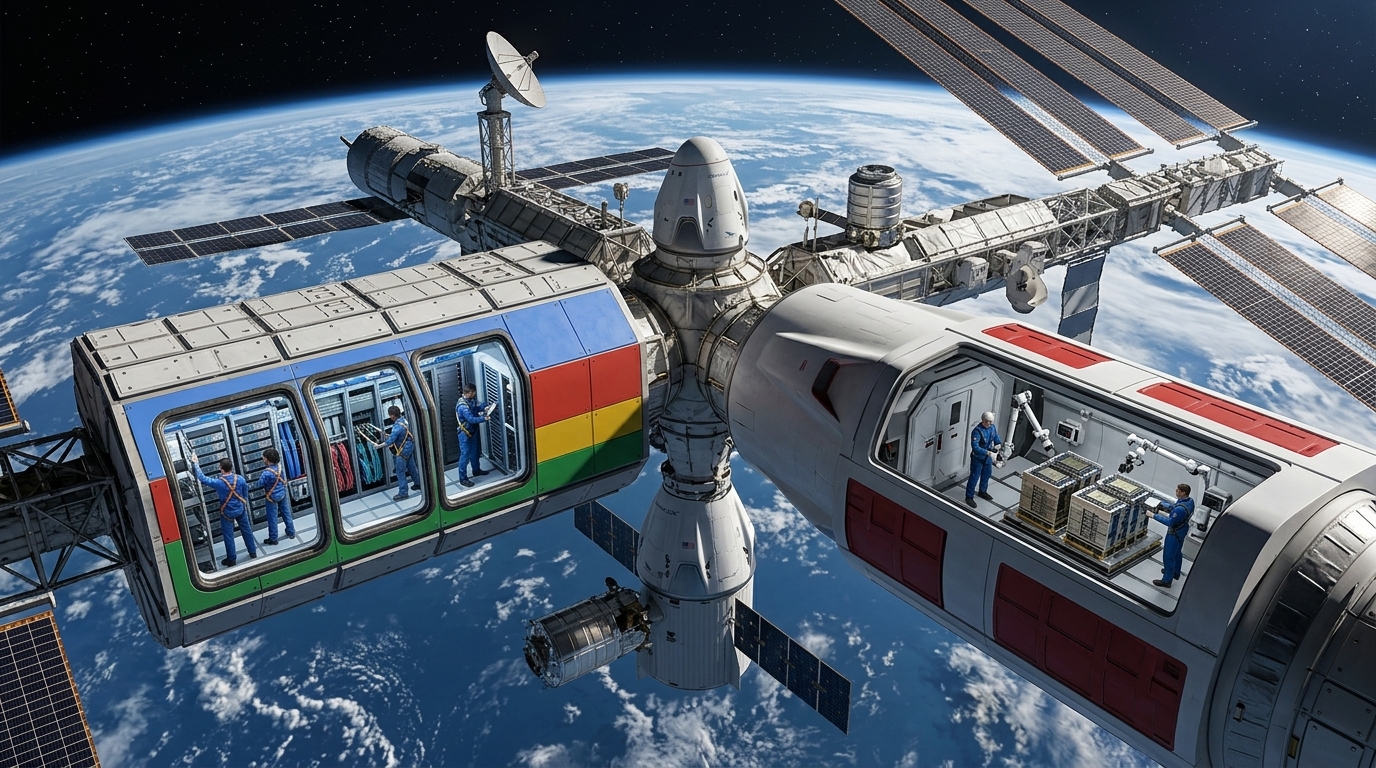
In a move that is sending shockwaves through the global technology and aerospace sectors, Google has reportedly struck a landmark deal with Elon Musk’s SpaceX. According to reports emerging just days before SpaceX’s highly anticipated and record-breaking Initial Public Offering (IPO), the Mountain View tech giant has committed to paying a staggering $1 billion per month for what is being described as AI "horsepower." This is not merely a commercial transaction; it is a strategic realignment that inextricably links terrestrial processing power with orbital infrastructure.
The Convergence of Cloud and Space
The term "horsepower" in this context refers to more than just raw compute capacity; it is primarily about global connectivity and edge computing. Google, currently locked in an existential battle in the Generative AI space with its Gemini models, requires an infrastructure that transcends traditional, localized data centers. SpaceX, through its Starlink constellation, offers something no other cloud provider can claim: global, low-latency coverage capable of moving massive volumes of AI data in real-time to the most remote corners of the planet.
This partnership allows Google to integrate Google Cloud capabilities directly into SpaceX’s ground stations, creating a hybrid fabric that merges artificial intelligence with satellite communication. For Google, this means its AI services can now operate at speeds previously thought impossible for remote industrial applications, ranging from autonomous maritime shipping to high-precision smart agriculture.
The IPO Factor and Musk’s Masterstroke
The timing of this deal is surgical. As SpaceX prepares for an IPO that aims to shatter valuation records, securing a guaranteed annual revenue stream of $12 billion from a blue-chip client like Google provides immense stability for prospective investors. It pivots SpaceX from being a launch and internet provider to becoming a critical pillar of global digital infrastructure.
- Guaranteed revenue flow significantly boosting SpaceX’s pre-IPO valuation.
- Elevation of Starlink to a mission-critical infrastructure for Artificial Intelligence.
- A strategic hedge for Google against competitors like Microsoft and Amazon.
- Enhancement of the AI ecosystem through drastically reduced data latency.
Despite the historical friction between Elon Musk and Google’s leadership, the sheer necessity of the AI arms race appears to have bridged the divide. Musk requires capital to fund his Mars ambitions, and Google requires Musk’s "mesh" to ensure it isn't outpaced in the race for AI dominance.
Geopolitical and Technological Implications
Beyond the balance sheets, this agreement carries profound geopolitical weight. The birth of "Orbital AI" means that data processing will no longer be strictly bound by national borders or terrestrial fiber-optic networks. This grants the United States a significant lead in the global control of information and technological leverage. However, it also raises critical questions regarding the concentration of immense power within just two entities.
"We aren't just buying bandwidth; we are purchasing the future of distributed intelligence," a high-ranking Google executive reportedly noted during the negotiations.
In conclusion, Google’s commitment of $1 billion monthly is the loudest confirmation yet that the future of AI is not just earthbound, but orbital. The "horsepower" provided by SpaceX could be the key that unlocks the next phase of the digital revolution, making artificial intelligence an omnipresent force, independent of geographical constraints.