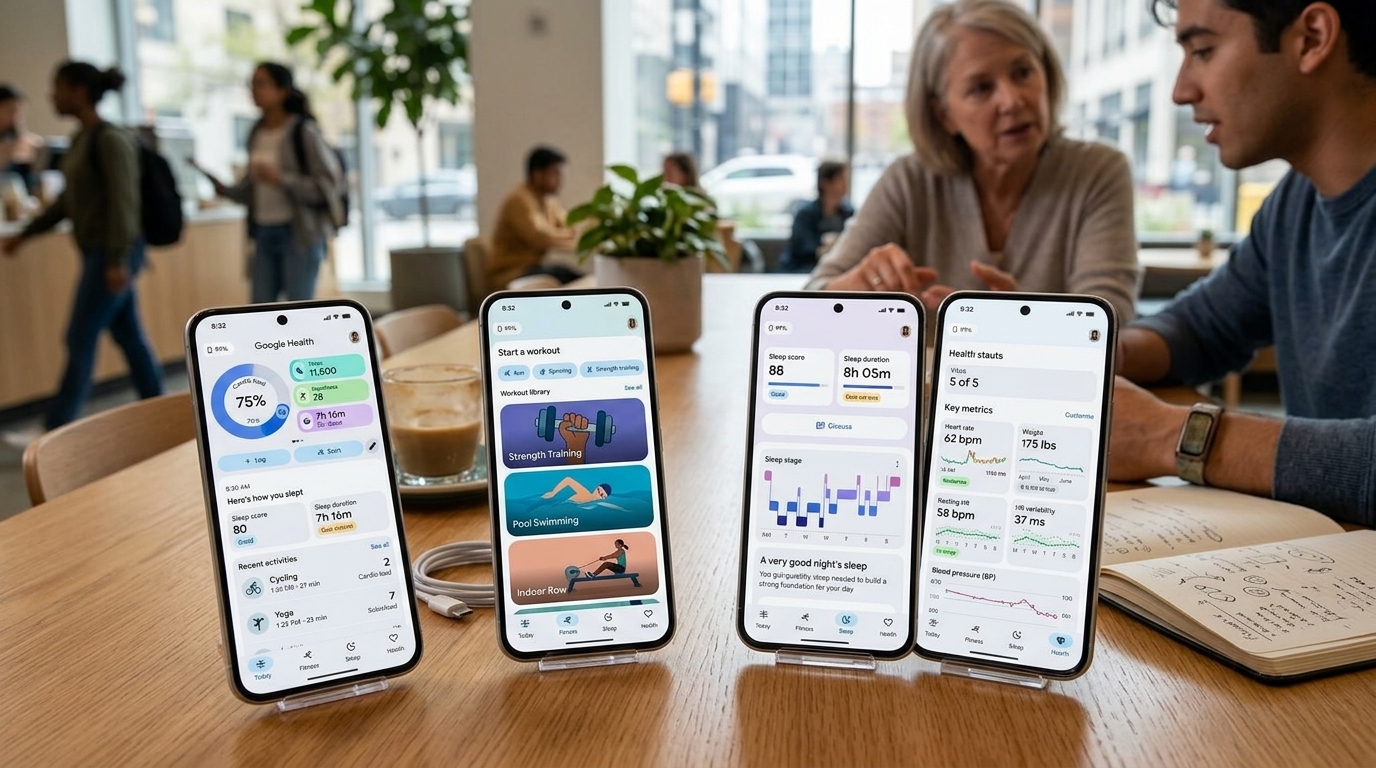
May 26, 2026, marks a pivotal moment in the wearable technology landscape as Google officially pulls the plug on one of the most iconic apps of the last decade. With the launch of the new Fitbit Air, Google has finalized the retirement of the dedicated Fitbit app, replacing it with the unified "Google Health" platform. While analysts have predicted this move since the 2021 acquisition, the actual transition has triggered a seismic wave of backlash from the global user community.
The Psychology of Change and the "Google Graveyard"
For millions of users, Fitbit was never just a step-counting app; it was a digital community with a specific aesthetic and functional rhythm. The migration to Google Health brings with it the heavy shadow of the "Google Graveyard"—the tech giant's notorious tendency to acquire successful services only to absorb or discontinue them. Long-time users report that the new app lacks the intuitive simplicity that made Fitbit stand out, offering instead an environment that feels more like a corporate data dashboard than a wellness tool.
Complaints are primarily focused on the loss of the customizable "Tiles" that allowed users to tailor their home screens, as well as the perceived degradation of social features. The "Challenges" with friends, which once formed the heartbeat of the Fitbit experience, have been integrated into a more sterile Google achievements system, losing much of their spontaneous and communal charm.
Artificial Intelligence as the New Coach
Google defends its strategy by highlighting the deep integration of Gemini, its flagship AI model. Google Health promises to be more than a data logger; it aims to be a "personal health analyst." Leveraging generative AI, the app can now correlate sleep quality with activity levels and nutritional habits, providing narrative reports and advice in natural language.
- Personalized workout regimens based on real-time biometric data.
- Automated heart rate anomaly detection with immediate emergency contact alerts.
- Seamless integration with Google Calendar for scheduled wellness breaks.
- Mental health analysis through voice tone and smartphone usage patterns.
However, this "AI-first" approach raises significant privacy concerns. Despite Google's assurances that health data will not be used for advertising purposes, the mandatory merging of Fitbit accounts into the central Google Account remains a point of contention for those who wish to keep their medical data isolated from their broader digital footprint.
Market Competition and Ecosystem Strategy
This move does not occur in a vacuum. Apple Health and Samsung Health have already established robust ecosystems that bind hardware and software in an unbreakable loop. With the Fitbit Air, Google is attempting to prove it can offer a premium experience that transcends basic tracking. The Fitbit Air boasts sensors never before seen in a consumer wearable, including non-invasive continuous glucose monitoring and blood pressure tracking.
"Integration is the key to the next phase of digital health. We cannot have isolated silos of data if we want AI to truly save lives," a Google executive stated during the keynote.
Nevertheless, the market remains skeptical. History has shown that wearable users are exceptionally loyal to their habits. Forcing a new User Interface (UI) can lead to a mass exodus toward the Apple ecosystem or specialized solutions like Garmin, which continues to bet on autonomy and athletic performance without the constraints of massive general-purpose ecosystems.
The Future of Fitbit Under the Google Umbrella
It is increasingly clear that the "Fitbit" brand is being transformed from a standalone entity into a hardware line for Google, much like the Pixel series. Google Health is the destination, and Fitbit is now merely the vehicle. For legacy users, the adjustment will be painful. For new adopters, the promise of a comprehensive AI-driven health suite might be enough to entice them.
Google's ultimate gamble is whether it can convince users that the loss of Fitbit's "soul" is compensated by the intelligence of Google Health. So far, reviews on the Play Store and App Store suggest that the road to acceptance will be long and fraught with obstacles. Technology may advance in leaps and bounds, but human habit remains the most difficult fortress to conquer.