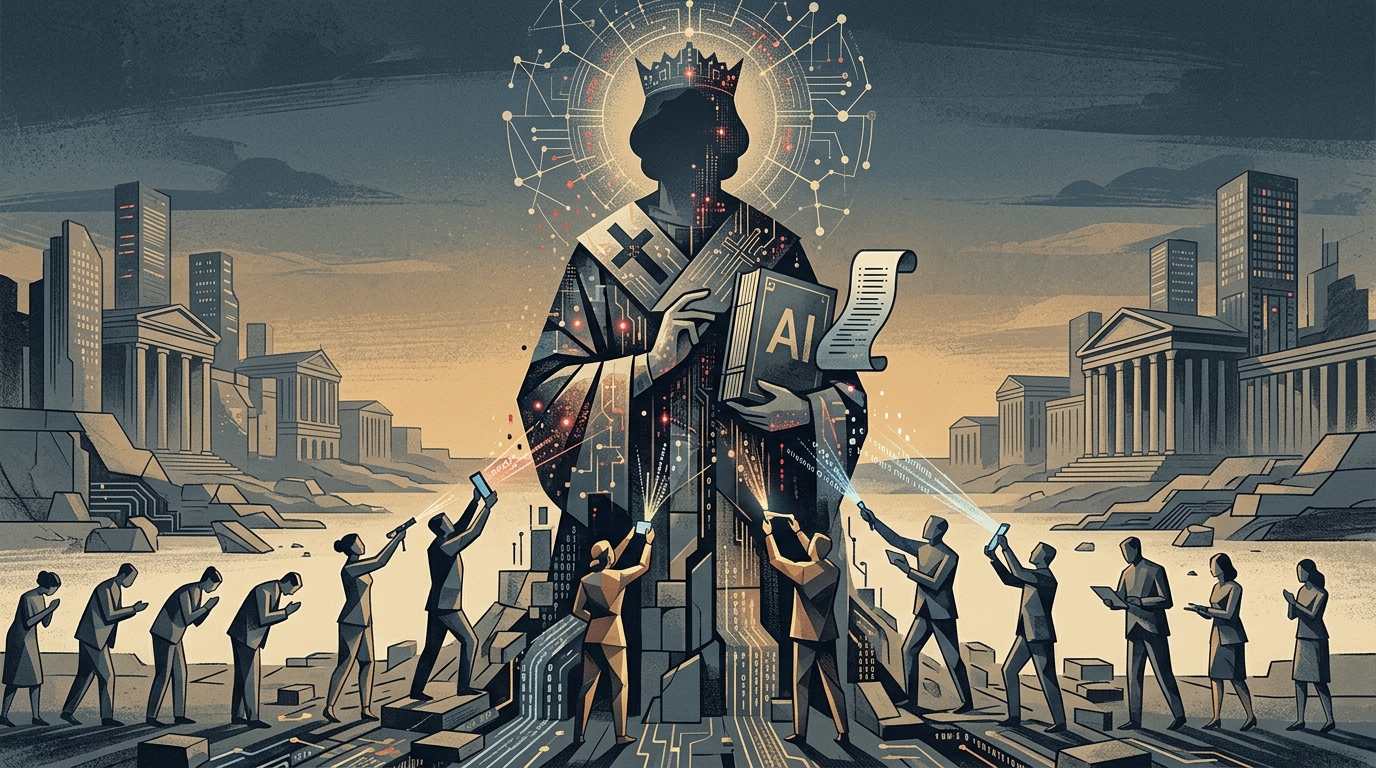
The history of technology will remember 2024 and 2025 as the years of the great transition, but May 2026 finds Google in a state that few had predicted with such precision: its complete evolution from an information gateway into an autonomous, self-governing AI ecosystem. What began as the addition of a chatbot (Bard, later Gemini) has now culminated in the total absorption of every operating system and application under the umbrella of a single, multimodal intelligence.
The Death of Search as We Knew It
For decades, Google was synonymous with "searching." Today, the concept of search is being replaced by "execution." With the introduction of AI Overviews and the integration of Gemini 1.5 Pro into every facet of Workspace, Google no longer refers you to sources; it provides the answer directly, synthesizing information from thousands of websites in seconds. This "zero-click ecosystem" creates a new reality where the user never needs to leave the Google environment.
"We are not just building an AI tool. We are building a fabric of intelligence that understands the context of your life," a company executive recently stated, highlighting the shift toward Project Astra.
Project Astra: The Eyes and Ears of the Ecosystem
The most impressive development is Project Astra, the universal AI agent that can "see" through your phone's camera and "hear" your environment in real-time. This is not a simple app, but a layer of perception running atop Android. Astra can remember where you left your keys, explain a complex diagram on a whiteboard, or even debug code as you type it on your screen. The autonomy of this system lies in its ability to take initiative, such as booking a doctor's appointment after reading an email, without requiring further prompting.
- Multimodality: Simultaneous processing of text, image, audio, and video.
- Massive Context Window: The ability to process millions of tokens allows the AI to "read" entire libraries of documents in seconds.
- Android Integration: The OS is becoming "AI-first," where every app communicates seamlessly with Gemini.
The Economic and Social Dimension
This transformation is not without cost. Content publishers and creators are in despair as Google "cannibalizes" traffic to their websites to power its own generated answers. On the other hand, productivity in businesses using Google Cloud has skyrocketed, as the automation of routine tasks—from report writing to data analysis—is now handled via natural language. The remaining question is whether Google, in its quest to become the ultimate digital ecosystem, will end up as a "walled garden" from which users cannot—or will not—escape.
The Future of Privacy
With AI having access to every email, document, photo, and now real-time camera feeds, the boundaries of privacy are being redefined. Google promises on-device processing via Gemini Nano, but the need for cloud-based computational power remains dominant. The thin line between a "personal assistant" and "constant surveillance" is now blurrier than ever before.