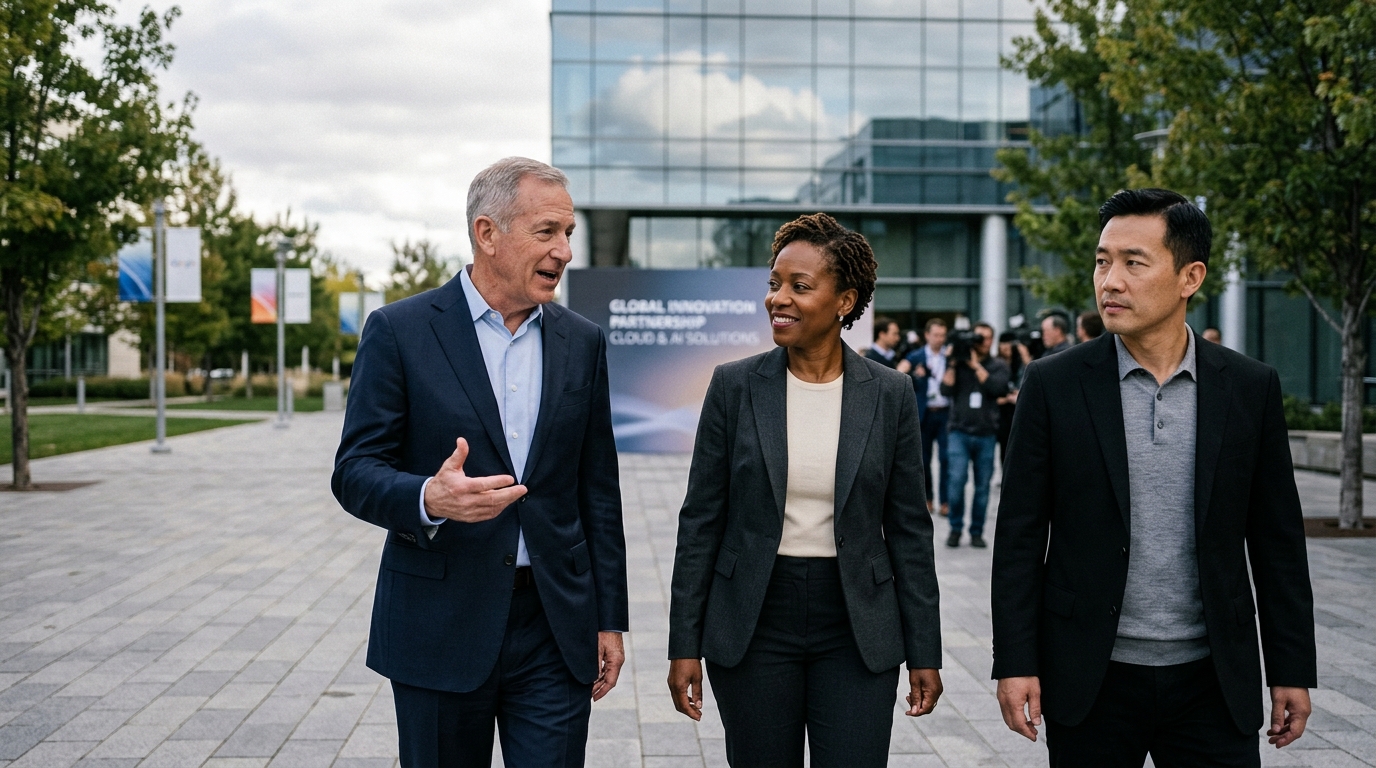
The era when Artificial Intelligence was considered an ethereal concept residing solely within the code of software engineers is long gone. Today, the battle for AI supremacy is being fought with concrete, steel, and massive amounts of electricity. The recent strategic convergence between Google and Blackstone, the world’s largest alternative asset manager, is the most resounding confirmation of this new reality. This is not merely a commercial agreement; it is a structural realignment of the global technological chessboard.
The Physicality of Intelligence
To power Large Language Models (LLMs) like Google’s Gemini, computational power exceeding any historical precedent is required. This power is housed in Data Centers, which have evolved from simple server warehouses into state-of-the-art 'thought factories.' The partnership with Blackstone grants Google access to the vast digital infrastructure portfolio held by the investment group, primarily through QTS (Quality Technology Services), which Blackstone acquired for billions.
Blackstone, under the leadership of Stephen Schwarzman, has recognized that Data Centers are the most profitable asset class for the coming decade. By investing over $100 billion in the development of such infrastructure, the firm is positioning itself as the 'landlord' of the digital future. Google, on the other hand, needs the speed and scale that only such a financial giant can provide to avoid falling behind in the race against Microsoft and Amazon.
The Energy Challenge and Sustainability
One of the greatest challenges of this alliance is energy supply. An AI-supporting Data Center consumes up to ten times more energy than a traditional data center. Google has committed to net-zero emissions by 2030, a promise that is becoming increasingly difficult to keep as AI demand surges. Blackstone brings more than just capital for buildings to the table; it brings strategic investments in renewable energy grids.
- Development of new cooling systems to reduce water consumption.
- Investments in Small Modular Reactors (SMRs) for stable power supply.
- Modernization of electrical grids in regions like Northern Virginia and Ireland.
The criticism faced by both companies concerns their environmental footprint. While AI promises solutions for climate change through resource optimization, the very construction of its infrastructure places a significant burden on the planet. The balance between technological progress and ecological responsibility will be the central theme of boardroom discussions in the coming years.
Economic Concentration and Monopolies
The entry of capital like Blackstone’s into the heart of AI raises questions about the concentration of power. When the infrastructure upon which the global economy relies is controlled by a handful of corporations, the risk of vendor lock-in increases. Smaller AI startups now find themselves at a disadvantage, unable to compete with the cost of accessing these premium computing facilities.
"We are not just building buildings; we are building the nervous system of the 21st-century global economy," industry executives state, highlighting the partnership's significance.
In conclusion, the Google-Blackstone partnership is not a random business move. It is proof that Artificial Intelligence has entered its 'industrial' phase. The success of this collaboration will be judged by whether it can provide the necessary power for innovation without sacrificing sustainability and healthy market competition.