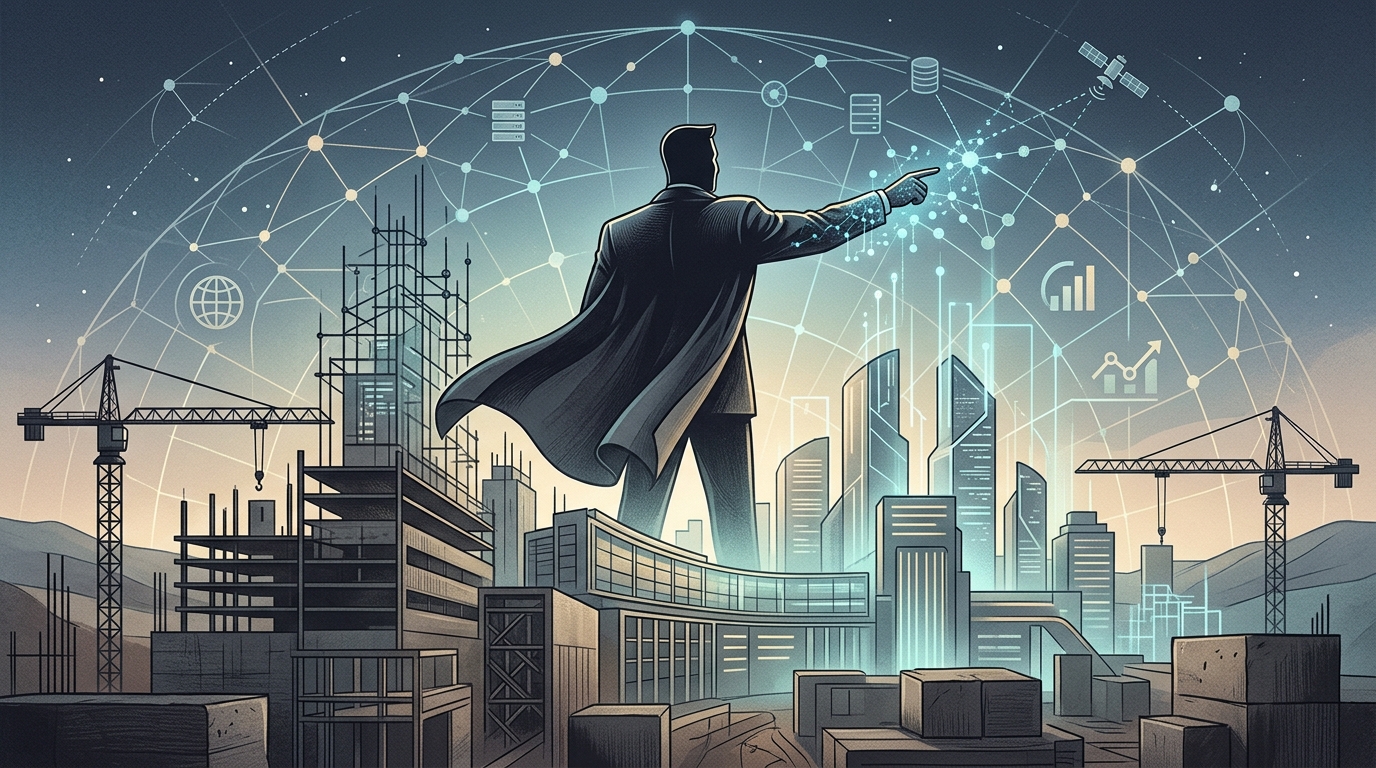
When the world hears the name Florentino Pérez, thoughts immediately drift to the Santiago Bernabéu, record-breaking transfers, and Real Madrid's dominance in global football. However, away from the stadium lights, Pérez is orchestrating one of the boldest business transformations of the 21st century. As the chairman of the ACS Group (Actividades de Construcción y Servicios), the Spanish tycoon is no longer just building highways and bridges; he is constructing the "nervous system" of Artificial Intelligence.
The strategic shift of ACS toward digital infrastructure and data centers is not a mere adaptation to market trends, but a radical reimagining of what "construction" means in the age of the algorithm. With AI demanding unprecedented computational power, Pérez recognized early on that real wealth lies not just in software, but in the bricks, mortar, and cooling systems that house Nvidia's processors and the clouds of Microsoft and Amazon.
The American Expansion and the Role of Turner
The key to Pérez's empire is Turner Construction, the US-based subsidiary of ACS, which now serves as the spearhead for high-tech projects. Turner is not just a contractor; it is the largest builder of data centers in the United States. In a market where the demand for server hosting space is growing exponentially, ACS has managed to secure multi-billion dollar contracts, turning traditional construction into high-value-added engineering.
Market analysts point out that profit margins in data centers are significantly higher than those in public roadworks. Furthermore, the complexity of these buildings—which require specialized power and cooling systems—acts as a protective "moat" against competition. Pérez has positioned ACS in a place where it no longer competes on price alone, but on expertise and delivery speed, factors that are critical for Silicon Valley tech giants.
Energy: The Invisible Fuel of AI
Artificial Intelligence is energy-intensive. A single query on ChatGPT consumes several times more energy than a simple Google search. Florentino Pérez, understanding this constraint, has integrated energy production and management into the ACS model. Through various investment vehicles and subsidiaries, the group is focusing on renewable energy sources and transmission grids.
The strategy is clear: ACS offers a comprehensive solution. It doesn't just build the data center shell; it ensures its connection to the power grid, often using green energy to meet the sustainability goals of its clients. This vertical integration allows the group to control a larger portion of the supply chain, increasing profitability and influence within the industry.
From Public Works to Digital Highways
The transformation of ACS reflects a broader shift in the global economy. As governments struggle with fiscal deficits, major infrastructure projects are increasingly funded by private capital directed toward technology. Pérez has demonstrated the political and economic acumen to pivot away from dependence on state funds, turning instead to Big Tech players who possess immense cash reserves.
This move has propelled ACS's stock price and Pérez's personal fortune. While other construction groups struggle with rising material costs and delays in public projects, ACS is enjoying the cash flow from the "digital gold rush." Pérez is no longer a traditional contractor; he is a strategic partner in the digital revolution, proving that foresight is the most valuable tool in a leader's arsenal.
The Future: AI and Construction Excellence
Looking ahead, ACS does not intend to stop here. The group is already experimenting with the use of AI itself to optimize its construction sites. From using drones for project oversight to algorithms that predict infrastructure maintenance needs, technology permeates every aspect of its operation. Florentino Pérez seems to have understood that in the 21st century, power is measured not only in tons of steel but in gigawatts and terabytes. His legacy, beyond Champions League trophies, will be a conglomerate that successfully bridged the gap between the physical and digital worlds, laying the foundations for the next phase of human civilization.