April 26, 2026, marks a pivotal turning point in the history of social media and the digital economy. Elon Musk, the controversial billionaire who reshaped the automotive and aerospace industries, is now attempting to upend the global banking establishment. With the imminent launch of X’s new financial services tool, the vision for 'X.com'—an idea born more than 25 years ago—seems to be finally taking shape.
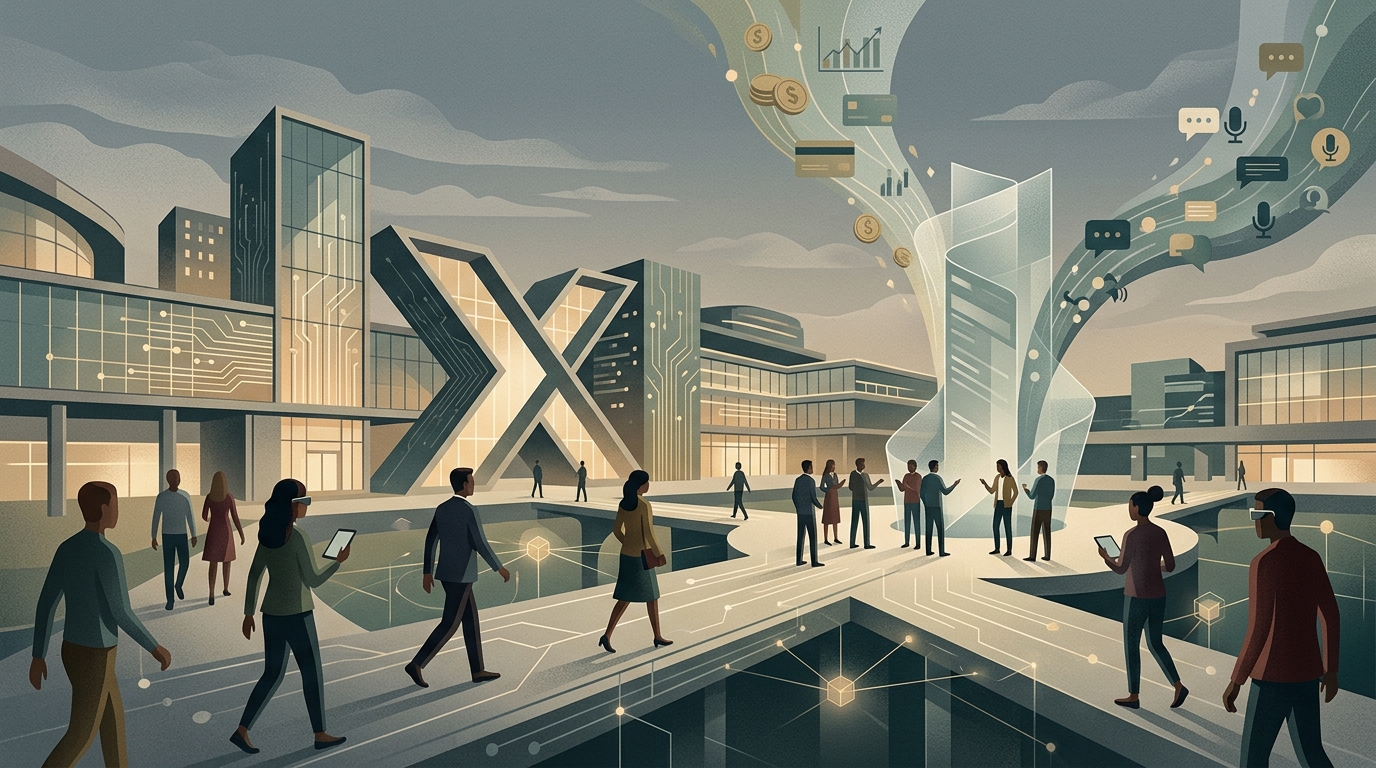
Musk’s strategy is not merely about adding a payment feature to a social network. It is a radical restructuring of how users interact with money, information, and communication. The goal is to create an 'Everything App,' modeled after China’s WeChat, where users never need to leave the X ecosystem to pay bills, invest in stocks, or send international remittances.
The Revival of X.com and the Banking Revolution
For those following Musk’s career, this move is no surprise. In 1999, he co-founded X.com, one of the first online banks, which later merged to become PayPal. When Musk acquired Twitter in 2022, he explicitly stated that the move was an 'accelerant' for creating X, the everything app. Today, having secured money transmitter licenses across dozens of U.S. states and partnering with major financial institutions, X is preparing to offer high-yield checking accounts and seamless peer-to-peer transactions.
The challenge, however, remains immense. The Western banking system is fragmented and heavily regulated, unlike the environment in which WeChat flourished in China. Regulators in the US and Europe are closely monitoring Musk’s moves, fearing the over-concentration of data and power within a single private entity.
"If done right, X will become the largest financial institution in the world," Musk has stated in internal meetings, highlighting his ambition to replace traditional banks with an algorithm.
Artificial Intelligence and the Personalized Economy
The key differentiator for X compared to traditional banks or even fintechs like Revolut is the integration of Artificial Intelligence via Grok. Musk’s AI will not just function as a chatbot but as a sophisticated financial advisor. It will analyze user spending, suggest real-time investment strategies, and automate payments based on conversation context or news consumed on the platform.
This convergence of social networking and finance creates a new paradigm. Imagine reading a news story about a new technology and being able to buy shares in the relevant company with one click, or tipping a content creator with zero friction. This eliminated 'friction' is the key to mass adoption.
The Trust Issue and the European Reality
Despite technological superiority, Musk’s biggest hurdle is trust. Following controversial changes in content policy and the departure of many advertisers, many users are hesitant to trust their savings to a platform often characterized by volatility. Furthermore, in the European Union, the strict framework of GDPR and the Digital Markets Act (DMA) poses significant obstacles to crossing social media data with banking data.
Traditional banking giants, from JPMorgan to HSBC, are not sitting idle. They are investing billions in their own digital transformation, betting on the security and stability offered by their decades of operation. The question is whether X’s ease of use will overcome the fear regarding data security.
In conclusion, X’s move into the banking market is a high-stakes experiment. If it succeeds, Musk will have created the most powerful tool in the history of capitalism: a platform that simultaneously controls the flow of information and the flow of money. If it fails, it will be a costly reminder that technology cannot always bend the rules of traditional economics and human psychology.