In the history of capitalism, few names have incited as much polarization as Elon Musk. Today, as we move through the first half of 2026, the South African-born visionary is not merely the wealthiest person on the planet; he is within striking distance of a milestone that once seemed like science fiction: a personal net worth of one trillion dollars. His journey is not just a tale of wealth accumulation, but a masterclass in how technological innovation, geopolitical leverage, and high-stakes marketing can forge a new paradigm of global power.
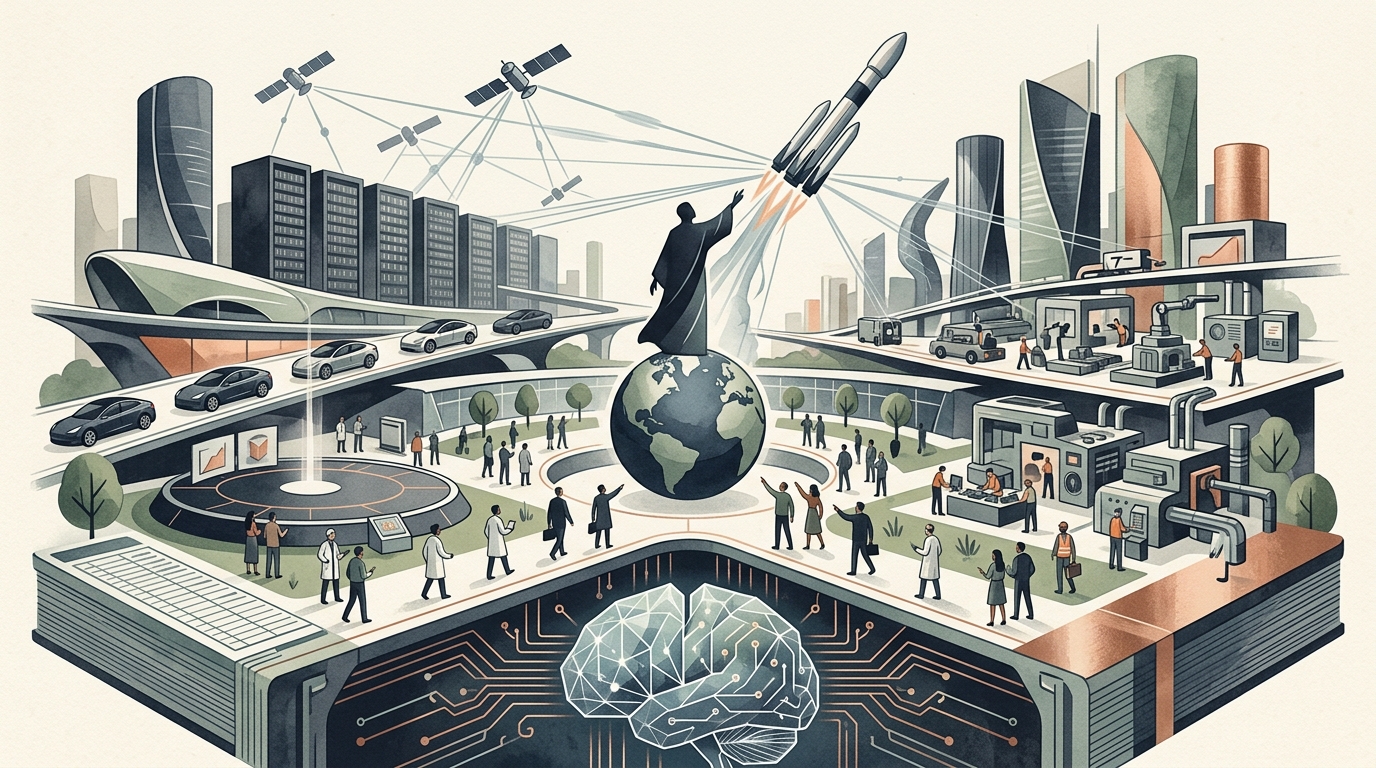
The Triple Engine of Wealth: Tesla, SpaceX, and xAI
The backbone of Musk's fortune remains Tesla. Despite the volatility of the electric vehicle (EV) market and surging competition from China, Tesla has successfully pivoted from being a mere car manufacturer to an AI and robotics powerhouse. The promise of Full Self-Driving (FSD) technology and the unveiling of the Optimus humanoid robot have convinced investors that the company's value is not measured by vehicle deliveries, but by its potential to dominate future infrastructure.
However, many analysts now view SpaceX as the "crown jewel" of his empire. With Starlink providing satellite internet to the remotest corners of the globe and Starship nearing full operational status for lunar and Martian missions, SpaceX holds a de facto monopoly on space transportation. The company's valuation has skyrocketed as the dependence of NASA and the Pentagon on Musk's services reinforces a steady stream of high-value revenue.
The latest addition to this empire is xAI. In a remarkably short period, Musk has raised billions in capital, leveraging data from the X platform (formerly Twitter) to train Grok. xAI is not just a competitor to OpenAI; it is the connective tissue of the Musk ecosystem, providing the intelligence for Tesla's robots and strategic data analysis for SpaceX operations.
The Risk Factor and Political Influence
Musk’s ascent was not built on technical prowess alone. He has consistently employed an "all-in" strategy, often investing his last cent into companies that were on the brink of bankruptcy. This approach has cultivated a loyal base of retail investors who see him as a leader defying the establishment. Simultaneously, his acquisition of X has provided him with the world’s most powerful megaphone, allowing him to sway markets and public opinion with a single post.
His political involvement, particularly in the United States, has drawn sharp criticism but has also ensured that his companies remain central to government contracts. From green energy subsidies to national security contracts, Musk has effectively made himself "too big to fail" for the American government, blending corporate interests with national policy.
Ethical Dilemmas and the Road Ahead
As Musk approaches the trillion-dollar mark, questions regarding the concentration of such immense power in a single individual are intensifying. Who holds accountable a man who owns the satellites above us, the data of our public discourse, and the autonomous vehicles on our streets? Musk's story is a stark reminder that in the 21st century, technology is the ultimate form of capital, and those who control it are the ones writing the rules of the game.
- Tesla remains the primary pillar of his wealth, despite market challenges.
- SpaceX dominates the space economy, with Starlink serving as a global infrastructure provider.
- xAI is emerging as a critical player in the generative AI race.
- Projections suggest his net worth could exceed $1 trillion by 2027 based on current growth rates.