In the high-stakes world of consumer technology, brand awareness is often as valuable as the innovation itself. For Dreame Technology, a Chinese company that emerged from the vast Xiaomi ecosystem, the path to the top isn't just paved with R&D breakthroughs, but also with the world’s most expensive television slots. The company’s recent decision to drop $10 million on a 30-second Super Bowl ad was more than a marketing stunt; it was a strategic manifesto aimed directly at the West.
The Obsession with Speed: From Motors to Hypercars
The core of Dreame’s identity isn't found in HEPA filters or dustbins, but in high-speed digital motors. Its founder, Yu Hao, a Tsinghua University graduate with a background in aerospace engineering, launched the company in 2017 with a singular, ambitious mission: to build the fastest motors on the planet. While traditional manufacturers struggled to hit 100,000 revolutions per minute (RPM), Dreame managed to surpass 150,000 and is now targeting 180,000 RPM.
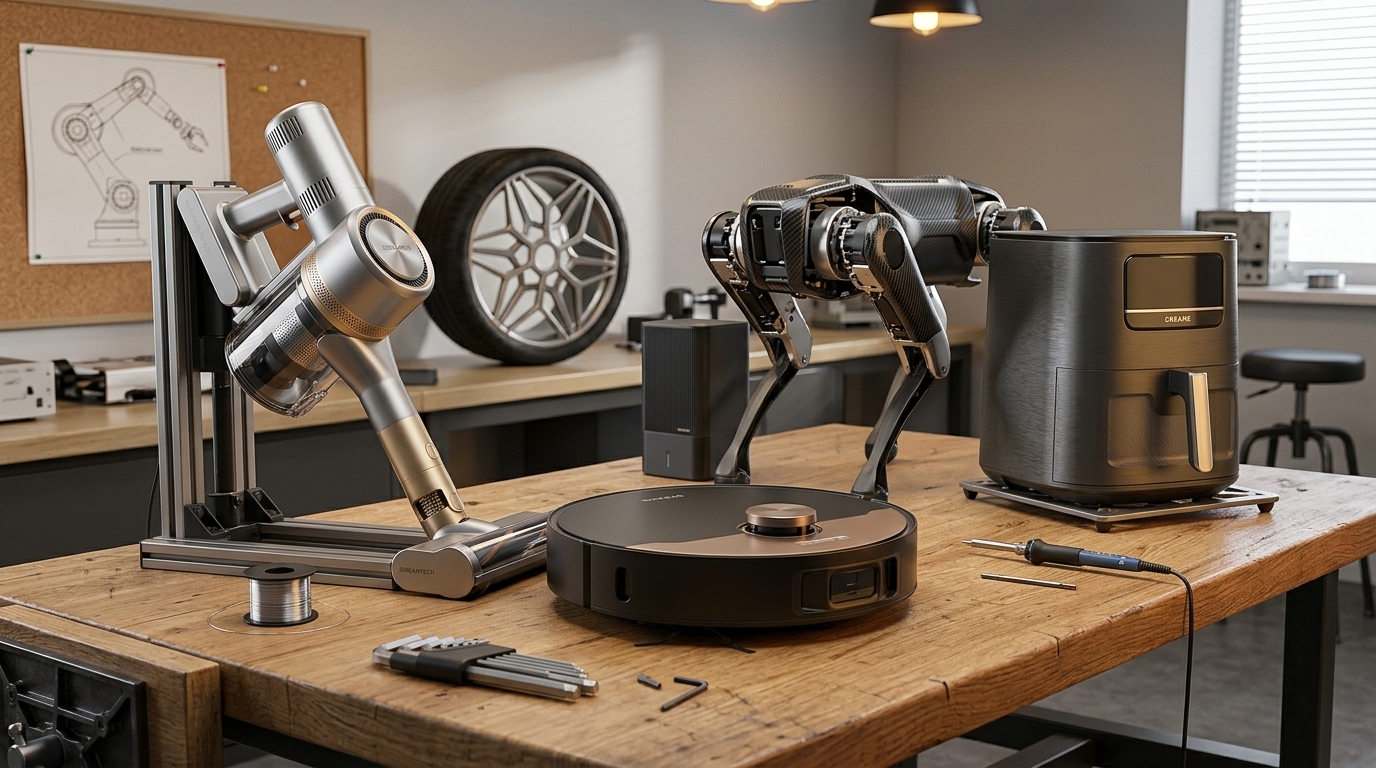
This technological edge in motor efficiency is what allows the company to dream far beyond floor cleaning. At its headquarters in Suzhou, Dreame isn't just iterating on robot vacuums and hair dryers. It is experimenting with exoskeletons, quadruped robots reminiscent of Boston Dynamics’ creations, and even the potential for high-performance hypercar components. The philosophy is clear: if you can master precision motion and power at a micro-scale, you can dominate any sector of robotics.
The Western Challenge and the Geopolitical Shadow
Despite its technical prowess, Dreame faces a formidable obstacle: its origin. In an era of escalating US-China trade tensions, where giants like Huawei and TikTok are under constant scrutiny, a Chinese company entering Western homes with cameras and LiDAR sensors inevitably raises data security concerns.
The Super Bowl strategy is part of a broader effort to "de-Sinicize" its brand image. Dreame is attempting to position itself as a global lifestyle tech player, akin to Dyson, rather than a budget manufacturer from the East. However, building trust requires more than expensive ads. It requires transparency in how home mapping data is processed and a demonstrable distance from Beijing’s state influence—a challenge that remains persistent for every major Chinese tech conglomerate.
From Utility to Luxury
One of the most intriguing aspects of Dreame's rise is its pricing strategy. Unlike many Chinese firms that enter Western markets by undercutting prices, Dreame is aiming for the premium segment. Its flagship robot vacuums retail for well over $1,000, placing them in direct competition with the likes of iRobot and Dyson.
This pivot toward luxury is backed by impressive aesthetics and a build quality that often outshines Western competitors. Dreame doesn't want to be the "alternative"; it wants to be the first choice. Investment in R&D is massive, with over 70% of its workforce employed in engineering roles. This human capital fuels a rapid product cycle, with the company introducing new technologies every six months, leaving traditional players scrambling to keep pace.
The Future: A Robotics Revolution?
As the robot vacuum market matures, the question is whether Dreame can make the next great leap. Entering the humanoid robotics market is the next logical step. If their motors can move robotic limbs with the same efficiency they use to create suction, Dreame could become a fundamental supplier for the "robot economy" of the next decade.
In conclusion, Dreame represents a new generation of Chinese companies that are no longer content with being the world's factory. They are ambitious, technologically sophisticated, and willing to risk enormous capital to capture the hearts and minds of global consumers. Whether it’s a vacuum that mops itself or a robotic arm assisting in a factory, Dreame is betting that the future will be powered by its motors.