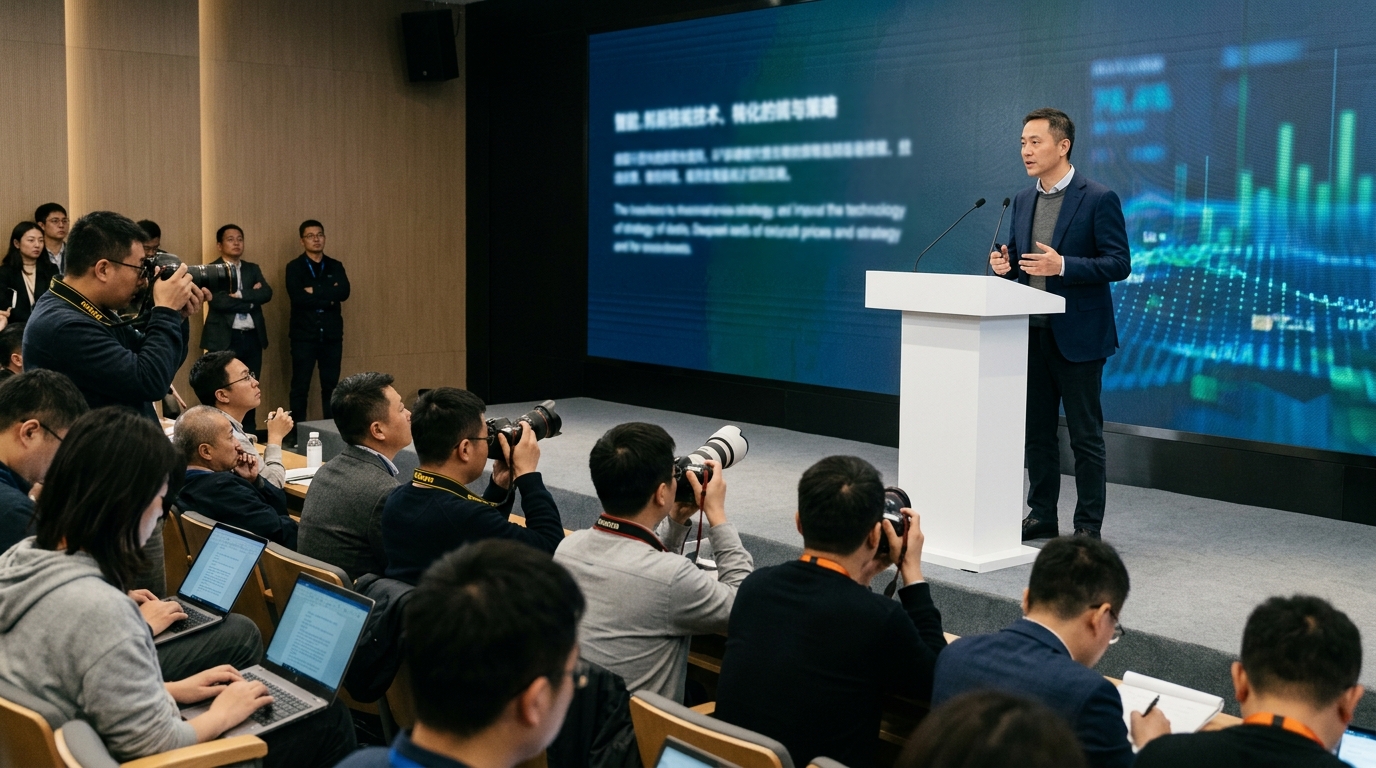
In the rapidly shifting landscape of global artificial intelligence, China appears to be doubling down on a strategy that blends aggressive pricing with technological self-reliance. DeepSeek, one of the most formidable players in the Large Language Model (LLM) ecosystem, has announced a drastic 75% price reduction for its flagship models. This move is more than just a commercial pivot; it is a geopolitical statement, coinciding with a significant expansion of its infrastructure utilizing Huawei’s domestic Ascend processors as a direct challenge to Nvidia’s global dominance.
The Economics of Aggressive Deflation
DeepSeek's decision to slash token costs for its top-tier models sends a shockwave through the industry. In a market where giants like Alibaba, Baidu, and ByteDance are already locked in a fierce battle for supremacy, DeepSeek is choosing to commoditize intelligence. By lowering the barrier to entry, the company aims to become the foundational layer for thousands of startups and developers, effectively squeezing the margins of its competitors to unsustainable levels.
Analysts suggest that this 'scorched earth' pricing strategy is designed to capture market share rapidly and establish DeepSeek’s ecosystem as the de facto standard in China. When the cost of processing millions of tokens drops to a fraction of what American counterparts like OpenAI or Anthropic charge, the economic calculus for enterprises shifts. For many, the sheer cost-efficiency of DeepSeek’s offerings may outweigh the brand prestige of Western alternatives.
The Huawei Pivot: Resilience Under Sanctions
Perhaps the most significant aspect of this announcement is the deepening integration with Huawei. As the United States continues to tighten export controls on high-end Nvidia chips, Chinese AI labs are forced to innovate under duress. DeepSeek’s expansion into Huawei’s Ascend 910B and 910C chipsets demonstrates a maturing domestic supply chain.
- Hardware-Software Co-optimization: DeepSeek isn't just running on Huawei silicon; it is engineering its models to exploit the specific nuances of the Ascend architecture.
- Breaking the CUDA Monopoly: This shift proves that high-performance AI is achievable without total reliance on Nvidia’s proprietary CUDA software stack.
- Sovereign Infrastructure: By scaling on domestic chips, DeepSeek insulates itself from future geopolitical shocks and potential total embargoes.
The success of this transition is a milestone for Beijing’s vision of technological sovereignty. If DeepSeek can deliver world-class AI performance at a lower price point using domestic hardware, the narrative that U.S. sanctions would effectively 'cripple' Chinese AI progress begins to lose its teeth.
Innovation Through Constraint: The MoE Advantage
How does DeepSeek manage such radical price cuts without compromising performance? The secret lies in its sophisticated use of the Mixture-of-Experts (MoE) architecture. Rather than activating the entire neural network for every query, MoE only engages the relevant 'experts,' drastically reducing compute requirements and energy consumption. DeepSeek has pioneered techniques like Multi-head Latent Attention (MLA), which allows for faster inference and significantly lower memory overhead.
"Efficiency is no longer an option; it is the only path to survival in a resource-constrained environment," noted industry observers regarding DeepSeek's technical direction.
This focus on 'resource efficiency' is what increasingly defines Chinese AI research. While Silicon Valley often solves problems through brute-force scaling and massive compute clusters, DeepSeek is forced to innovate through smarter algorithmic design that extracts maximum utility from available, albeit less powerful, hardware.
Global Implications and the Path Ahead
DeepSeek’s move is expected to trigger a global chain reaction. In the West, AI providers will face a new reality where the cost of 'intelligent tokens' trends toward zero. This could accelerate AI adoption across industries but will simultaneously force companies to find revenue in specialized services rather than simple model access.
Furthermore, the proven efficacy of Huawei’s Ascend chips in training and running large-scale models could pave the way for China to export these integrated AI solutions to other nations seeking to reduce their dependence on U.S. technology. The 'chip war' is entering a new, more complex phase where software optimization is the key to unlocking the power of domestic hardware, potentially redrawing the map of global technological influence.