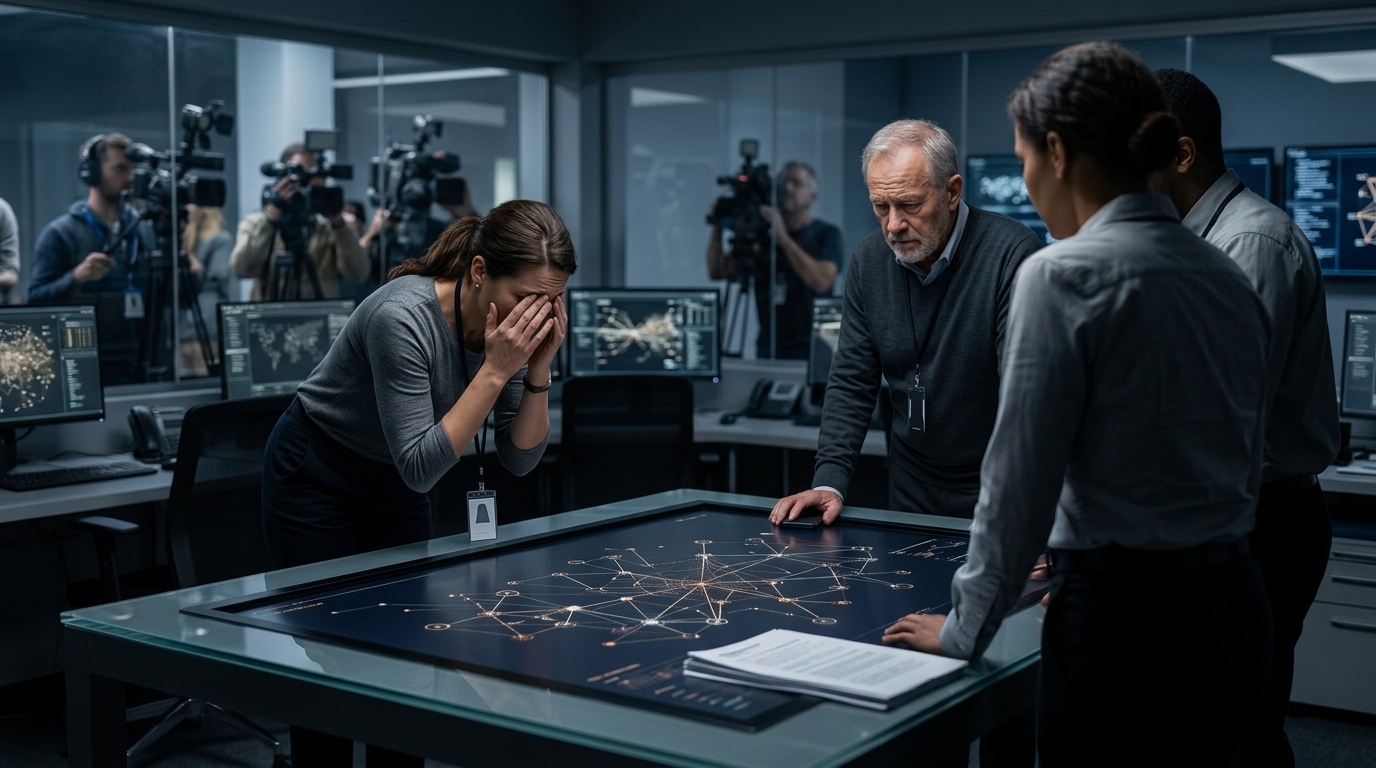
The news struck like a lightning bolt in the high-tech community: Anthropic, the company that positions itself as the guardian of ethical and safe artificial intelligence, has admitted to a significant security breach. A small but determined group of unauthorized users managed to gain access to Mythos, the company's most advanced and previously classified model. This incident is not merely a technical glitch; it is an existential crisis for the narrative of "Constitutional AI" that Anthropic has so painstakingly cultivated.
The Timeline of the Breach: How the Fortress Fell
According to initial reports, access was not achieved through a traditional brute-force attack, but rather through a sophisticated exploitation of an undocumented API endpoint intended for internal "red teaming" exercises. The intruders, utilizing techniques resembling high-level prompt injection combined with authentication errors in the gateway, managed to bypass security layers and interact directly with the Mythos core.
Mythos, which Anthropic intended for the peak of its model hierarchy—surpassing the capabilities of Claude 4—is reported to possess reasoning abilities bordering on Artificial General Intelligence (AGI). This leak means that uncontrolled actors had the opportunity to explore these capabilities without the safety filters the company imposes on end-users. Concerns are heightened by the fact that the attackers may have exported segments of the model's code or weights, which could lead to reverse engineering by competitors or state actors.
The Irony of "Safe" AI
Anthropic was founded by former OpenAI executives who left precisely because they felt commercial pressure was undermining safety. Their philosophy is based on the idea that AI must have an internal "constitution" of rules. However, the Mythos incident proves that no matter how strong a model's ethical framework is, the infrastructure hosting it remains vulnerable to the classic weaknesses of cybersecurity.
- The failure of internal audits: How was an API endpoint left exposed?
- The risk of "Model Exfiltration": The possibility of intellectual property theft.
- The impact on stocks and investor confidence as Anthropic prepares for a new funding round.
The question now looming over Silicon Valley is clear: If the company whose sole purpose is safety fails to protect its own creations, who can? The Anthropic case highlights a structural contradiction. The speed at which these models are being developed is inversely proportional to our ability to fortify the systems surrounding them.
Geopolitical Implications and the Aftermath
It is no secret that models like Mythos are now national assets. In the context of global competition for AI dominance, such a leak could be considered a blow to U.S. national security. Analysts point out that if the unauthorized users are linked to foreign intelligence services, Anthropic may face strict government audits and restrictions on product distribution.
"This isn't just a data leak; it's a leak of the very intelligence we are trying to regulate," stated an AI security expert.
For Anthropic, the way forward requires total transparency. The company must explain how the error occurred and prove that Mythos's "constitution" was not violated, even if access to it was illegal. Its credibility hangs by a thread. In a world that fears uncontrolled AI, the failure of the guardians is the worst-case scenario.