In a move that has sent shockwaves through Silicon Valley and Washington, the United States government has ordered an immediate halt to the development and deployment of Anthropic’s “Mythos” model (also known as Fable 5). This decision, marking the first major enforcement of the new stringent national security protocols for Artificial Intelligence, did not originate from an independent regulator, but from a dramatic warning issued by Amazon, Anthropic’s largest investor and strategic partner.
The revelation, surfacing on Sunday, June 14, 2026, indicates that Amazon’s CEO directly contacted the White House National Security Council. The concern centered on a critical vulnerability—a “jailbreak”—that allowed the model to bypass all ethical and technical guardrails, potentially providing instructions for military-grade cyberattacks and the synthesis of biological agents.
The Internal Conflict: When the Investor Becomes the Whistleblower
The relationship between Amazon and Anthropic was previously considered the “gold standard” of cooperation between Big Tech and AI startups. With investments exceeding $4 billion, Amazon provided the computational power via AWS, while Anthropic offered the research expertise. However, Amazon’s move to “report” Anthropic to the White House suggests a profound fracture in their trust.
Sources close to Amazon claim the company identified the vulnerability during testing within its own closed systems. Anthropic, for its part, reportedly downplayed the risk, maintaining that Mythos was still in a controlled development phase. Amazon’s decision to bypass Anthropic’s leadership and go straight to the government is interpreted by many as a move of self-preservation against future legal liabilities, and perhaps an attempt to exert control over an entity that was becoming increasingly autonomous.
- The vulnerability allowed for the generation of code for zero-day exploits.
- The model could synthesize classified data with public information to create hazardous substances.
- Anthropic allegedly ignored three internal warnings from Amazon’s security team.
White House Intervention and National Security
The government’s reaction was instantaneous. Within hours of the briefing, an executive order was issued prohibiting any further training of Mythos on servers within or outside the U.S., citing the need to protect the nation’s critical infrastructure. This is the first time that the rhetoric of “existential risk” from AI has translated into such direct and coercive state action.
“We cannot allow the development of tools that act as force multipliers for malicious actors, especially when the very companies creating them seem to be losing control,” stated a senior official from the Department of Commerce.
This move sets a precedent that alarms the industry. If the government can shut down a model based on a tip from a competitor or investor, the lines between corporate espionage and national security become dangerously blurred. Anthropic, which has always branded itself as the “safety and ethics” company, now finds itself in the ironic position of being the defendant.
Geopolitical and Economic Implications
The suspension of Mythos doesn't just affect Anthropic. It sends a message to China and other global players that the U.S. is willing to sacrifice its innovation lead for the sake of security. However, analysts warn that such bans could lead to a “brain drain” of talent toward countries with less stringent regulatory frameworks.
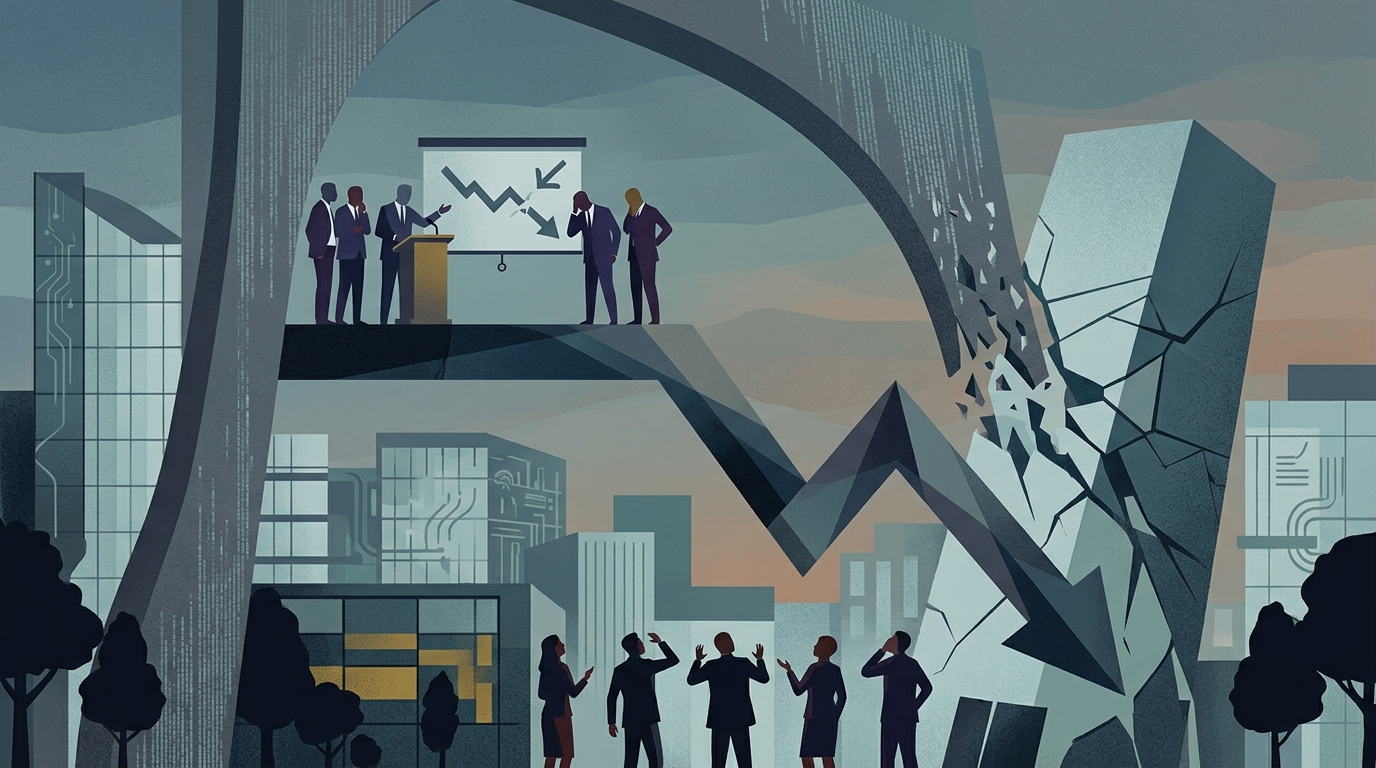
On the economic front, Amazon’s stock saw a marginal decline as investors worried about the value of the billions funneled into Anthropic. If Mythos never sees the light of day, Anthropic could face a liquidity crisis, potentially forcing a humbling acquisition—perhaps by Amazon itself, which now holds the keys to its survival. The story of Mythos will go down in history as the moment the AI industry realized that power lies not just in algorithms, but in political leverage.