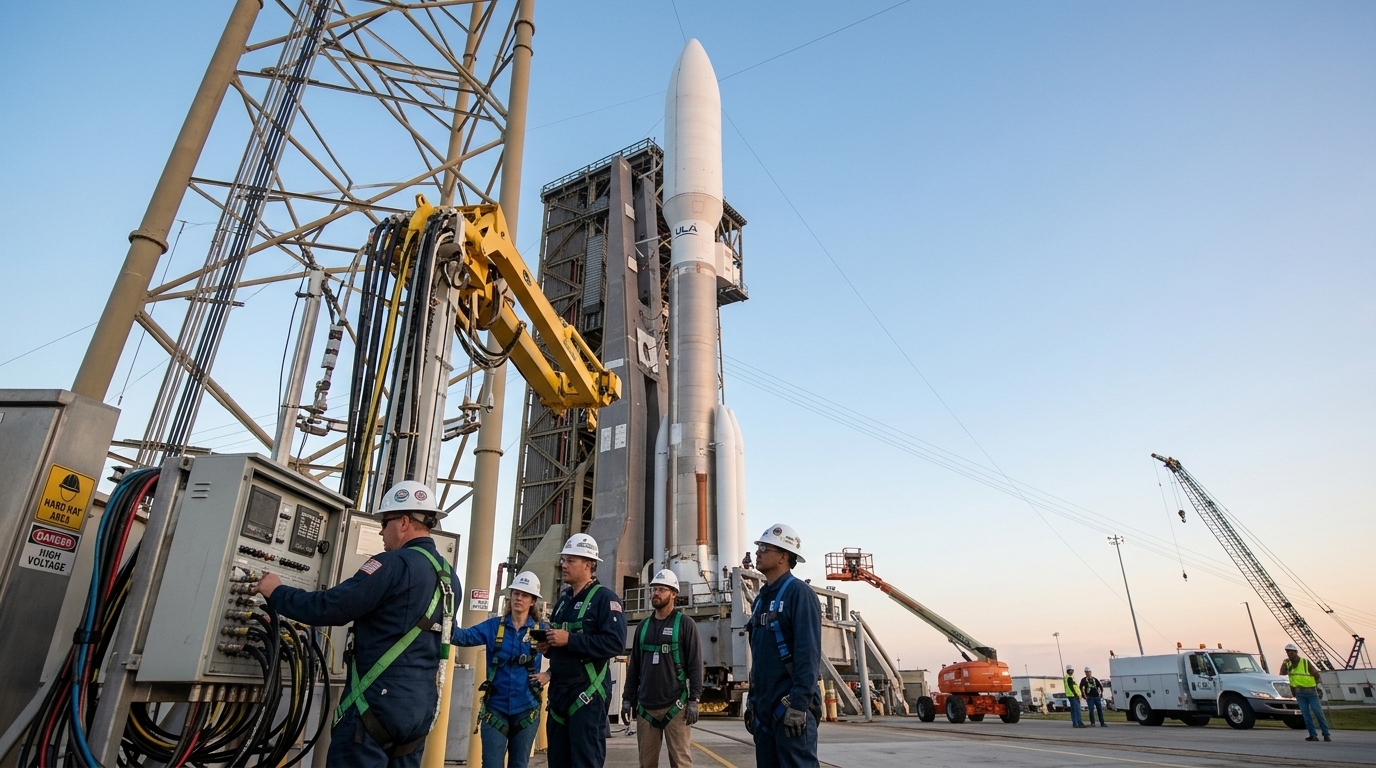
The era of total connectivity is entering a new, highly competitive phase. Amazon, under the Project Kuiper umbrella, has announced it now possesses the necessary number of Low Earth Orbit (LEO) satellites to begin commercial internet services. With over 390 satellites already orbiting above us, Jeff Bezos's tech giant is preparing to challenge the dominance of SpaceX's Starlink in a battle set to reshape the global telecommunications map.
The Strategic Importance of Project Kuiper
For Amazon, Project Kuiper is not merely an attempt to provide internet to remote areas; it is a strategic expansion of its ecosystem. The service, set to launch commercially under the name 'Amazon Leo,' aims to connect millions of households, businesses, and government agencies that currently lack reliable access. Integration with AWS (Amazon Web Services) offers a unique advantage: providing secure, low-latency connections directly to the company's data centers.
The technology utilized by Amazon relies on advanced satellites equipped with optical inter-satellite links (OISLs). This allows satellites to communicate with each other in space, transferring data at the speed of light without needing to constantly relay back to ground stations. This 'mesh network' in space ensures greater coverage and stability, particularly over oceans or remote deserts where ground infrastructure is non-existent.
Competition with Starlink and Regulatory Hurdles
Elon Musk's SpaceX has a significant head start, having deployed thousands of Starlink satellites. However, Amazon is betting on the quality of its infrastructure and its deep penetration into the consumer market. Amazon's user terminals (dishes) promise to be smaller, more efficient, and more affordable, with speeds expected to reach or exceed 1 Gbps for residential users.
A critical factor is compliance with the U.S. Federal Communications Commission (FCC) requirements. Under its license, Amazon must launch at least half of its planned 3,236 satellites by July 2026. The current success with 390+ satellites marks the first major milestone, proving that the supply chain and partnerships with launch providers like United Launch Alliance (ULA) and Blue Origin are yielding results.
Economic and Social Implications
Amazon's entry into the LEO market is expected to drive prices down, benefiting consumers worldwide. Furthermore, the ability to provide internet to maritime, aviation, and logistics sectors will radically transform global trade. In regions with challenging geography, such as the Greek islands or the mountainous Balkans, these services can solve long-standing connectivity issues for remote communities.
- Bridging the global digital divide.
- Enhancing network resilience during natural disasters.
- New opportunities for remote work and telemedicine in non-urban areas.
However, the proliferation of objects in orbit raises concerns regarding space debris and light pollution affecting astronomical observations. Amazon maintains that its satellites are designed to fully de-orbit and burn up in the atmosphere at the end of their life cycle, minimizing their environmental footprint.
The Future of the Space Economy
As we move through 2026, the battle for celestial dominance will intensify. Amazon does not view Project Kuiper as a standalone product, but as the connective tissue for the smart home (Alexa), e-commerce, and enterprise solutions. If the 'Leo' service can deliver the reliability it promises, Starlink will face a rival with nearly unlimited resources and a customer base that already trusts the Amazon brand for daily needs.
"Space is no longer the final frontier; it is the new infrastructure for the global economy," industry analysts suggest.
In conclusion, the activation of the Leo service signals the end of SpaceX's monopoly on LEO broadband. The next two years will be pivotal in determining whether Amazon can scale its production and launches fast enough to meet the burgeoning demand visible on the horizon.