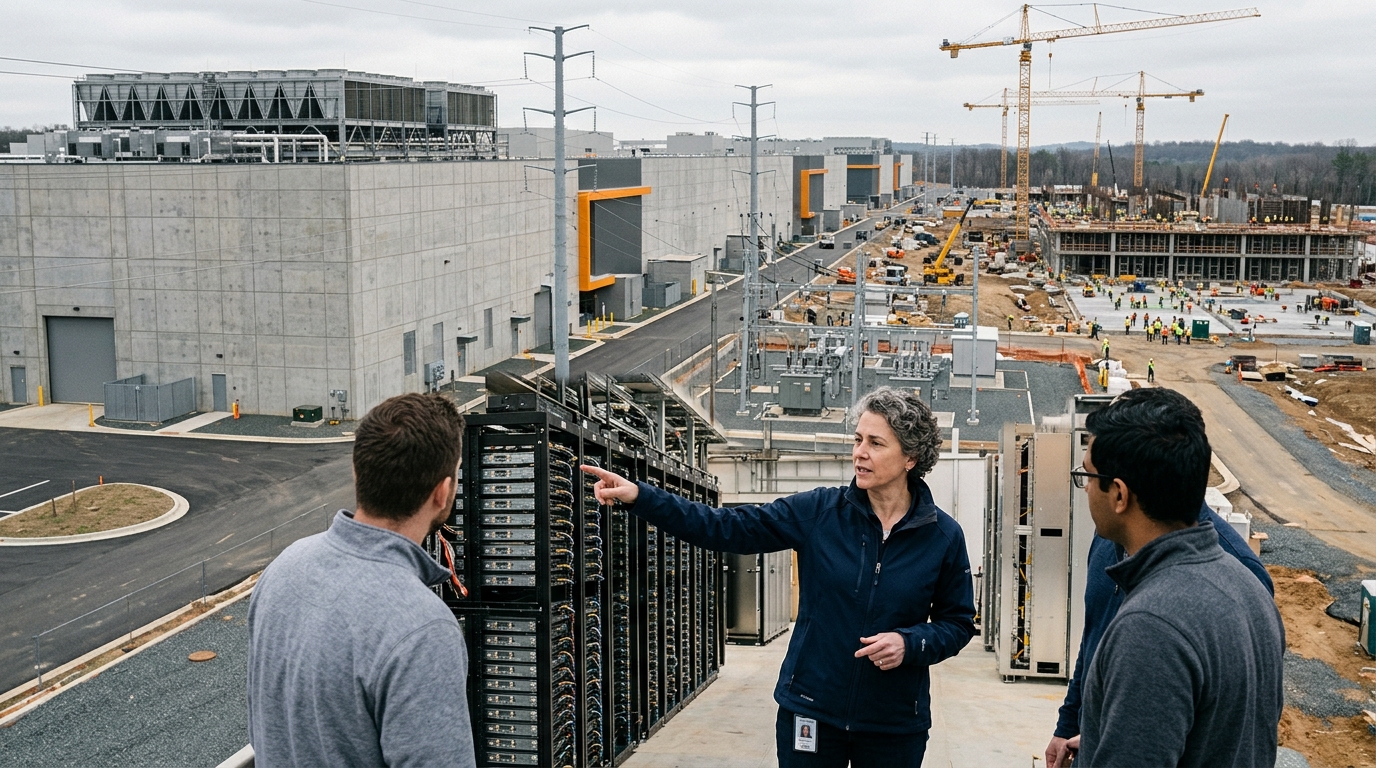
In the annals of capitalism, we have rarely witnessed a single corporation commit capital of this magnitude in such a condensed timeframe. Amazon, the e-commerce titan turned cloud sovereign, has unveiled an investment roadmap totaling $200 billion over the next decade, dedicated almost exclusively to Artificial Intelligence (AI) infrastructure. This move is not merely a business expansion; it is a strategic fortification against the encroaching dominance of Generative AI across every sector of the economy.
The Architecture of Dominance: Where is the Money Going?
The figure of $200 billion is difficult for the human mind to grasp. To put it in perspective, it exceeds the GDP of many European nations. Amazon Web Services (AWS), the company's profit engine, is channeling these funds into three primary pillars: the construction of massive data centers, the procurement of energy resources, and the development of proprietary semiconductors. The demand for computational power has skyrocketed, as Large Language Models (LLMs) require billions of parameters to be trained and executed efficiently.
Amazon’s strategy diverges from its rivals, such as Microsoft and Google, through its heavy emphasis on "custom silicon." While Nvidia remains the world's premier GPU provider, Amazon is investing billions in its own chips, Trainium and Inferentia. This allows them to offer lower costs to AWS customers while simultaneously reducing their dependency on Nvidia’s supply chain, which currently represents the industry's most significant bottleneck.
The Energy Question and the Geopolitics of Power
An often-overlooked aspect of this investment is energy. AI data centers consume up to ten times more electricity than traditional cloud facilities. Amazon has become one of the world's largest corporate buyers of renewable energy, yet the challenge remains: how to fuel this digital revolution without collapsing local power grids? The company is now exploring solutions that include Small Modular Reactors (SMRs), signaling that the race for AI is, in reality, a race for energy sovereignty.
- Securing strategic locations for global data center clusters.
- Investing in advanced cooling technologies to mitigate environmental impact.
- Forging long-term agreements with energy providers for 24/7 stability.
What This Means for Investors: Risk or Reward?
For Wall Street, the burning question is whether this massive capital expenditure (Capex) will yield a sufficient Return on Invested Capital (ROIC). Investors often fret over the short-term compression of Free Cash Flow. However, Amazon’s history has demonstrated that bold infrastructure bets—much like the early days of Prime and the original AWS—create impenetrable competitive moats. Amazon isn't just selling AI software; it is selling the "factory" in which the future economy will be built.
"Artificial Intelligence is not just a new product category; it is the new infrastructure of the global economy." – Goldman Sachs Analyst
In conclusion, Amazon is betting that whoever controls the infrastructure controls the ecosystem. While the risks of overcapacity or technological obsolescence are real, the $200 billion scale makes it nearly impossible for smaller players to enter the arena, solidifying an oligopolistic structure in the AI cloud market for years to come.