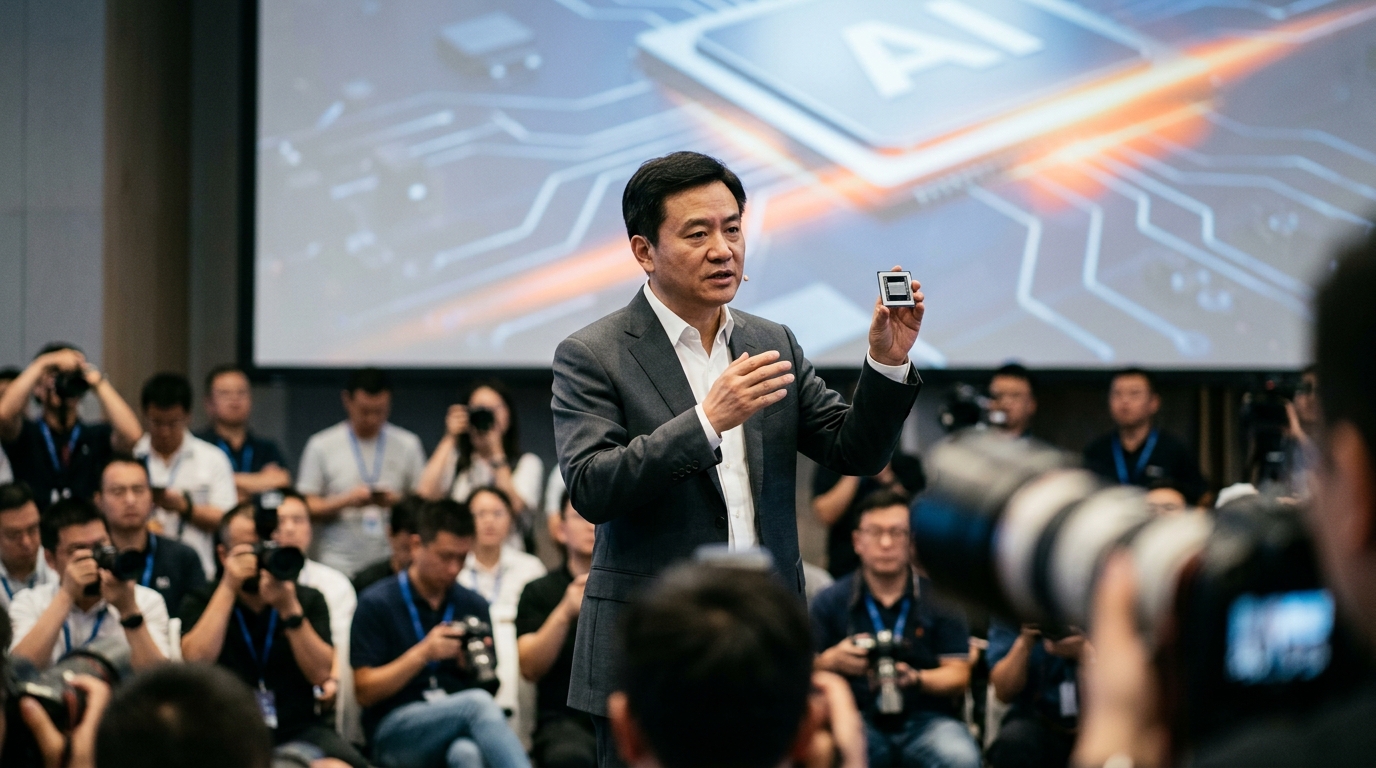
In a move that significantly reshapes the landscape of global technological power, Alibaba Group Holding Ltd. has unveiled its latest silicon marvel: the Zhenwu chip. This development is far more than a mere hardware iteration; it is a strategic declaration of independence. As the United States tightens export controls on advanced AI semiconductors, China’s tech titans are accelerating their pursuit of domestic self-reliance. The Zhenwu chip, engineered by Alibaba’s dedicated semiconductor arm, T-Head (Pingtouge), aims directly at the heart of Nvidia’s dominance, promising high-performance capabilities for both AI training and inference.
The Sovereignty Strategy and the T-Head Division
Alibaba is no stranger to custom silicon. Following the success of its Yitian 710 server processor, the Zhenwu chip represents the next logical step in the company's vertical integration strategy. T-Head has invested billions to bridge the technological chasm with the West. The Zhenwu is specifically optimized for the Alibaba Cloud ecosystem, allowing the company to offer AI services at a fraction of the cost associated with imported hardware.
Technical analysis suggests that Zhenwu prioritizes energy efficiency and interconnect bandwidth—two critical metrics for running Large Language Models (LLMs). In a world where access to Nvidia’s H100 and B200 GPUs is increasingly restricted for Chinese entities, Zhenwu provides a viable alternative that keeps China in the race for Generative AI supremacy. By controlling the full stack from silicon to software, Alibaba is insulating itself from external supply chain shocks.
Market Implications and BABA Stock Performance
For investors, this news serves as a beacon of hope following years of regulatory and geopolitical volatility for Alibaba’s stock (BABA). The ability to produce proprietary hardware reduces reliance on foreign vendors and significantly improves the margins of Alibaba Cloud. Analysts suggest that if Alibaba can replace even 30% of its GPU requirements with internal designs, the capital expenditure savings would be monumental.
- Reduction in operational costs for Cloud and AI divisions.
- Increased institutional confidence in Alibaba’s R&D capabilities.
- Competitive pricing advantages for Chinese AI startups using Alibaba’s infrastructure.
However, the manufacturing elephant in the room remains. While Alibaba can design the Zhenwu, fabrication requires advanced lithography processes largely controlled by firms like TSMC, which must comply with US regulations. A partnership with China's SMIC (Semiconductor Manufacturing International Corp) is the most likely path forward, though scaling 7nm and 5nm production remains a formidable hurdle for domestic foundries.
The Nvidia Rivalry and the Global Chip War
Nvidia remains the undisputed global leader, but the emergence of Zhenwu indicates that its monopoly is beginning to fracture, at least within the Chinese domestic market. Alibaba is not just competing with Nvidia; it is also in a fierce rivalry with domestic peers like Huawei (with its Ascend series) and Baidu (with the Kunlun chip). The battle for AI hardware supremacy in China will determine who controls the next generation of digital services in Asia.
"Technological sovereignty is no longer about software dominance; it is about who owns the silicon upon which intelligence runs," notes a Beijing-based technology analyst.
In conclusion, the Zhenwu chip is more than just a piece of hardware. It is the instrument through which Alibaba seeks to redefine itself as an AI-first powerhouse while safeguarding its interests against geopolitical headwinds. For BABA shareholders, the success of Zhenwu could be the catalyst for a long-term valuation rerating, turning a political liability into a technological moat.