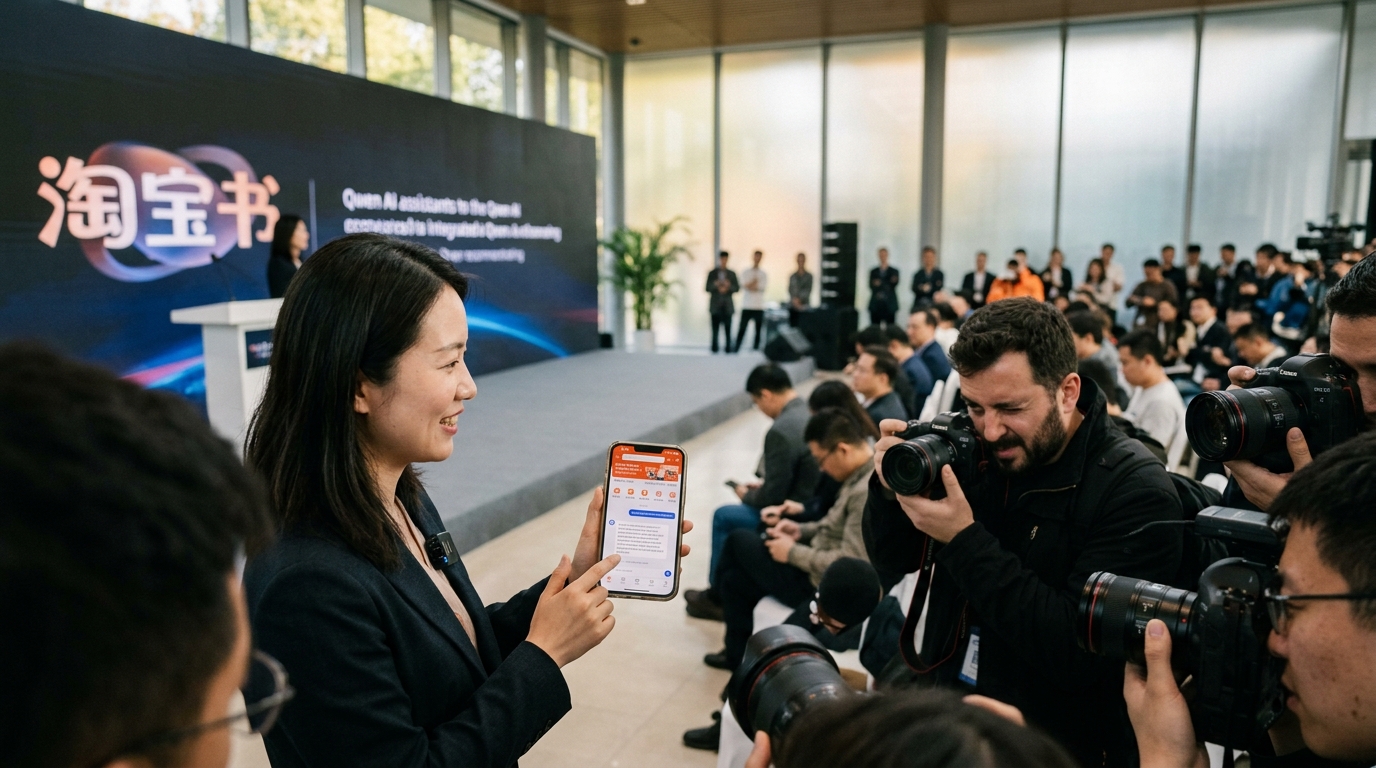
In the heart of Hangzhou, where the pulse of Chinese tech giant Alibaba beats strongest, a quiet revolution is nearing completion. The announcement that Qwen (Tongyi Qianwen), the company’s sophisticated Large Language Model (LLM), will be embedded directly into the Taobao ecosystem is more than just a technical patch. It marks the official commencement of a new era in global e-commerce, where product discovery ceases to be a static keyword-based process and evolves into a dynamic dialogue.
From Search Bars to Personal Concierges
For decades, e-commerce has operated under a specific hierarchy: the user types a need, the algorithm returns results, and the user manually filters through choices. By embedding Qwen, Alibaba aims to eliminate this friction. The new AI assistant within Taobao won't just suggest products; it will understand complex, contextual queries such as "I need camping gear for a humid mountain trip for three days that can fit in a compact car."
The system synthesizes millions of user reviews, technical specifications, and real-time inventory data to provide a curated solution. This transition from "search-based" to "conversation-based" commerce allows Alibaba to reclaim the personalized service advantage traditionally held by brick-and-mortar stores, but at the infinite scale and speed of the internet.
Empowering Merchants and Enhancing Productivity
Alibaba’s strategy isn't solely consumer-facing. The Qwen integration provides the platform's millions of merchants with generative AI tools that previously required dedicated marketing teams. Sellers can now generate product descriptions, advertising copy, and edit professional-grade imagery through simple voice or text prompts.
Furthermore, Qwen will act as a 24/7 customer service representative for small-scale shops. It can handle complaints, explain return policies, and assist with sizing queries, drastically reducing operational overhead. In a period where competition from Pinduoduo and ByteDance’s Douyin is intensifying, providing these high-level tools is essential for maintaining merchant loyalty within the Alibaba ecosystem.
The Strategic Chessboard and Competitive Edge
This move comes at a pivotal moment. Alibaba has been under pressure from newer players who utilize "discovery" algorithms rather than traditional search. By integrating Qwen, the company is attempting to transform Taobao from a shopping destination into a "lifestyle inspiration" hub. The AI's ability to synthesize content and suggest solutions before a user explicitly asks for them is the key to increasing "dwell time" within the app.
However, significant hurdles remain. Managing the massive data throughput and the computational power required to serve hundreds of millions of concurrent users with LLMs is a gargantuan task. Additionally, China’s regulatory landscape regarding AI ethics and data privacy is stringent, forcing Alibaba to navigate a fine line between aggressive innovation and state compliance.
Conclusion: The Future of Retail
The integration of Qwen into Taobao signals the end of the "passive catalog" era. The future of retail is active, predictive, and deeply personal. If Alibaba can convince users that its AI assistant is a trusted advisor rather than just a sales tool, it will have redefined the rules of the game for the next decade. The battle for AI supremacy is no longer being fought in laboratories alone; it is being won or lost in the shopping carts of millions.