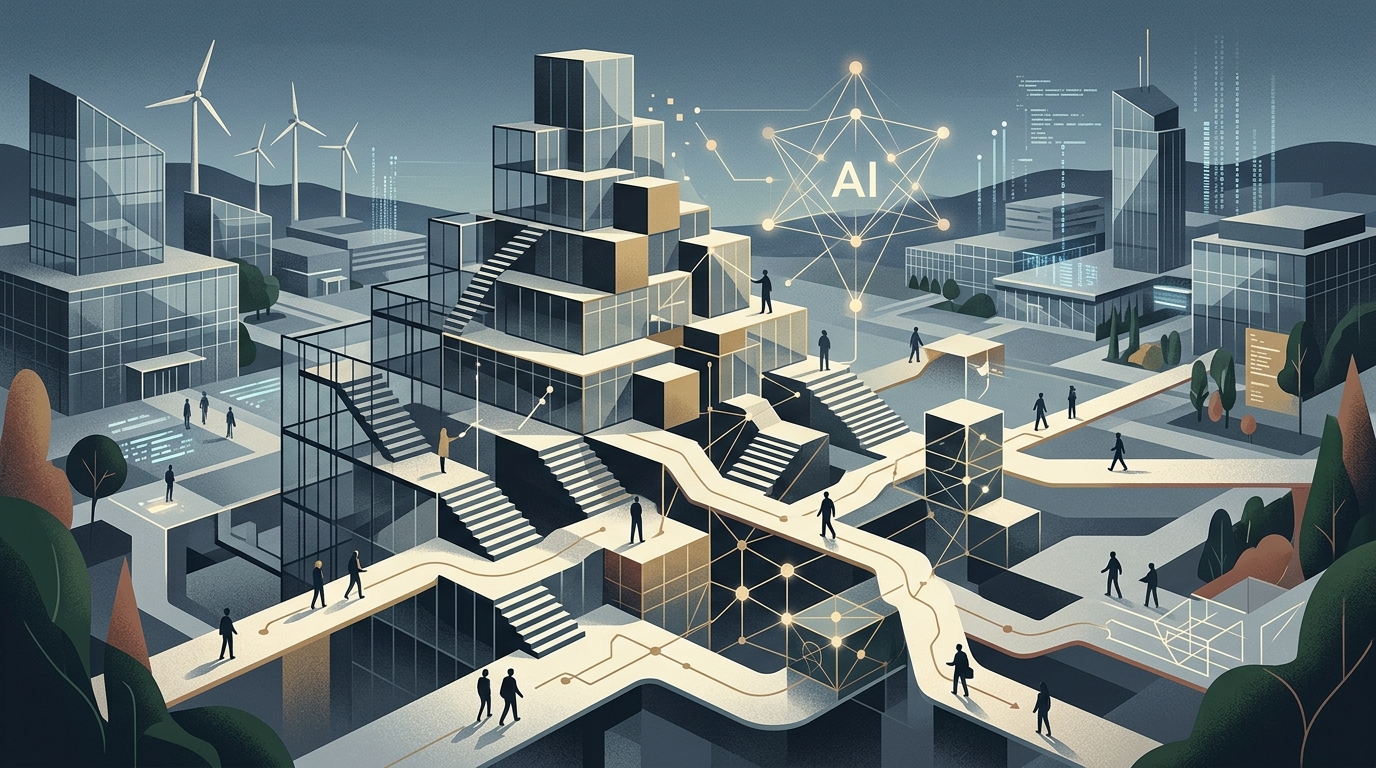
Silicon Valley is undergoing one of the most radical transformations in its history, and this time it’s not just about what it produces, but how power is structured within its walls. Brian Chesky, co-founder and CEO of Airbnb, in recent statements, described a new reality that should send shivers of excitement—or dread—down the spine of every middle manager in tech. The revelation that nearly 60% of Airbnb’s code is now generated with the help of Artificial Intelligence is not just an efficiency statistic; it is the death certificate for the "manager-as-supervisor" model.
The Dethroning of Middle Management
For decades, the success of a tech company was measured by headcount. The more engineers you had, the more managers you needed to coordinate them. Chesky argues that this era is over. In the new world of AI, a single developer, armed with advanced code-generation models, can perform work that previously required an entire team. This creates a "flat" hierarchy where the role of the middle manager, who functioned as a conduit for information between leadership and execution, becomes redundant.
According to Chesky, Airbnb has already begun merging roles that were traditionally seen as distinct. The elimination of the product management department as a separate entity and its integration into product marketing is a prime example. "We don't need people who just move messages from one room to another," he stated. AI is taking over the role of the coordinator, allowing builders to communicate directly with strategic leadership.
Code as a Commodity and the Rise of the "Full-Stack" Human
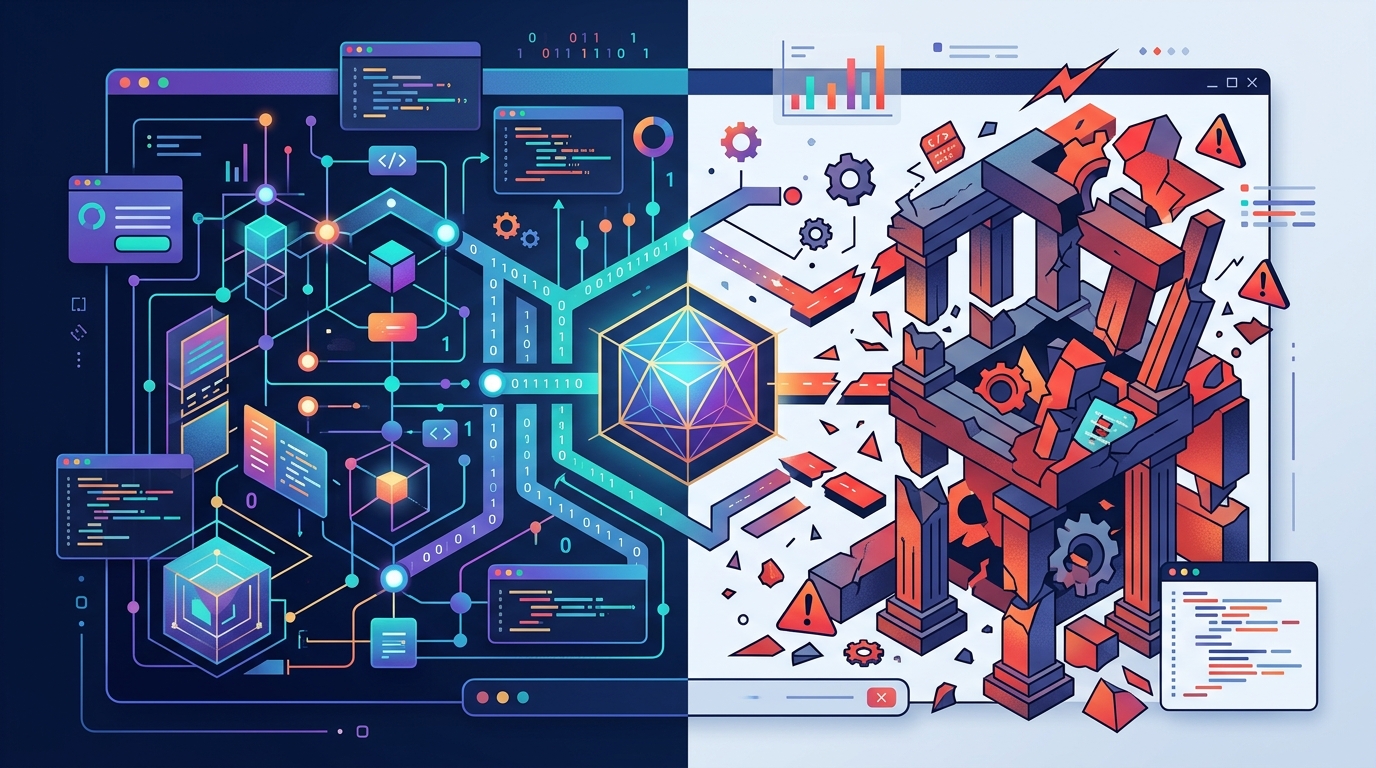
The fact that 60% of code is AI-generated changes the very nature of programming. Coding is shifting from an art of syntax to an art of curation and architecture. Airbnb’s developers are no longer sitting and writing boilerplate code for hours; instead, they act as editors-in-chief, reviewing AI suggestions and ensuring the system's logic remains robust. This shift requires a new type of worker: the "Full-Stack" professional who understands code, design, and market needs simultaneously.
- Routine Automation: AI handles debugging and the writing of basic functions.
- Focus on Creativity: Humans are freed to solve complex user experience problems.
- Technical Debt Reduction: AI tools can refactor legacy code faster than any human team.
However, this evolution carries risks. Over-reliance on generated code could lead to product homogenization or security vulnerabilities that AI cannot predict without human intuition. Chesky remains optimistic but emphasizes that leadership must be "closer to the metal" than ever before.
The Cultural Clash in Silicon Valley
Airbnb’s approach is not an isolated incident. From Mark Zuckerberg’s Meta, which declared the "Year of Efficiency," to Nvidia, the message is clear: the era of corporate bloat is over. AI provides CEOs with the perfect excuse—and the tool—to shed the bureaucratic layers accumulated over the last decade. Resistance, however, is strong. Many employees see this trend as an attempt to undermine labor rights and intensify workloads.
"AI will allow smaller teams to do much bigger things. This means the way we run our companies has to change fundamentally," Brian Chesky.
In conclusion, Silicon Valley isn't just changing its software; it's changing its governance operating system. The hierarchy of the future will be less of a pyramid and more of a constellation of highly skilled individuals supported by powerful digital tools. For Chesky, Airbnb is the experiment that will show whether a billion-dollar company can operate with the mindset of a lean startup, thanks to AI.