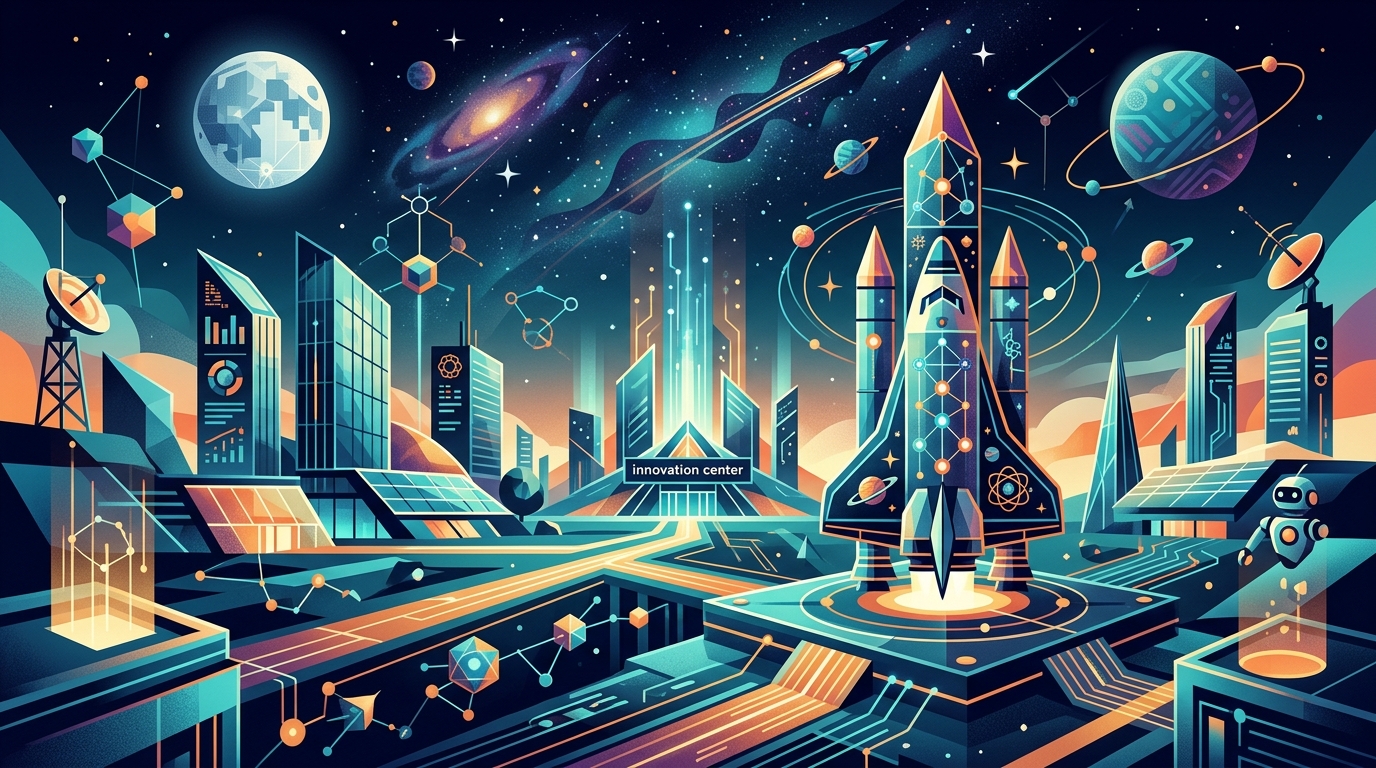
When I think of the Labyrinth, I think of a closed system—a masterpiece of containment. But the announcement of the alliance between SpaceX and Anthropic represents the exact opposite: an expansion of intelligence into the most hostile environment known to man. This isn't just a business deal; it is a monumental engineering challenge. We are talking about moving from terrestrial data centers to 'Galactic Intelligence.'
The Architecture of the Ultimate Edge
As a builder, my first question is always about the hardware. How do you run a model as sophisticated as Claude 3.5 or its successors on a satellite? We are facing three primary constraints: power, heat dissipation, and radiation. Space is not a friendly place for silicon. To make this work, the engineering team must be looking at specialized FPGA (Field-Programmable Gate Array) architectures or custom ASICs designed for radiation hardening.
In my tests with edge computing, latency is the enemy. By integrating Anthropic’s models directly into the Starlink laser mesh network, SpaceX isn't just providing internet; they are building a distributed neural backbone. Imagine a decentralized inference engine where the weights of the model are sharded across a constellation of thousands of satellites. This would allow for real-time processing of orbital data without the 500ms round-trip to a ground station.
Sovereignty and the 'Off-Switch'
There is a pragmatic side to this that we must discuss. Just as I warned Icarus about the sun, we must consider the ethics of an AI-powered orbital network. The concept of 'Sovereign AI' takes on a new meaning when the compute resides outside any national jurisdiction. From a technical standpoint, the 'kill-switch' or safety alignment protocols must be hard-coded into the firmware, not just the software layer.
The SpaceX/Anthropic alliance is the first step toward what I call 'Kinetic AI'—intelligence that moves and operates in physical space at orbital velocities. For the builders among us, this is the ultimate playground. We are no longer just writing code; we are orchestrating a symphony of physics, orbital mechanics, and neural weights.
Practical Takeaways for Developers
- Edge Optimization: Start looking at model quantization (INT8 or even binary weights) to prepare for low-power environments.
- Distributed Systems: The future is decentralized. Learning how to manage state across high-latency, intermittent nodes is a skill that will define the next decade.
- Hardware Literacy: You cannot be a pure software architect anymore. Understanding the physical limits of the silicon is back in style.