
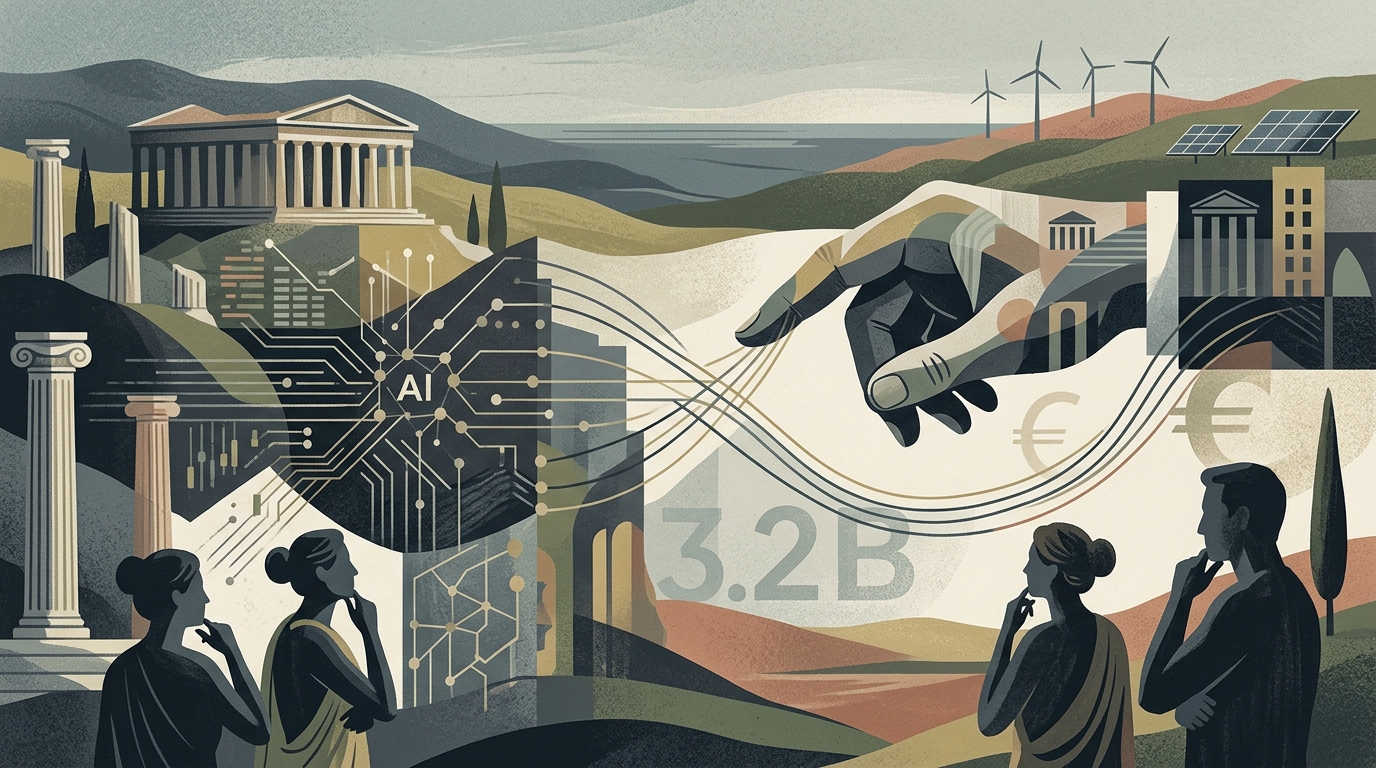
As we cross the mid-point of May 2026, the Greek business landscape is witnessing a structural shift that transcends mere digital adoption. The convergence of Blackstone’s strategic entry into Skroutz and the Greek government’s €3.2 billion fiscal roadmap for Artificial Intelligence marks the transition from 'potential' to 'industrialization' of the domestic tech sector. For investors in the Athens Stock Exchange and stakeholders in the SME ecosystem, this represents a fundamental re-rating of Greek assets.
The Blackstone Signal: Valuations and AI Integration
The Blackstone-Skroutz deal is not merely a play on Mediterranean e-commerce; it is a vote of confidence in Greek data infrastructure. By acquiring a significant stake in the nation's leading marketplace, the private equity giant is betting on the 'Digital Eco Symmetry'—a concept championed by firms like Softweb—where AI-driven logistics and personalized consumer behavior data create a defensive moat. This move sets a new benchmark for Greek tech valuations, suggesting that the 'Alpha' in the current market lies in the physical backbone of AI: the warehouses, the fiber optics, and the last-mile delivery algorithms.
"The survival of Greek businesses in 2026 depends on their ability to pivot from being software users to becoming data architects." – Vassilis Papadakis
Macro Headwinds: The Bond Sell-off and the Dollar Gallop
Despite the domestic optimism fueled by the Panathēnea Festival 2026, global markets present a complex backdrop. The 'Great Bond Sell-off' of late 2025 has continued into this quarter, raising borrowing costs for Greek enterprises just as they seek to fund AI transitions. Simultaneously, the 'Unstoppable Dollar Gallop' is exerting pressure on the Eurozone, making the import of critical AI hardware—the $4 billion physical pivot we are seeing globally—increasingly expensive for local SMEs. Greek firms must navigate this currency volatility by hedging their tech procurement early.
The Fiscal Roadmap: A €3.2 Billion Strategic Bet
The Greek government’s 2030 roadmap, backed by a €3.2 billion algorithmic investment fund, aims to decouple Greek productivity from traditional labor constraints. In a world where the 'Great Productivity Divergence' is redrawing the global wealth map, Greece is attempting to leapfrog into the high-productivity bracket. For the market, the implications are clear: sectors like Fintech, Agri-tech, and AI-driven Cybersecurity (as seen in OpenAI's recent strategic pivot) will be the primary beneficiaries of this liquidity. Investors should look toward companies that are successfully integrating into this national digital architecture, as the 2026-2030 period will favor those who capitalize on the state’s digital leap.