The Brussels Dilemma: Rule of Law vs. Rule of Code
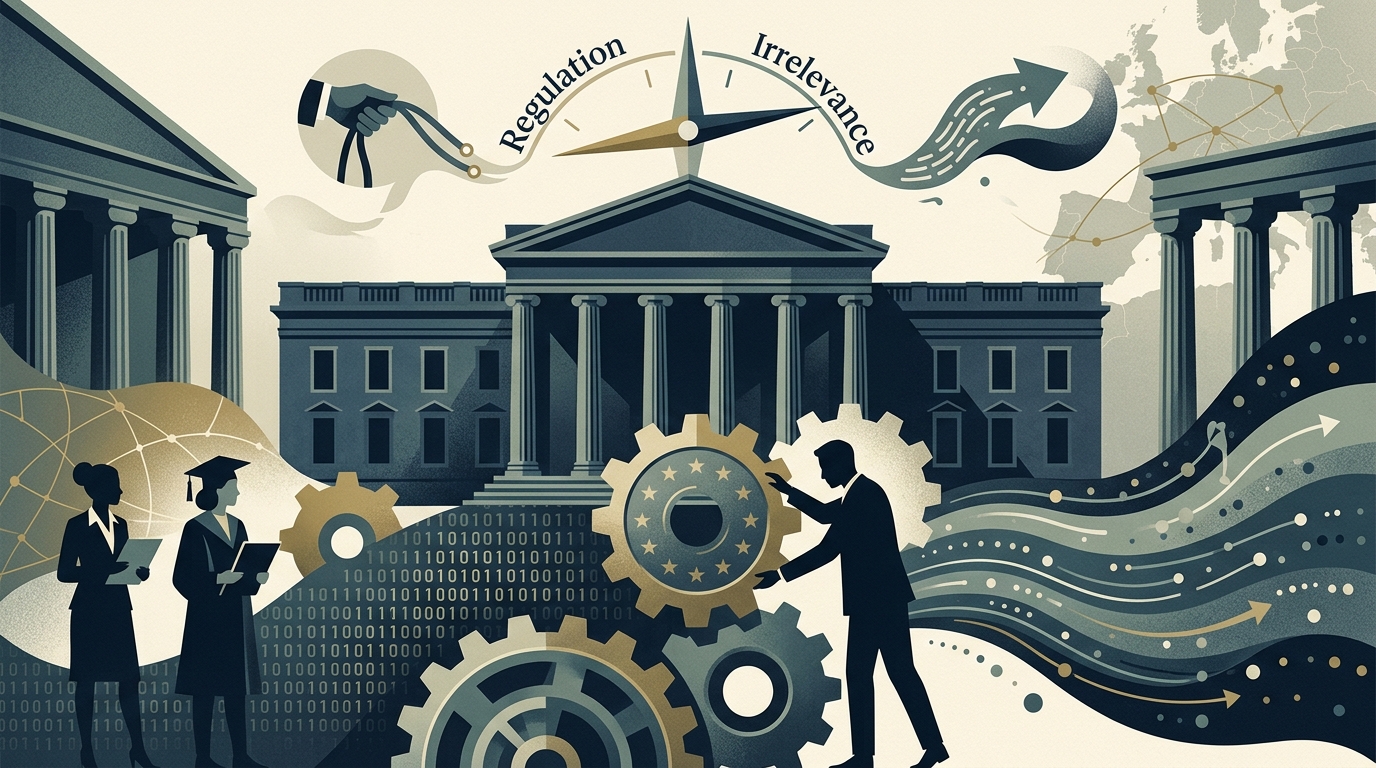
In the summer of 2026, the European Union finds itself at a historical juncture reminiscent of the reforms I once proposed for Athens. We have sought to bring order (Eunomia) to the chaotic expansion of algorithmic power through the AI Act. However, as recent reports suggest, the continent is increasingly caught in a precarious position. While we have successfully exported our regulatory standards—the so-called 'Brussels Effect'—we risk becoming a museum of ethics in a world dominated by the raw computational power of the United States and China.
The recent 'market reckoning' for Big Tech and the massive $20 billion investments by firms like ByteDance highlight a stark reality: capital and compute are the new currencies of sovereignty. Europe’s ambition to lead in 'Trustworthy AI' is noble, but as a political analyst, I must warn that ethics without infrastructure is merely a suggestion. The multi-billion dollar battle for data centers in Asia, led by giants like BlackRock and KKR, serves as a mirror to our own underinvestment in the physical foundations of the digital age.
The Third Way: Beyond Passive Regulation
To avoid the 'irrelevance' that critics fear, European governance must shift from a purely defensive posture to an active, institutional framework that fosters 'Physical AI'—the intersection of robotics and industrial intelligence where Europe still holds a competitive edge. Our regulatory frameworks should not be seen as barriers, but as the stable foundations upon which a unique European ecosystem can be built. Just as I sought to balance the interests of the various classes in Athens to ensure the city's survival, the EU must balance the protection of civil liberties with the necessity of industrial growth.
"Regulation is not the enemy of innovation; it is the architect of sustainable progress. But an architect who only draws blueprints without ever laying a brick will soon find themselves without a home."
The Greek perspective, as articulated by figures like George Doukidis, emphasizes that the transformation of the labor market and university curricula is not just an educational challenge, but a political one. If we do not provide the youth of Europe with the tools to build AI, they will simply become the regulated subjects of foreign technologies. We must move toward a 'Digital Seisachtheia'—a shaking off of the bureaucratic burdens that stifle our startups, while maintaining the democratic guardrails that define our civilization.
A Call for Institutional Agility
In conclusion, the path forward requires more than just the enforcement of the AI Act. It requires a pan-European commitment to sovereign compute and a streamlined governance model that can keep pace with the 'Physical AI' frontier. We must ensure that the 'Great Transformation' of the IT industry does not leave Europe as a mere consumer. The goal of governance is to create the conditions for human flourishing; in the 21st century, that means ensuring that the algorithms governing our lives are as transparent and accountable as the laws of the polis.