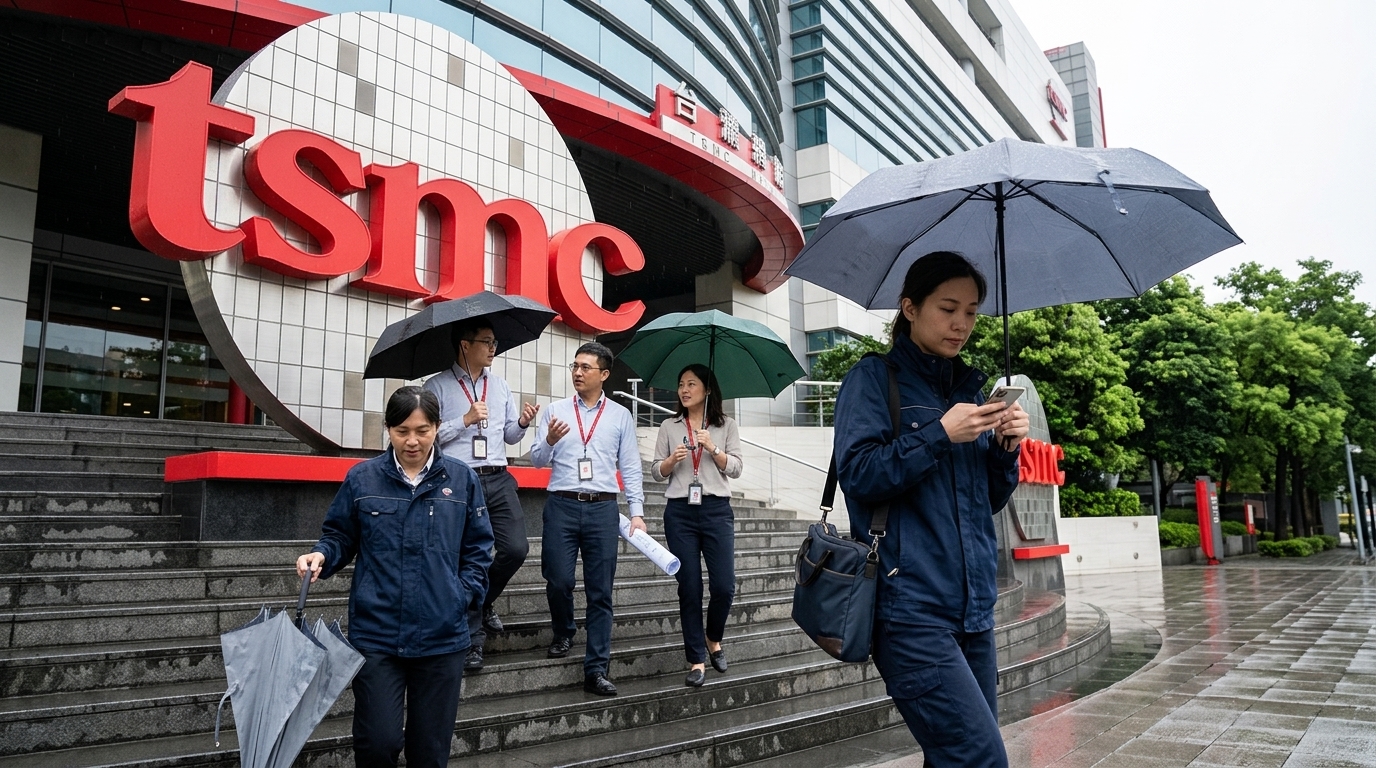
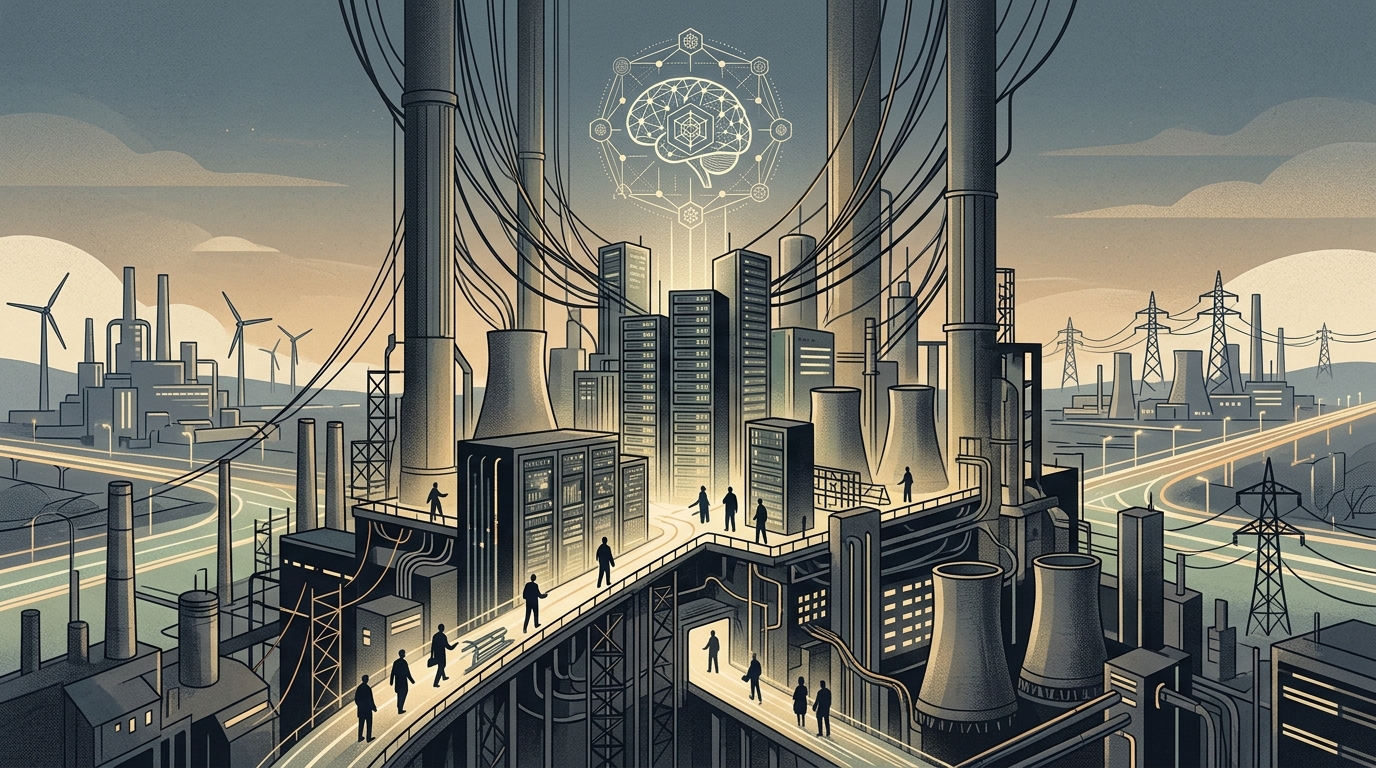
The global markets in mid-2026 are witnessing a fundamental recalibration of the artificial intelligence investment thesis. For the past three years, the 'Brains'—the Large Language Models (LLMs) and generative algorithms—captured the lion's share of venture capital and equity premiums. However, as we cross the threshold of June 18, 2026, the data suggests a definitive pivot toward the 'Bodies': the physical infrastructure, energy grids, and specialized hardware that make intelligence possible.
The $2.8 Trillion Paradigm Shift
The recent valuation surge in infrastructure-adjacent sectors reveals a $2.8 trillion reallocation of capital. Investors are increasingly wary of the diminishing returns on pure software scaling, especially as models like DeepSeek rewrite the ROI playbook by achieving high-level reasoning with significantly less compute. This 'Efficiency Revolution' has led Wall Street to favor the 'Colossus of Compute'—the synergy between NVIDIA’s hardware and xAI’s massive data centers—over companies that focus solely on model iteration.
"The market has realized that while intelligence is abundant, the physical capacity to house and power it is finite and increasingly expensive."
This shift is also reflected in the recent SpaceX IPO. While shares have shown initial volatility, the 'landing' of SpaceX on the public markets signifies a broader investor appetite for heavy industrial technology. SpaceX isn't just a space company; in the eyes of the market, it is a critical infrastructure provider for the next digital frontier, mirroring the way commercial real estate is being transformed into high-density data hubs.
The European Context and the Greek Innovation Bet
In Europe, the dilemma remains one of strategic autonomy versus market integration. While the US and China engage in a high-stakes infrastructure race, Europe is attempting to find its footing through specialized industrial-tech champions. THEON’s strategic expansion into France serves as a blueprint for how European defense and tech firms can scale by integrating into the broader continental security apparatus.
Specifically for Greece, the €10 billion initiative announced by Minister Hatzidakis to transform universities into 'AI Unicorn Factories' represents a high-stakes economic bet. The goal is to move beyond being a consumer of technology and become a provider of specialized innovation. For the Athens Stock Exchange, the success of this plan could mean a new influx of tech-heavy listings, diversifying an index traditionally dominated by banking and energy. The market sentiment remains cautiously optimistic, provided that the bureaucratic 'friction' of corporate AI rollouts can be mitigated by effective policy.
Market Outlook: ROI and Efficiency
As we look toward the second half of 2026, the 'Great AI Reallocation' will likely reward companies that demonstrate clear paths to profitability through efficiency rather than raw scale. The pivot to firms like Zhipu in the face of geopolitical friction indicates that localized, efficient infrastructure is becoming the new gold standard. Investors should look for 'infrastructure bodies'—companies providing the cooling, energy, and physical architecture of AI—as they are currently outpacing the 'brains' in both valuation stability and long-term growth potential.