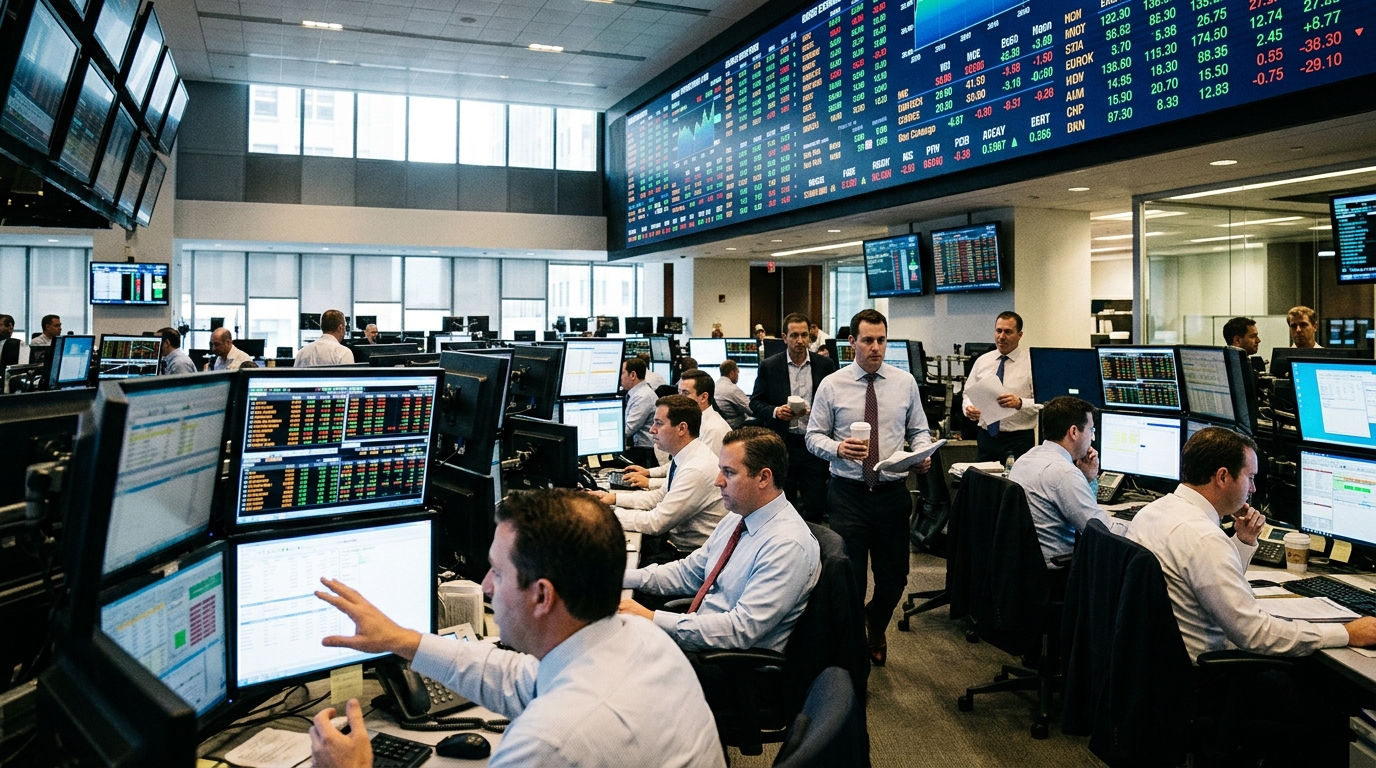

As we cross the threshold of late May 2026, the global financial landscape is witnessing a profound structural realignment. The initial euphoria surrounding generative AI has matured into what analysts are calling the 'Agentic Gold Rush'—a $15 trillion economic shift identified by the latest EY reports. This is no longer about chatbots; it is about autonomous systems capable of executing complex business workflows without human intervention. For the markets, this represents a transition from speculative valuation to operational efficiency at scale.
The SpaceX Catalyst and the Private-Public Rebalancing
The headline dominating boardrooms this week is the impending SpaceX IPO, often referred to as the 'Mother of All IPOs.' Valuations are reaching levels that challenge the traditional dominance of legacy aerospace and defense conglomerates. However, the true market signal lies in the SpaceX-Anthropic alliance. By integrating advanced AI models into the most sophisticated transport and satellite infrastructure on (and off) the planet, we are seeing the birth of a new asset class: Vertically Integrated Autonomous Giants.
This liquidity event comes at a critical juncture. While SoftBank experiences a 'Renaissance' by doubling down on AI-driven logistics, the broader market is grappling with the institutionalization of volatility. The introduction of Bitcoin options on the Nasdaq has bridged the gap between traditional hedging and digital assets, allowing institutional players to manage risk in a way that was impossible during the 2024-2025 cycle. Investors should view the SpaceX IPO not just as a single company going public, but as a massive injection of liquidity that will likely flow into the 'Agentic' ecosystem.
The European Friction: Lagarde’s Hawkish Return
In Europe, the narrative is more complex. ECB President Christine Lagarde has signaled that the 'ghost of inflation' has returned, placing interest rate hikes back on the table. This creates a divergence between high-growth tech valuations and the cost of capital. For European SMEs, the pressure is twofold: they must adopt AI to remain competitive, yet they face tightening credit conditions. This is where the 'Greek Silicon Shield' becomes a fascinating case study. By pivoting toward defense tech and digital reform, Greek enterprises are attracting 'smart money' that seeks stability and sovereign security over pure consumer-tech speculation.
"The market is no longer rewarding AI for its potential; it is rewarding AI for its autonomy and its ability to defend margins in a high-interest-rate environment."
We are also seeing a geographic shift in tech hubs. Ericsson’s departure from Kista marks the 'twilight of the suburban tech hub,' as talent and capital migrate toward either hyper-connected urban centers or decentralized, AI-managed remote networks. For investors, the takeaway is clear: the winners of 2026 will be those who control the 'Agentic' layer of the economy while successfully navigating the geopolitical friction points in the Hormuz Strait and the evolving China-Russia trade axis.