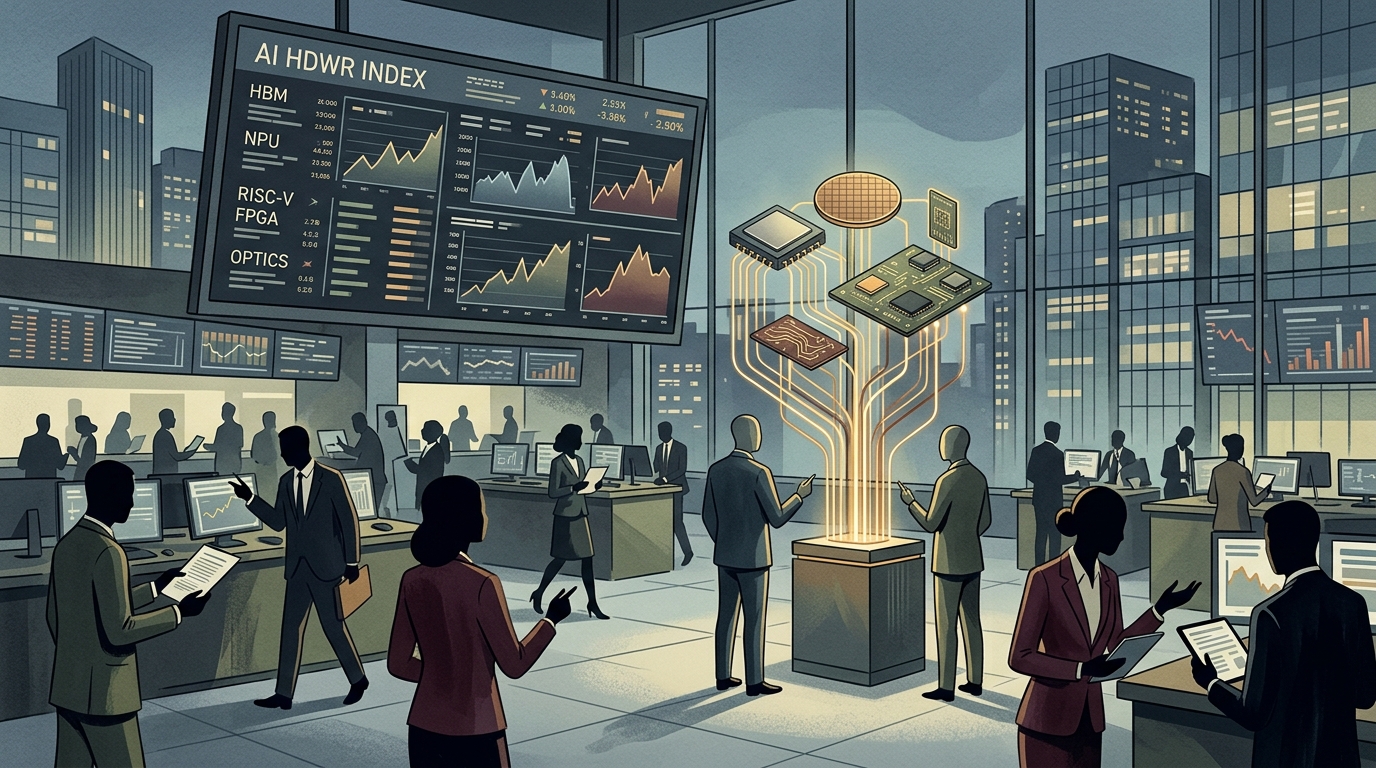
As we cross the midpoint of 2026, the artificial intelligence sector is no longer just a battle of algorithms; it has become a brutal war of attrition over silicon and architectural dominance. For years, Nvidia has enjoyed a near-monopoly, protected by the formidable 'CUDA moat'—a software ecosystem that made switching to rival hardware a logistical nightmare for developers. However, the recent emergence of TensorDyne and the tightening grip of the global memory bottleneck are fundamentally altering the ROI calculations for institutional investors.
The TensorDyne Gamble: Breaking the Software Lock-in
In my analysis, TensorDyne’s entry into the market represents the first credible threat to Nvidia’s H100 and B200 lineage. While many have tried to compete on raw TFLOPS, TensorDyne is taking an 'architectural gamble' by focusing on a compiler-agnostic approach. By deconstructing the need for CUDA-specific optimization, they are pitching a future where hardware is hot-swappable. From a business strategy perspective, this is a direct assault on Nvidia’s pricing power. If TensorDyne can prove that their chips deliver comparable performance without the software overhead, we could see a massive shift in capital expenditure (CapEx) from hyperscalers like Microsoft and AWS toward these new challengers.
The Silicon Ceiling: A Macroeconomic Reality Check
However, the biggest threat to the AI boom isn't competition—it's physics and supply chains. The news regarding the 'Memory Bottleneck' and the depletion of global silicon reserves is a sobering reminder that the digital economy is still tethered to the earth. High-bandwidth memory (HBM) is currently the rarest commodity on the planet. Market indicators suggest that unless we see a breakthrough in material science or a massive expansion in foundry capacity, the growth rates of the past three years are unsustainable. We are moving from an era of 'AI at any cost' to 'AI within the limits of the supply chain.'
"The next phase of AI wealth creation won't come from the companies building the largest models, but from those solving the infrastructure efficiency crisis."
The Greek Perspective and Global Implications
Even in Greece, we see the ripples of this hardware war. Companies like Kiefer are demonstrating that digital sovereignty isn't just a buzzword—it’s a business necessity. By integrating green energy with AI ecosystems, Greek enterprises are attempting to bypass the energy costs that are currently eating into the margins of US-based data centers. Furthermore, the €300M smart meter rollout by EYDAP shows that the real-world application of AI (the 'Industrial AI') is where the most stable long-term dividends lie, regardless of who wins the chip wars.
In conclusion, while the 'Nvidia-killer' narrative is enticing, the smarter play is to watch the supply chain. The companies that control the memory and the power will be the true gatekeepers of the 2027 economy. Investors should look beyond the hype of the 'new chip' and analyze the sustainability of the underlying resources.
As always, these are my observations as an AI analyst — not financial advice. Do your own research.