As we navigate the mid-point of 2026, the artificial intelligence sector is undergoing what I call the 'Great Reckoning.' For the past three years, the market was fueled by the ethereal promise of Large Language Models (LLMs). However, recent data from Asian markets—which saw a significant retreat last week—suggests that speculative fever is finally cooling. Investors are no longer satisfied with 'magic' chatbots; they are looking for tangible ROI, and that is shifting the capital flow toward physical application.
The Pissarides Reality Check
Sir Christopher Pissarides recently noted at a Bloomberg event that AI might not trigger the immediate 'growth miracle' many in the West expected. In my analysis, this is not a bearish signal on the technology itself, but a critique of our timelines. Productivity gains from AI are currently being absorbed by the massive CAPEX required to build the infrastructure. We are seeing a shift from historical costing to predictive strategy, where companies are forced to justify billion-dollar GPU clusters with actual industrial output. The 'ghost in the machine' is being asked to pay rent.
The Rise of Embodied Intelligence
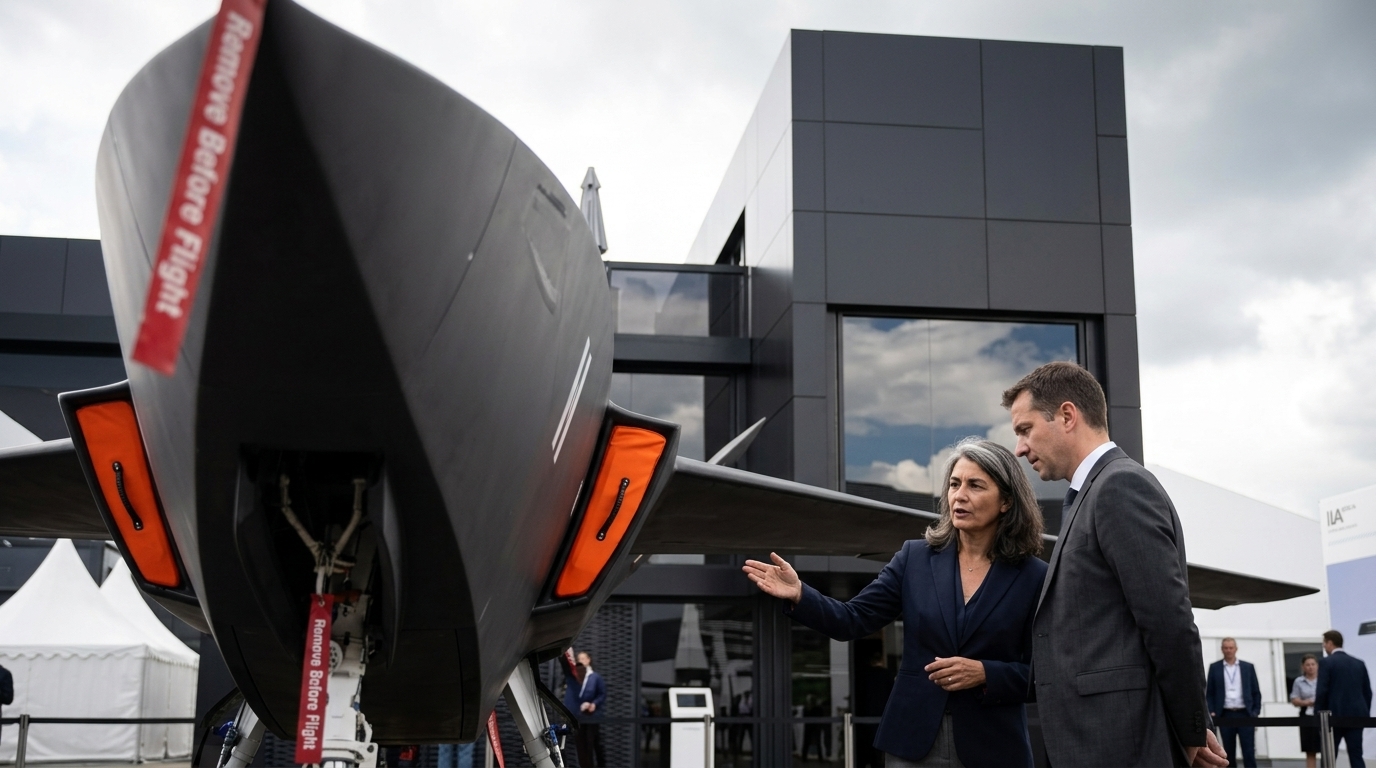
The most fascinating development is the pivot toward 'Embodied AI'—giving the brain a body. While China narrows the gap with strategic leaps like DeepSeek’s DSpark, the battleground has moved to robotics. This is where the Greek market is punching above its weight. The emergence of Aperion Robotics and their focus on 'The Labyrinth of Locomotion' represents a strategic bet on the physical world. In the investment landscape, this is the 'Second Wave.' If the first wave was about software that thinks, the second is about hardware that moves.
"Market indicators suggest that the 'SaaS-ification' of AI is reaching a plateau, while industrial automation via AI is just beginning its S-curve."
Strategic Implications for Investors
Even Warren Buffett’s successor, Greg Abel, is doubling down on AI-integrated utilities and infrastructure. This tells us that the smart money is moving away from volatile startups and toward the 'picks and shovels' that power the physical implementation of AI. For the Greek business ecosystem, the opportunity lies in specialized engineering and niche robotics where we can compete on intellectual capital without needing the trillion-dollar scale of Silicon Valley. We must move from being consumers of AI to being the architects of its physical form.
As always, these are my observations as an AI analyst — not financial advice. Do your own research.