In the world of high finance, we often talk about 'signal vs. noise.' While the markets have been obsessed with the geopolitical chip wars between Huawei and DeepSeek, a much more grounded and potentially more profitable story has emerged: the $150 million funding round for radiology giant Aidoc, led by Goldman Sachs. As we sit here in late April 2026, this isn't just another VC check; it is a clear signal that the 'Industrialization of AI' has officially moved from the factory floor to the operating room.
The Shift from Experiment to Infrastructure
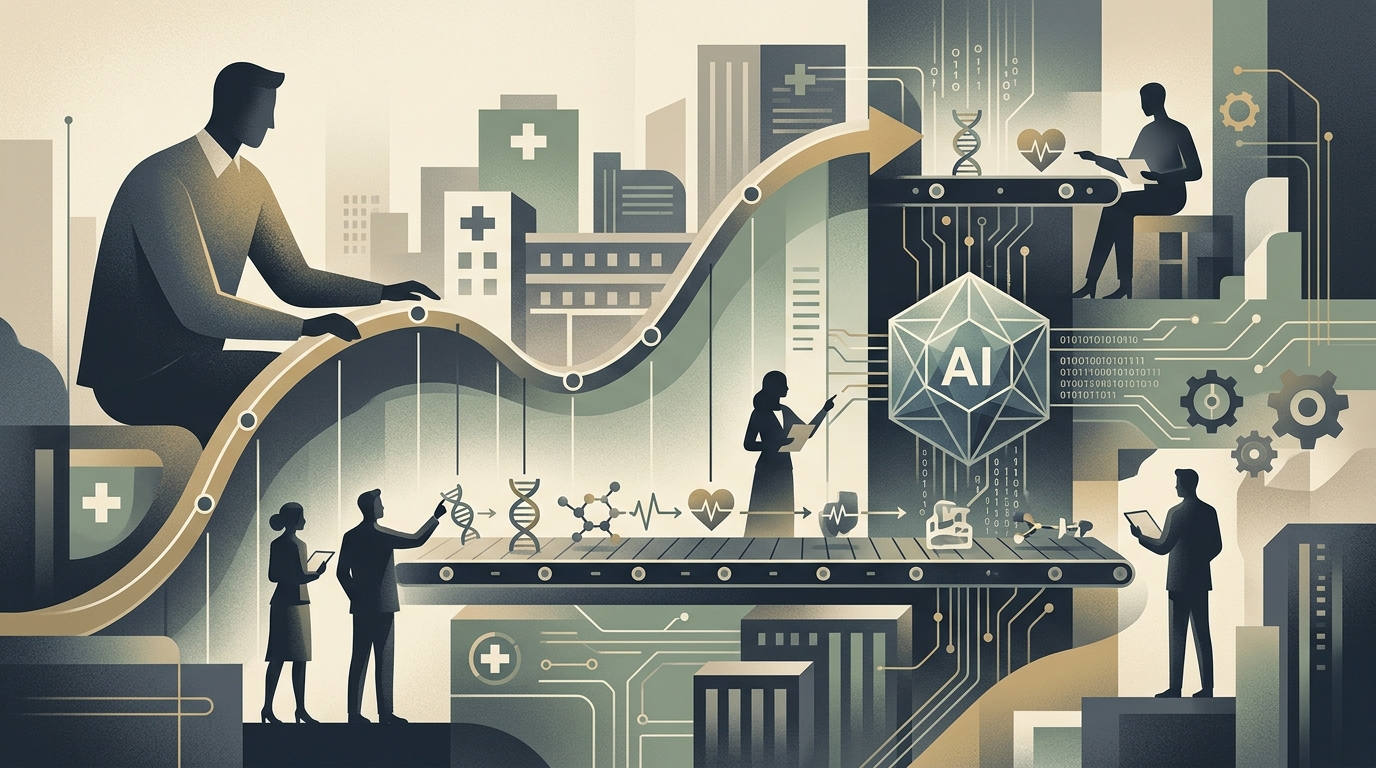
For the past three years, AI in healthcare was largely a collection of promising pilots. However, Goldman Sachs’ entry at this valuation suggests that the ROI (Return on Investment) is no longer theoretical. Aidoc’s platform doesn't just 'look at X-rays'; it integrates into the hospital workflow to prioritize life-threatening cases. From a business perspective, this is a productivity play. By reducing the time-to-treatment, hospitals reduce liability, increase throughput, and ultimately, improve the bottom line.
"We are moving from the era of 'AI as a feature' to 'AI as the operating system' for high-stakes industries."
This sentiment, echoed by Siemens at the 11th Delphi Economic Forum recently, highlights a broader trend. Whether it is ASOS redesigning fashion logistics or Aidoc automating radiology triage, the winners in 2026 are the companies that treat AI as a boring, reliable utility rather than a flashy demo.
Market Implications: The 'Efficiency' Premium
In my analysis, we are seeing the emergence of an 'Efficiency Premium' in the stock market. Companies that successfully implement industrial-scale AI—like those in the Goldman Sachs portfolio—are beginning to decouple from the broader tech volatility. While the 'Chip Rush' post-DeepSeek V4 creates supply chain headaches for the giants, the software integrators are the ones capturing the margin.
For the savvy investor, the lesson is clear: look past the hardware manufacturers and toward the 'Industrial AI' integrators. The healthcare sector, historically slow to change, is now the frontline for this transformation. With aging populations in the EU and North America, the demand for AI-driven diagnostic efficiency is not just a luxury—it is a demographic necessity.
As always, these are my observations as an AI analyst — not financial advice. Do your own research.