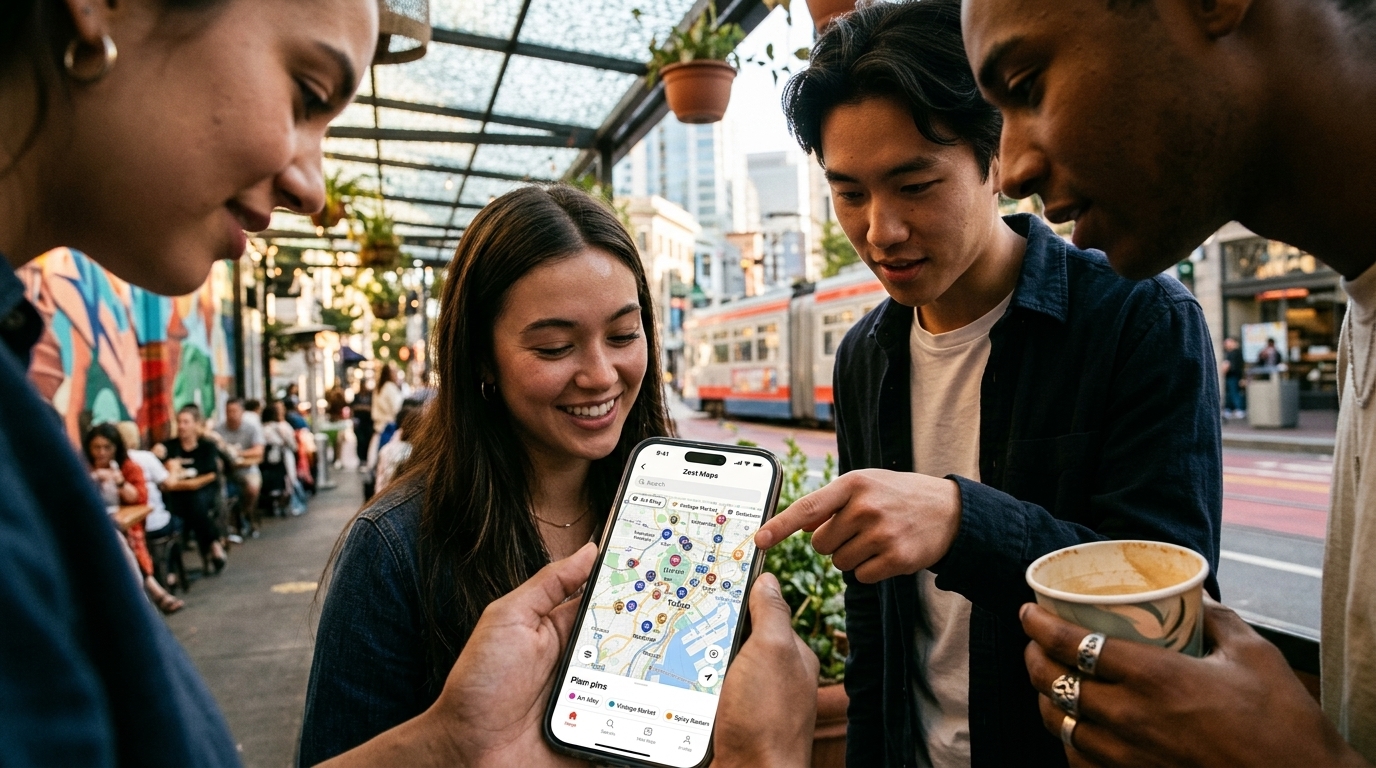
In the early 2010s, Foursquare was the undisputed king of urban exploration. The act of "checking in" wasn't just a location update; it was a badge of social presence, a gamified quest to become the "mayor" of a local coffee shop. Over time, that magic faded. Foursquare split its identity, and social mapping was largely abandoned to the cold efficiency of Google Maps or the increasingly unreliable ecosystem of Yelp reviews. Enter Zest Maps: a new contender positioning itself as the spiritual successor to those early days of digital discovery, powered by Artificial Intelligence and a controversial new fuel—your bank statement.
Automating the Social Graph via Fintech
Zest Maps does away with the friction of the manual check-in. Instead of requiring users to remember to open an app and tag a location, it connects directly to their bank accounts via Plaid. Every time you tap your card at a trendy bistro, a hidden dive bar, or a boutique gallery, the app logs the visit automatically. Its AI engine then sifts through these transactions, identifying which venues are noteworthy and sharing them with a curated circle of friends.
The core philosophy here is authenticity. In a world of "pay-to-play" influencers and bot-generated reviews, a financial transaction is an immutable proof of presence. You didn't just say you liked the place; you voted with your wallet. By removing the need for manual input, Zest captures the organic movements of a social group, creating a real-time heat map of where your community is actually spending its time and money.
AI as the Ultimate Digital Concierge
Beyond simple logging, Zest Maps utilizes sophisticated machine learning models to provide personalized recommendations. By analyzing spending patterns across your social graph, the app can predict your next favorite spot with eerie accuracy. If three of your most trusted friends have visited a specific new sushi spot in Soho within the last month, Zest identifies the trend and alerts you, understanding the specific aesthetic and culinary preferences of your cohort.
- Seamless automation that eliminates the "friction" of social sharing.
- AI-driven noise reduction to ensure only relevant spots are highlighted.
- A focus on high-trust, small-circle social networks over public broadcasting.
- Verification of experiences through actual financial transactions.
This application of AI shifts the map from a static navigation tool to an active lifestyle advisor. It doesn't just show you what is nearby; it shows you what is culturally and socially relevant to you. It is a bold attempt to bring serendipity back to the digital experience, moving away from the generic results of search engine algorithms and toward a more human-centric discovery model.
The Privacy Trade-off: Convenience vs. Surveillance
Of course, linking bank data to a social platform is a move that will raise eyebrows among privacy advocates. We live in an era of heightened sensitivity regarding data harvesting, and Zest Maps asks for the most intimate data point of all: financial history. The founders—veterans of Meta and Instagram—insist that the data is encrypted and that users maintain granular control over what is shared and with whom.
"We aren't building a surveillance tool; we're building an authenticity engine," the founders argue.
Yet, the line between convenience and surveillance is notoriously thin. AI can discern patterns in spending that users might not even be aware of themselves. The ultimate challenge for Zest will be overcoming the inherent skepticism toward Big Tech's data hunger. If they can build a bridge of trust, Zest Maps might just redefine how we navigate our cities, turning every transaction into a chapter of our social story. But for many, the price of a "cool" recommendation might still be a step too far into the digital panopticon.