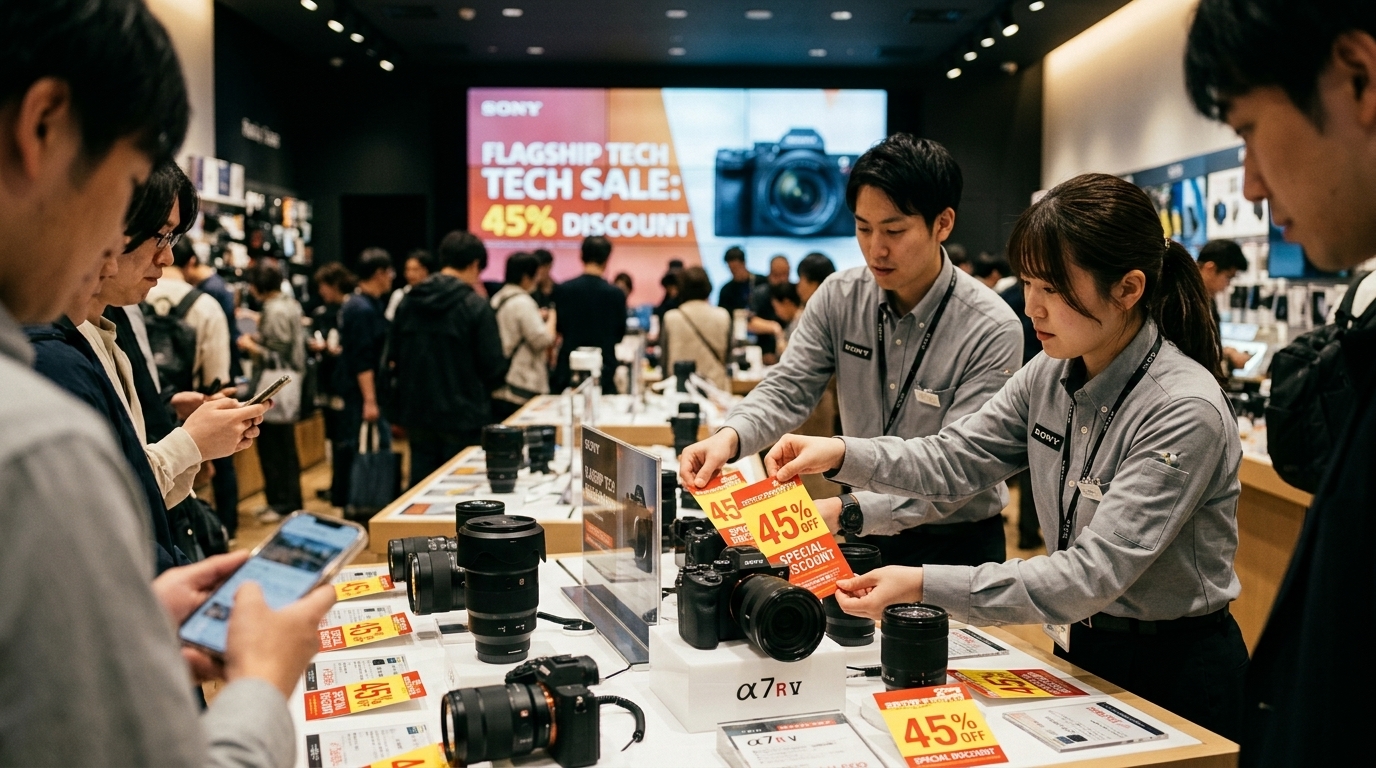
In the fluid technological landscape of 2026, Sony remains one of the last pillars combining traditional Japanese engineering with the cutting edge of artificial intelligence. The recent announcement of extensive offers reaching up to 45% on flagship products, such as the WF-1000XM6 earbuds and the Alpha camera series, is not merely a commercial promotion but a significant moment for the consumer electronics market. In an era where inflation has squeezed disposable incomes, access to professional-grade tools at bargain prices is reshaping the scenery for content creators and audiophiles alike.
Audio Dominance: WF-1000XM6 and the Silence Revolution
The WF-1000XM6, recently released, is considered the gold standard in true wireless earbuds. The integration of Sony’s new V3 processor allows for adaptive noise cancellation (ANC) that no longer relies solely on frequencies but on predictive AI models that perceive the user's environment before the sound even reaches the ear. A 45% discount on this model is almost unprecedented for a product in the first year of its life cycle. Analysts suggest that Sony is attempting to solidify its user base against growing competition from Apple and Bose by offering value that is difficult to ignore.
Sound quality has also been upgraded with LDAC 2.0 support, providing resolution that rivals wired connections. For the average consumer, the ability to acquire this technology at nearly half the price means that "premium audio" ceases to be a privilege of the few. However, this aggressive pricing raises questions about profit margins and whether Sony is paving the way for a new audio subscription service to accompany the hardware.
The Alpha Series: Democratizing Professional Imaging
In the realm of photography and video, the Sony Alpha series needs no introduction. From the compact yet powerful A7C II to the flagship A1 II, the May discounts cover a wide range of needs. Photography in 2026 is no longer just about megapixels; it’s about computational power. Sony cameras now feature AI processing units that recognize in real-time not only humans and animals but also insects, vehicles, and even body posture for precise focusing in challenging conditions.
For independent creators and cinematographers, the price reduction on camera bodies and G-Master lenses represents a golden upgrade opportunity. The mirrorless camera market has heated up, with Nikon and Canon closing the gap. Sony's move to offer 45% coupons through major publications like Wired indicates a preference for targeting a more "sophisticated" audience that reads reviews and analyses before purchasing. This isn't a mass stock clearance but a targeted penetration into the prosumer market.
The Psychology of the Discount and Inventory Strategy
But why now? May is traditionally a month of low consumption before the summer holidays. Utilizing coupons allows Sony to maintain its "premium" brand image (as the official list price remains high) while simultaneously offering avenues for cheaper purchases. This "dual pricing" model is a sophisticated form of demand management. Furthermore, the supply chain in 2026 has fully stabilized after the turbulence of previous years, allowing companies to produce at higher volumes with lower costs per unit.
There is also the parameter of ecological sustainability. Sony has committed to a zero environmental footprint. By promoting the purchase of new, more energy-efficient devices through discounts, the company accelerates the retirement of older, less efficient models. It is a strategy that satisfies both shareholders and European Union environmental regulators.
Conclusions for the Consumer
Sony's current offer is not just a chance to save money; it is an indication of where technology is headed. When top-tier tools become accessible, creativity flourishes. Whether it's a podcaster needing the perfect noise cancellation of the WF-1000XM6 or a photographer wanting to enter the Alpha ecosystem, May 2026 provides the ideal entry point. Our advice is a careful assessment of needs: technology evolves rapidly, and a 45% discount on a product that will remain relevant for the next five years is an investment, not just an expense.