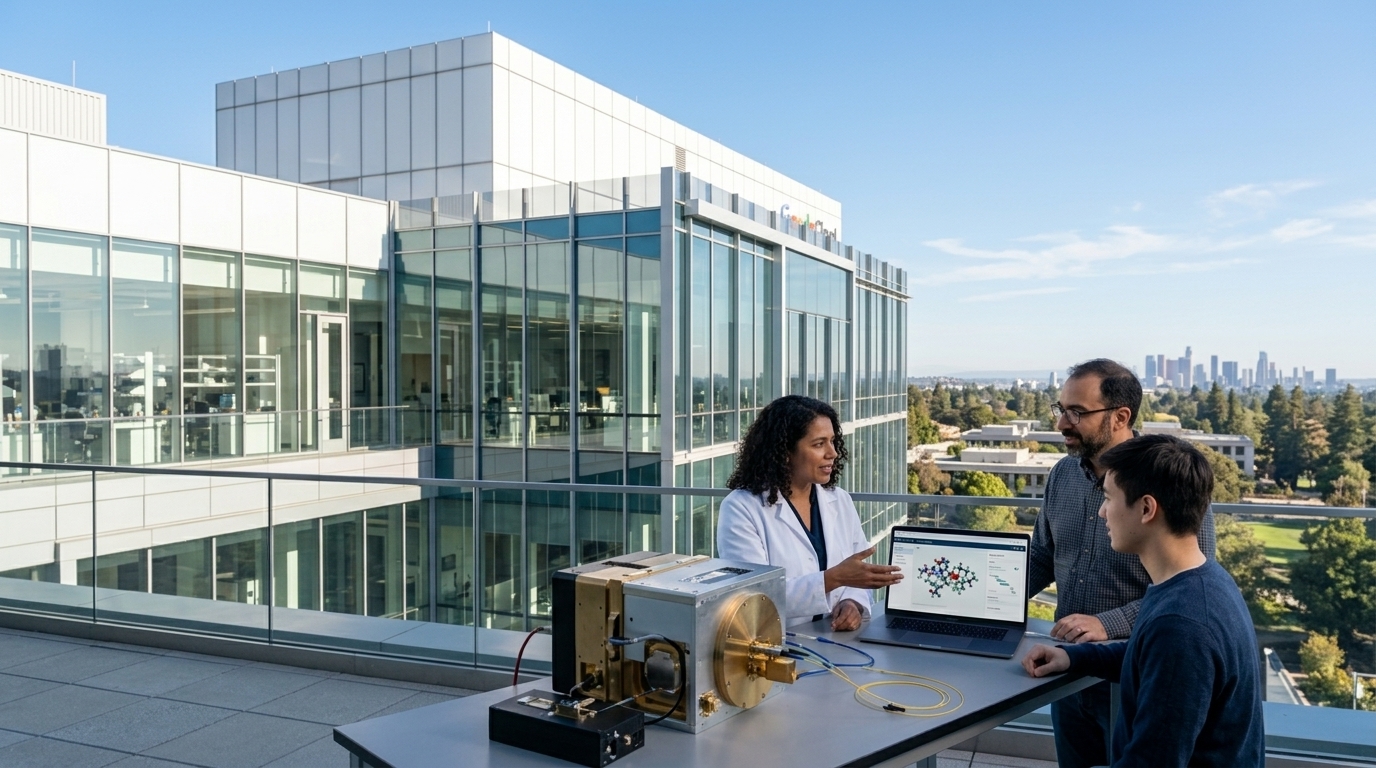
The era of General Artificial Intelligence (Generative AI), dominated by chatbots and text generation, is gradually giving way to a more specialized and impactful phase: the application of AI in the hard sciences. Google Cloud's recent announcement regarding the integration of SandboxAQ's specialized models into its Marketplace is not merely a commercial agreement. It is a strategic move that brings the power of quantum simulations and deep learning into the hands of researchers worldwide, promising to compress decades of laboratory research into a few months of digital processing.
The Convergence of AI and Quantum Physics
SandboxAQ, which began as an internal project at Alphabet before spinning off, focuses on what it calls "AQ" (AI + Quantum). Its approach differs from traditional large language models. Instead of predicting the next word in a sentence, SandboxAQ's models use the laws of physics to simulate the behavior of molecules and atoms. This is the key to solving problems that previously required expensive "trial and error" testing in physical laboratories.
According to company executives, the ability to simulate chemical reactions with quantum-level precision allows scientists to screen millions of potential compounds for new drugs or battery materials, discarding unviable solutions before they ever touch a test tube. Google Cloud, by providing the infrastructure and accessibility through its Marketplace, transforms these sophisticated capabilities into an "on-demand" service for pharmaceutical giants and biotech startups alike.
Drug Discovery: From 10 Years to 10 Months?
The pharmaceutical sector is perhaps the primary beneficiary of this partnership. Traditionally, developing a new drug costs billions of dollars and requires over a decade of research, with failure rates in clinical trials remaining frustratingly high. SandboxAQ’s AI can analyze how a drug candidate interacts with specific proteins in the human body, predicting efficacy and potential side effects with unprecedented accuracy.
“This is no longer about digital guesswork; it is about physics-based digital proof,” industry analysts note.
Furthermore, the collaboration extends into materials science. The need for more efficient electric vehicle batteries, lighter alloys for aerospace, and more sustainable plastics requires a deep understanding of molecular structures. The models now hosted on Google Cloud can accelerate the discovery of catalysts that will make hydrogen production cheaper or enable carbon capture from the atmosphere at a much lower energy cost.
Strategic Importance for the Cloud Ecosystem
For Google Cloud, this move is part of a broader strategy to differentiate itself from competitors like Microsoft Azure and Amazon Web Services (AWS). While all provide access to LLMs, Google is systematically investing in "vertical" solutions for science and industry. The integration of SandboxAQ complements the work of Google DeepMind and AlphaFold, creating a comprehensive ecosystem for computational biology and chemistry.
- Access to advanced algorithms without the need for proprietary supercomputers.
- Reduction of R&D (Research and Development) time for critical technologies.
- Enhanced data security, as simulations run in a controlled cloud environment.
- Ability to combine quantum algorithms with traditional computing power.
In conclusion, Google Cloud’s deployment of specialized AI marks the transition from the informatics of information to the informatics of matter. It is a promise that technology can solve some of humanity's most pressing problems, from incurable diseases to the climate crisis, provided we give it the right tools to understand the physical world.