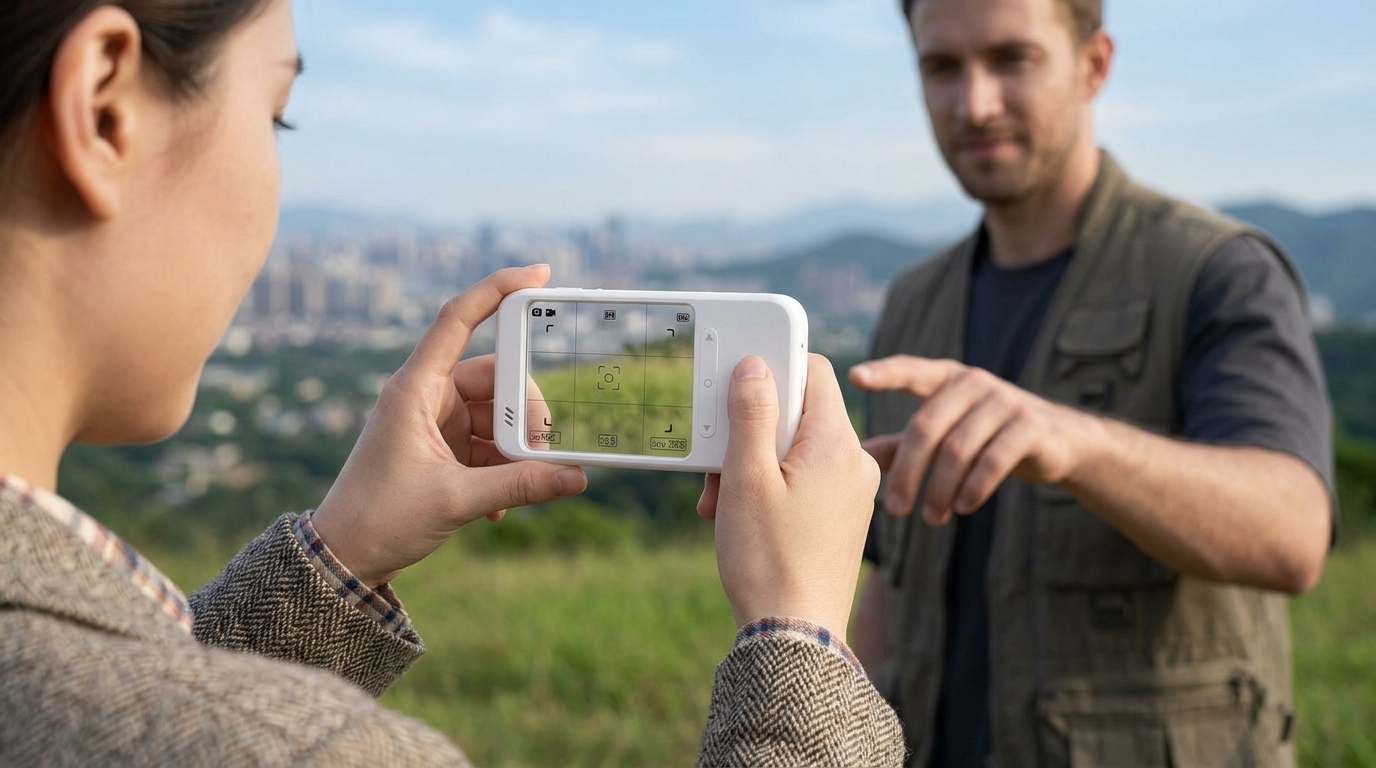
In an era where smartphones boast camera sensors that would have been the envy of professional photographers a decade ago, a strange paradox is unfolding: the return to simplicity. Godox, a company previously known almost exclusively for its professional lighting equipment, has decided to enter the imaging hardware space with a device that is turning heads. The Godox C100 is not just another pocket digital camera; it is a design manifesto featuring a transparent LCD screen as a viewfinder, offering an experience that balances precariously between the future and the past.
Transparent Tech: Innovation or Gimmick?
The centerpiece of the C100 is undoubtedly its screen. Eschewing the traditional optical viewfinder or the standard rear-mounted LCD, Godox has integrated a transparent panel. When the camera is powered off, it looks like a simple pane of glass housed in a sleek, minimalist frame. Once activated, digital readouts, histograms, and focus points appear to "float" over the real-world scene the user is viewing. This approach is reminiscent of Head-Up Displays (HUDs) found in fighter jets or modern Augmented Reality (AR) applications.
From a technical standpoint, the use of a transparent LCD offers a unique advantage: the photographer is never disconnected from their environment. Unlike Electronic Viewfinders (EVFs) that present a digital reconstruction of reality, the C100 allows for direct optical contact with the subject. This creates a more organic connection during the shoot, something street photographers have sought for decades, often opting for rangefinders specifically for this peripheral awareness.
The Point-and-Shoot Renaissance in the TikTok Era
But why would a company invest in a standalone camera in 2026? The answer lies in a significant cultural shift among Gen Z and influencers. There is a growing fatigue with the "perfect," hyper-processed images produced by the latest iPhone and Samsung algorithms. The search for the "authentic," the "imperfect," and the "retro" has driven the prices of early-2000s digital cameras (digicams) to staggering heights on platforms like eBay.
- The need for a single-purpose device that fosters focus and intentionality.
- A desire for natural digital noise and specific color science that doesn't feel algorithmic.
- The aesthetic value of the device itself as a fashion statement.
The Godox C100 taps directly into this trend. With its slim form factor and striking display, it isn't targeting the professional who needs 100 megapixels. Instead, it targets the creator who wants a tool that inspires creativity and serves as a conversation starter.
Strategic Pivot: Godox as a Hardware Contender
Godox’s move to release the C100 signals a deeper strategic evolution. The lighting market is increasingly saturated, and the company already possesses extensive expertise in high-quality electronics manufacturing. By branching into cameras, Godox is attempting to build a comprehensive ecosystem. Imagine a camera that communicates seamlessly and wirelessly with the company’s flashes and continuous lights, offering a true "studio in a pocket" experience.
"Technology is no longer just about benchmarks and specs; it's about how it makes us feel during the creative process," say industry analysts.
However, challenges remain. Transparent LCDs can be notoriously difficult to view under direct sunlight, as the lack of a traditional backlight reduces contrast. Godox must prove that the C100 is more than just a beautiful gadget and that it can deliver image quality sufficient to justify carrying an extra device alongside a smartphone.
The Future of Digital Imaging
The C100 might be the herald of a new category of devices. If the transparent screen proves functional and popular, we could see similar applications in high-end mirrorless cameras or even smart eyewear with photographic capabilities. In a world dominated by software and AI-generated imagery, the return to innovative, tactile hardware is a refreshing change of pace. Godox isn't just selling a camera; it's selling a new way to look at the world—literally and figuratively.