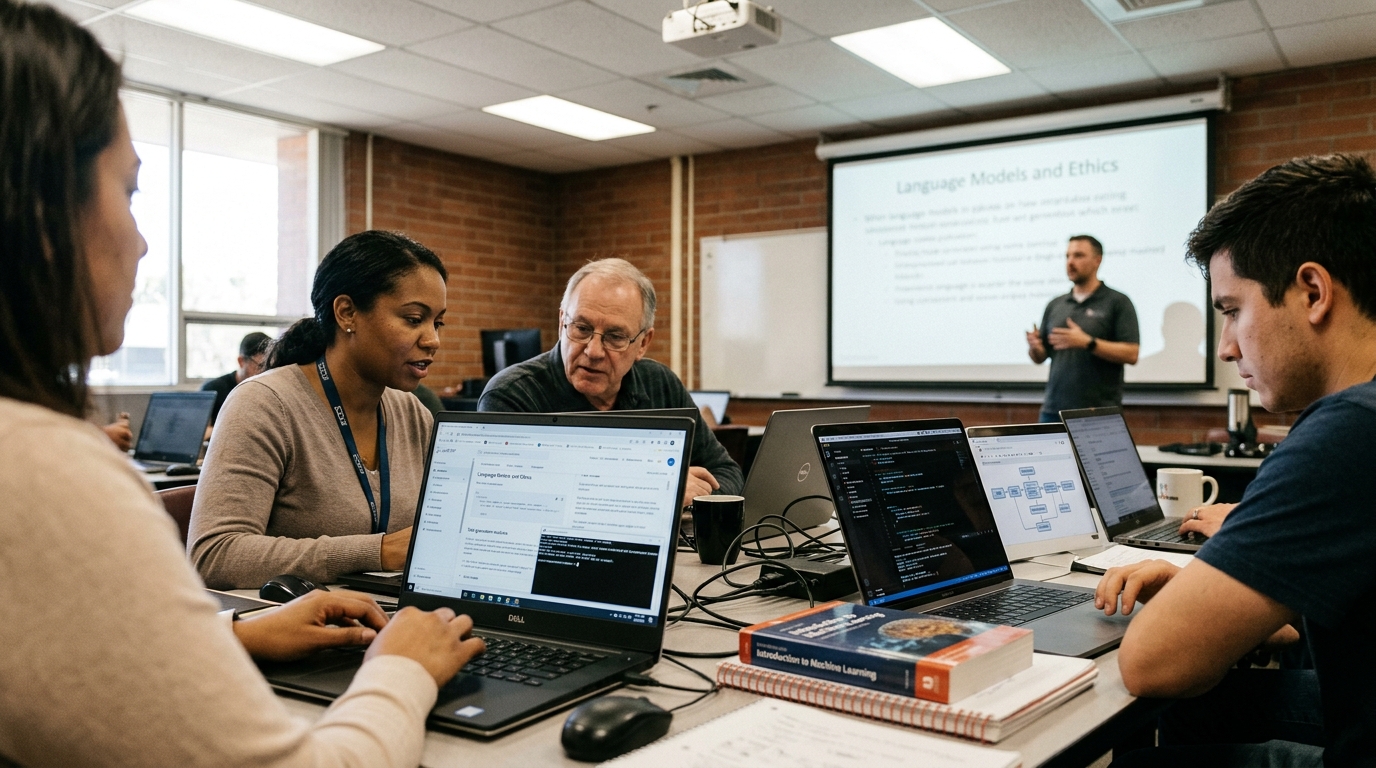
In an era where Artificial Intelligence (AI) is radically transforming the landscape of work and daily communication, access to knowledge remains the critical stake. Fresno City College (FCC) in California is emerging as a beacon of this effort, offering free AI workshops aimed at providing practical skills for the average citizen. This initiative, recently covered by ABC30, is not merely an educational action but a strategic intervention to bridge the burgeoning digital divide.
Bridging the Digital Divide 2.0
Historically, every technological revolution is accompanied by a period of inequality, where those with the resources to adapt gain a disproportionate advantage. With the advent of Generative AI, the risk of a "Digital Divide 2.0" is palpable. Fresno City College recognized that a theoretical understanding of AI is not enough; citizens need practical tools to draft resumes, organize finances, or enhance their productivity at work.
The workshops focus on tools like ChatGPT, Gemini, and various automation applications, teaching participants how to formulate effective prompts. The significance of this action lies in the simplification of technology. By demystifying algorithms, the college allows individuals of all ages and professional backgrounds to see AI not as a threat, but as a digital assistant that can save them time and effort.
The Community College as a Tech Hub
The choice of a community college for such an initiative is both symbolic and substantive. Community colleges in the U.S. have traditionally served as the link between education and the local economy. Unlike large research universities that focus on the development of AI, FCC focuses on its application. This "bottom-up" approach is essential for social cohesion.
Workshop instructors emphasize that AI is not just for programmers or data scientists. In fact, the greatest benefits may arise in sectors such as small business, local government, and education. By providing these courses for free, Fresno City College ensures that an individual's economic status will not be a barrier to acquiring skills that are now considered essential in the 2026 labor market.
Practical Skills for a New Reality
During the sessions, participants learn how to use AI to optimize daily tasks. From drafting professional emails to creating meal plans or analyzing complex documents, the subject matter is broad. The workshop also places great emphasis on the ethical use of technology and the recognition of AI "hallucinations," training citizens to be critical consumers of information.
"Technology is only as good as the person operating it," the organizers state. "Our goal is to give people the steering wheel, not just show them the car."
The community's response has been overwhelming, suggesting a deep thirst for knowledge in a rapidly changing world. The success of the program in Fresno could serve as a model for similar initiatives worldwide, proving that public education can and must remain relevant.
Conclusions and Outlook
As we head into the second half of the 2020s, the ability to collaborate with Artificial Intelligence will be considered as basic as literacy. Initiatives like that of Fresno City College are vital to avoid the marginalization of large segments of the population. The challenge for the future will be sustaining these programs as technology evolves at rates that often exceed the speed of academic curricula. However, the first step—access—has already been taken.