In an era where technology tends toward the total elimination of physical resistance, Erick the Architect, the production mastermind behind the legendary Flatbush Zombies, expresses a desire that resonates with many creators: a return to the physical BlackBerry keyboard. In a recent extensive interview, the artist—who has collaborated with icons like James Blake and RZA—analyzed how the loss of haptic feedback has impacted his workflow and creative process.
The Psychology of Touch in Music Production
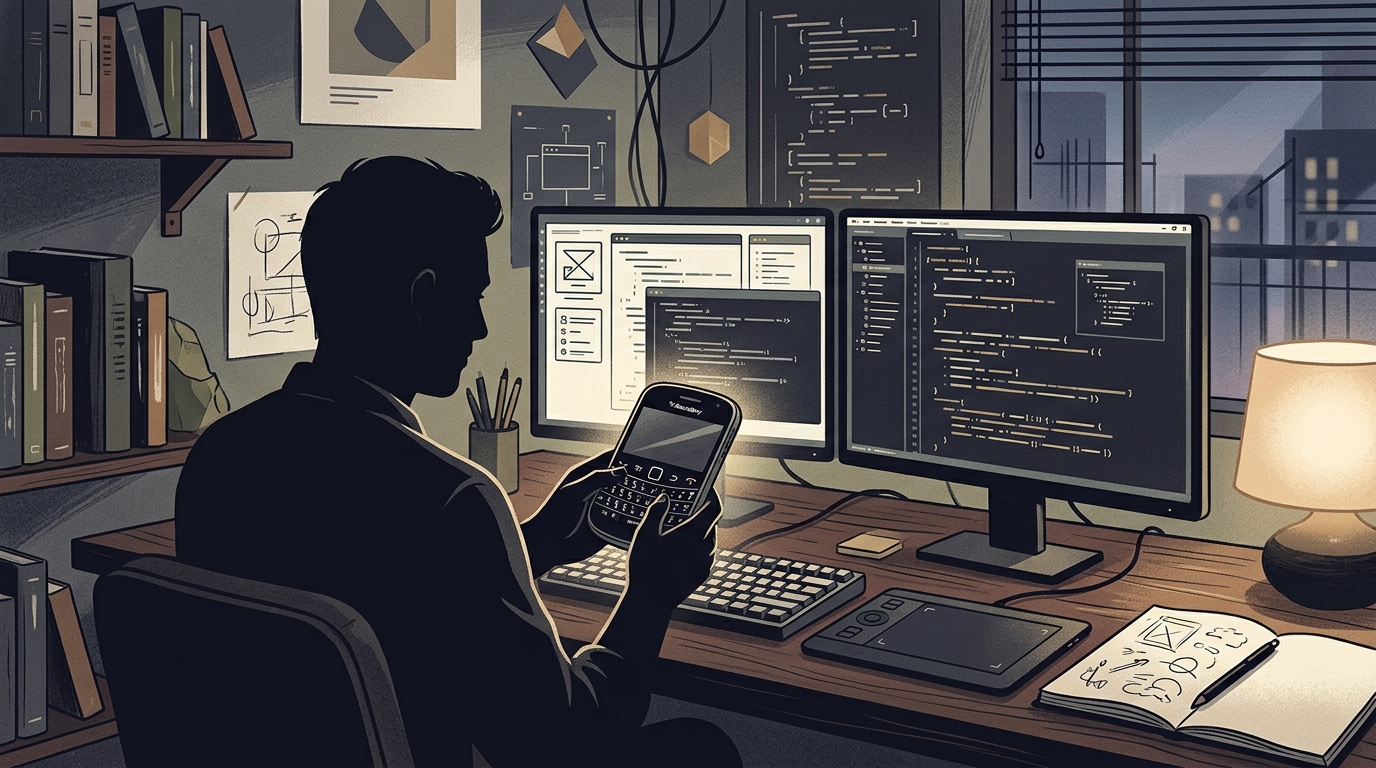
For a producer and rapper like Erick, a writing tool is not just a means of data transfer, but an extension of the body. The BlackBerry, with its distinct sculpted keys, allowed for a form of "muscle memory" that modern touchscreens fail to replicate. As he explains, the ability to type lyrics or jot down ideas without necessarily looking at the screen creates a direct link between thought and action. In the world of hip-hop, where rhythm and speed are paramount, the "friction" provided by a physical key acts as a metronome for creativity.
The transition to the iPhone and other touchscreen devices marked the end of an era where the mobile phone was a production tool rather than just a consumption device. Erick points out that the glass surface is "cold" and anonymous. It doesn't allow you to feel a mistake before you make it. The lack of physical confirmation forces the brain to allocate more resources to visual processing, distracting from pure auditory or verbal inspiration.
The Rise of "New Material Nostalgia"
Erick the Architect's case is not an isolated one. We are witnessing a growing trend among creative professionals returning to analog or semi-analog tools. From writers who prefer mechanical typewriters to producers who ditch software plugins for hardware synthesizers, the need for physical contact is more intense than ever. The BlackBerry represents the pinnacle of this ergonomics in the communications sector.
Today, in 2026, we see the market reacting to this need with products like "Clicks," the external keyboard for iPhone that attempts to revive the BlackBerry experience. However, for Erick, it's not just about the keys, but the philosophy of a device designed to "get work done." Modern smartphones are designed to keep you trapped in an endless cycle of notifications and scrolling. The BlackBerry was a digital assistant that let you finish your thought.
AI and the Future of Interfaces
As Artificial Intelligence becomes increasingly integrated into our daily communication, the need for typing may soon seem archaic. Already, voice commands and predictive text have reduced the need for manual data entry. However, there is a danger: the loss of "creative resistance." When AI completes our sentences or auto-corrects our mistakes, it removes the element of chance and personal style.
Erick the Architect argues that imperfections and the way you press a button give character to the final result. If technology becomes too smooth, the result will be a uniform, sterile culture. Returning to tools that require physical effort may be the only defense against digital homogenization. For the artist, the BlackBerry is not an obsolete device, but a reminder that art requires effort, touch, and presence.
- Physical key resistance enhances focus and concentration.
- Touchscreens promote passive content consumption over creation.
- Muscle memory is essential for rapid lyrical documentation.
- Hardware choices directly influence the artistic output.
In conclusion, Erick’s nostalgia invites us to reflect: In our quest to make everything easier, have we simultaneously made it less meaningful? The technology of the future may need to look back at the buttons and clicks that defined a generation of creators to rediscover its humanity.