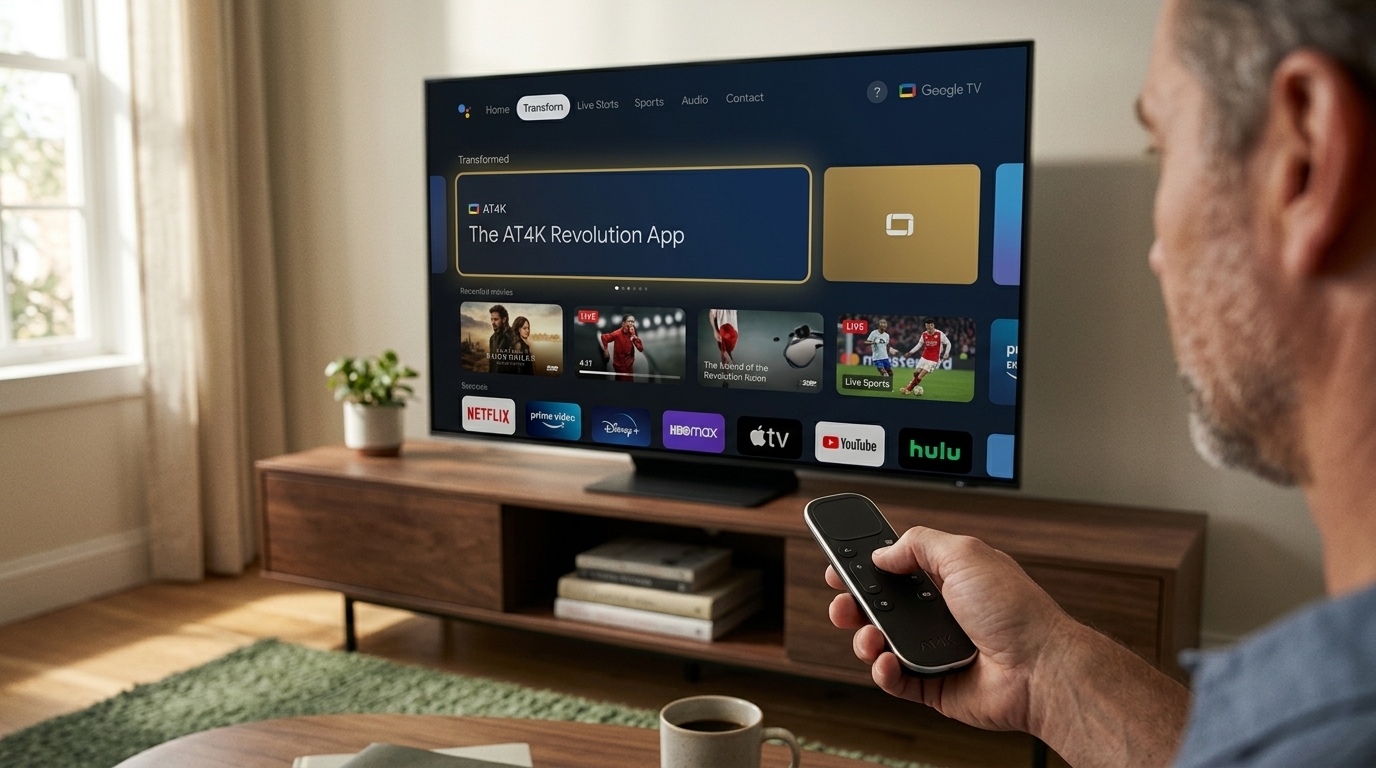
The modern television experience has, for many users, become a constant battle against algorithms and sponsored content. When Google rebranded Android TV to Google TV, the promise was a more personalized experience. However, the reality facing millions of users worldwide is a home screen cluttered with recommendations for shows they don't care about, auto-playing trailers, and a general sense of 'digital noise'. In this landscape, a new app called AT4K (formerly known as Project Ivy) has emerged to provide a solution, offering an experience many describe as 'Apple TV for the rest of us,' but with the inherent flexibility of Android.
The Degradation of the Google TV User Interface
The problem with Google TV is not technical; it is structural. As an advertising-driven company, Google has every incentive to turn your TV's home screen into a billboard. Users often find 80% of their screen real estate occupied by content they didn't ask for, while the apps they actually use are tucked away in a small corner. This phenomenon, often termed 'enshittification'—the gradual degradation of online service quality for the sake of profit—has made devices like the Chromecast or smart TVs from Sony and TCL feel sluggish and frustrating.
The AT4K app is not just a skin; it is an alternative launcher that completely replaces the stock home screen. Designed with minimalism in mind, AT4K strips away every trace of advertising, leaving the user with only the icons of the apps they have chosen. The difference in speed is immediate and striking, as the TV's processor no longer has to load dozens of images and video streams from Google's servers every time you press the Home button.
The Aesthetics of Clarity: From Chaos to Order
AT4K’s design philosophy borrows heavily from Apple’s tvOS, widely considered the gold standard in the industry. Large, clean icons, plenty of whitespace, and a color palette that is easy on the eyes. The user is in total control: they can group apps into folders (e.g., 'Streaming', 'Games', 'Tools'), change the background, and completely hide system apps they never use.
Furthermore, the app offers advanced features for power users. It allows for the customization of widgets, providing information like weather or network status without bloating the system. Most importantly, however, is the sense of ownership. With AT4K, the television stops being a data collection tool for Google and returns to its role as an entertainment device that obeys its owner.
Technical Challenges and the Future of Launchers
Despite its advantages, installing AT4K is not a 'one-click' process. Google, seeking to protect its advertising model, has made it increasingly difficult to change the default launcher in recent versions of Android TV. Users must often use tools like ADB (Android Debug Bridge) via a computer to disable the factory interface. This creates a barrier to entry for the average user, but for those who take the plunge, the result is well worth the effort.
There is also the risk of updates. Google frequently releases system updates that 'break' the functionality of third-party launchers, initiating a cat-and-mouse game between the corporation and the developer community. However, the popularity of apps like AT4K sends a powerful message: there is a critical mass of consumers willing to pay (or put in the work) for a clean, private, and fast user experience, away from the grip of tech giants.
Conclusion
AT4K is more than just a personalization tool; it is an act of resistance against the commodification of our attention. In a world where every inch of our screens is for sale, the ability to choose how we interact with our technology is vital. While it requires a bit of technical effort, transforming a sluggish Google TV into a lightning-fast, elegant entertainment machine is one of the best home upgrades one can make today.