In the traditional educational landscape, the classroom has long been an "island." For decades, once the door closes, teachers are left to navigate the complexities of instruction, classroom management, and curriculum adaptation largely on their own. Despite the existence of staff meetings and professional development days, the transfer of "tacit knowledge"—that nuanced intuition a veteran educator develops over a career—rarely reaches the novice colleague in a systematic way. However, as we move through 2026, Artificial Intelligence (AI) is emerging as a powerful catalyst to bridge this gap, transforming individual classroom experience into collective institutional intelligence.
Digitizing Pedagogical Wisdom
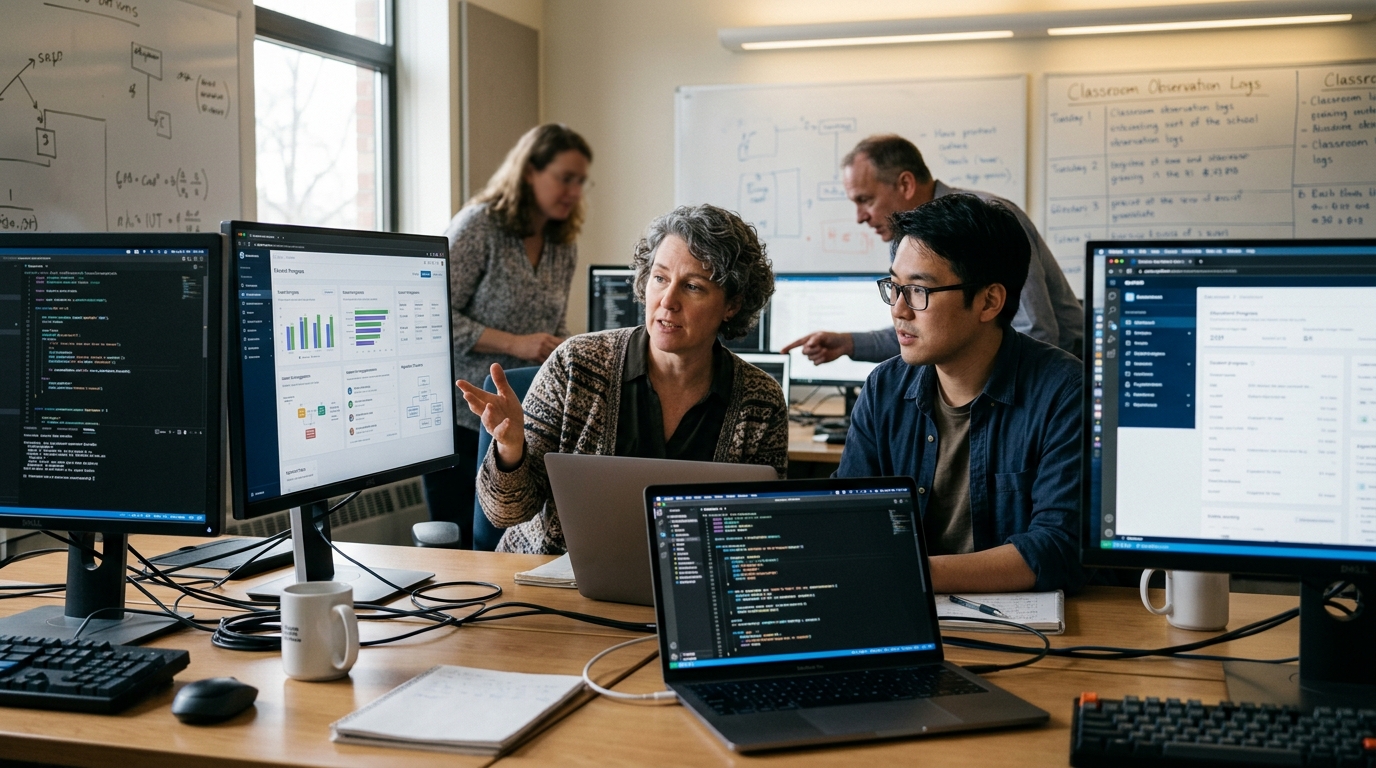
The fundamental challenge in education has never been a lack of information; it has been a lack of context. A new teacher can find thousands of lesson plans online, but they cannot easily find the specific way a colleague across the hall managed to engage a disruptive student or simplify a complex calculus concept for a struggling group. Generative AI now allows for the codification of these experiences. Through specialized platforms, educators can feed the system with their successes and failures, creating a "living repository" of pedagogical strategies.
"AI does not replace the teacher; it strengthens the bond between teachers, allowing one person's experience to become another's support system in real-time," notes an educational technology analyst.
This is not merely about file sharing. It involves AI models analyzing the teaching approaches of an entire district and offering proactive suggestions: "Your colleague in a nearby school handled this same unit using this specific analogy for students with diverse learning needs. Would you like to adapt it?"
Mitigating Burnout through Collaborative Intelligence
Teacher burnout is a global crisis, often driven by the sheer volume of administrative and preparatory work. Much of this pressure stems from reinventing the wheel for every lesson. AI can act as a "senior teaching assistant" with access to the collective best practices of the entire faculty. Instead of a teacher spending five hours on a Sunday preparing a new unit, AI can present a draft based on methods already proven effective in similar demographic contexts.
- Personalization at Scale: AI helps teachers adapt their colleagues' materials to the specific needs of their own students without starting from scratch.
- Collaborative Mentorship: New teachers gain access to a form of "virtual mentorship" grounded in the actual experiences of veterans within their specific school culture.
- Continuous Improvement: AI systems can identify which instructional tools yield the best outcomes, fostering a culture of evidence-based teaching rather than guesswork.
The Human Element and Ethical Considerations
Despite the promise, integrating AI as a collaborative tool carries significant risks. The primary concern is the loss of authenticity. If every lesson is based on an algorithm suggesting "what worked elsewhere," teaching risks becoming standardized and sterile. Education is, at its core, a human relationship. AI must remain the co-pilot, not the pilot.
Furthermore, issues of intellectual property and privacy arise. Who owns a teacher's "experience" once it is digitized? How do we ensure that AI usage doesn't morph into a tool for constant surveillance and performance monitoring by school administrations? Trust is the essential currency. For this model to succeed, teachers must feel safe sharing not just their triumphs, but also their vulnerabilities and failures.
Conclusion: The Era of the Connected Educator
The future of education lies not in isolation, but in connection. Artificial Intelligence provides the infrastructure to transform teaching from a solitary profession into a collective endeavor. By leveraging the wisdom of their peers through technology, educators can refocus on what they do best: inspiring, mentoring, and connecting with their students. AI is not the end of the teacher; it is the rebirth of their collective power in a digital age.