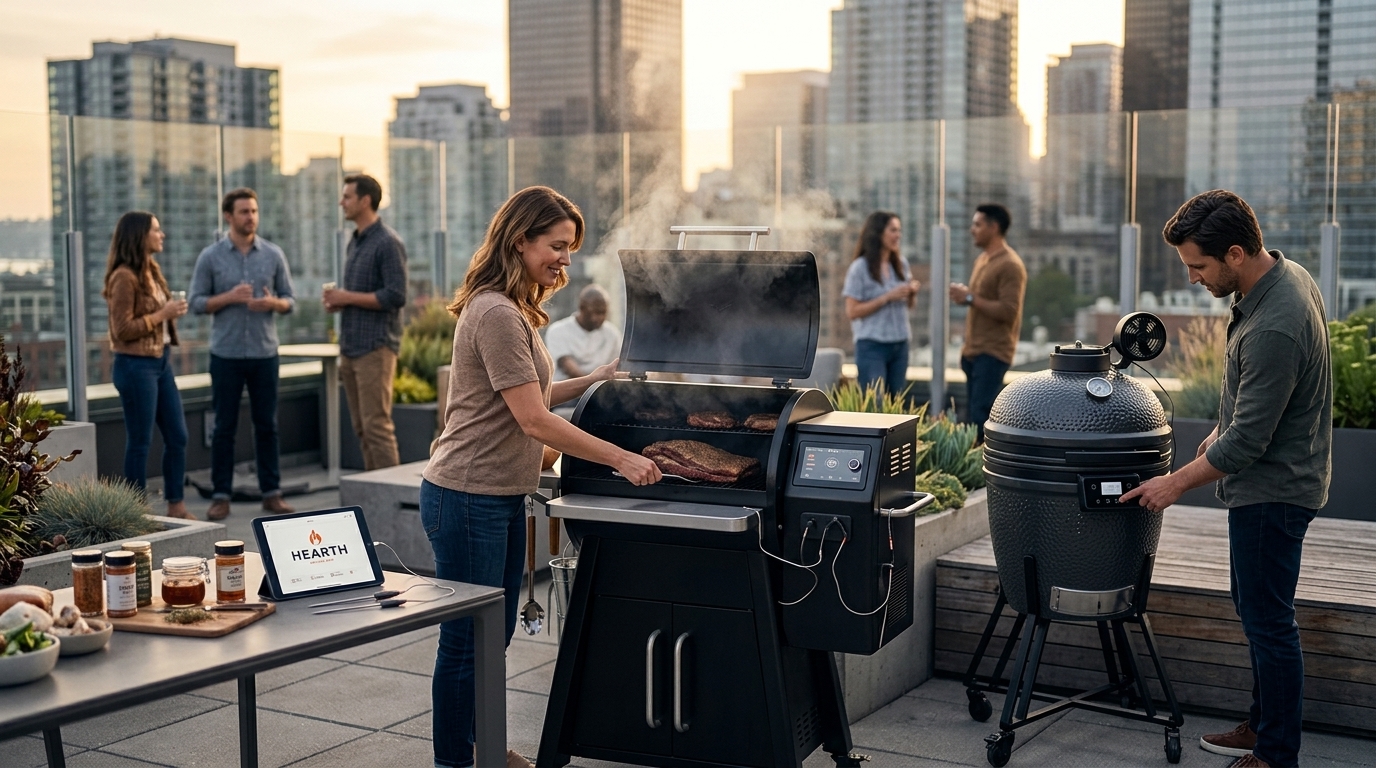
The ritual of outdoor cooking is one of humanity’s oldest habits, a connection to fire that stretches back to the dawn of civilization. However, as we move through 2026, the image of the "pitmaster" standing over coals with a pair of tongs and a manual thermometer is rapidly being replaced by sophisticated systems that would rival the most modern restaurant kitchens. Technology hasn’t just entered our backyards; it has occupied them, transforming BBQ from an instinct-based art into a precision science.
The Pellet Revolution and the Rise of AI
2026 marks the full maturation of pellet grills. Once considered a niche solution for smoking enthusiasts, they are now the primary choice for the average consumer seeking wood-fired flavor without the logistical nightmare of charcoal management. This year’s top-tier models integrate PID (Proportional-Integral-Derivative) controllers, which maintain temperatures within a single degree Celsius, regardless of external weather fluctuations.
But the true breakthrough this year is the integration of Artificial Intelligence. New "smart" grills no longer stop at simply notifying the user when the meat reaches a target temperature. They utilize predictive algorithms that analyze meat density, fat content, and moisture loss in real-time. This means the grill can tell you, down to the second, when to pull your brisket or ribeye to achieve the perfect finish, accounting for "carryover cooking"—the rise in internal temperature that occurs after the meat is removed from the heat source.
Portability Without Compromise
For decades, camping or tailgating meant compromising on food quality. Portable grills were either underpowered electric units or flimsy, unreliable charcoal buckets. In 2026, this paradigm has been completely shattered. The latest portable pellet grills utilize high-density lithium-ion batteries, allowing for up to 15 hours of continuous smoking far from any power outlet.
This is particularly relevant for the modern adventurer. The ability to monitor a slow-smoked meal via a smartphone while hiking or boating is no longer a futuristic dream. Connectivity through Matter and Thread protocols ensures that the grill remains online even in areas with spotty cellular service, creating its own local mesh network with peripheral sensors and probes. The ruggedization of these units also means they can withstand the vibrations of off-road travel, making them true "go-anywhere" culinary tools.
Electric Grilling: The Urban Solution
As regulations regarding smoke emissions and open flames become increasingly stringent in major metropolitan areas, electric grilling is experiencing an unprecedented boom. Manufacturers have finally overcome the biggest hurdle: the lack of authentic flavor. Through "infusion" technologies, where small amounts of real wood are electrically heated to produce smoke without an open flame, modern electric grills deliver results that are virtually indistinguishable from traditional BBQ.
Furthermore, energy efficiency has become a cornerstone of design. The grills of 2026 are heavily insulated, reducing energy consumption by 40% compared to models from a decade ago. This makes them ideal for apartment balconies and urban terraces, where environmental consciousness and neighborly courtesy are paramount. The "smart" aspect here extends to power management, with some models able to sync with home energy systems to cook during off-peak hours or utilize solar battery storage.
Conclusion: Is the Art Still Human?
Despite the invasion of sensors, probes, and mobile apps, the essence of grilling remains unchanged: the gathering around food. Technology in 2026 does not aim to replace the cook, but rather to liberate them from the anxiety of failure. The six best grills of the year—ranging from massive backyard smokers to sleek, urban-friendly electric units—prove that we can have the best of both worlds: the primal flavor of fire and the absolute precision of the digital age. As we look toward the future of outdoor cooking, the focus is shifting from "how to cook" to "what to share," as the machines take care of the variables, leaving us to enjoy the company.