In the rapidly evolving AI landscape of 2026, the geopolitical chessboard of technology has just gained a critical new dimension. According to recent reports from the cybersecurity sector, the new model from China’s Zhipu AI has managed to match—and in some instances exceed—the performance of Anthropic’s Claude Mythos in the specialized field of software vulnerability detection. This development is not merely a technical milestone for Beijing; it is a clear signal that Western semiconductor export controls have failed to stifle China’s algorithmic ingenuity.
The Technical Leap: GLM-5 and Code Reasoning
Zhipu AI, a standout unicorn emerging from the prestigious Tsinghua University labs, has long been characterized as China’s answer to OpenAI. With the release of their latest GLM (General Language Model) architecture, the company has pivoted heavily toward "multi-step reasoning," a capability essential for deep code analysis. Vulnerability detection requires more than simple pattern matching; it necessitates a profound understanding of data flow, memory management, and the potential logical fallacies that an adversary might exploit.
In rigorous benchmarking conducted within isolated sandbox environments, Zhipu’s model demonstrated a startling proficiency in identifying "zero-day" vulnerabilities—flaws unknown even to the software's original developers. Claude Mythos, which until recently was considered the gold standard for secure coding due to its sophisticated alignment protocols and semantic depth, now faces a formidable peer from the East. The gap that once separated Silicon Valley from Beijing in high-reasoning tasks is closing at an unprecedented rate.
The Geopolitics of Dual-Use Technology
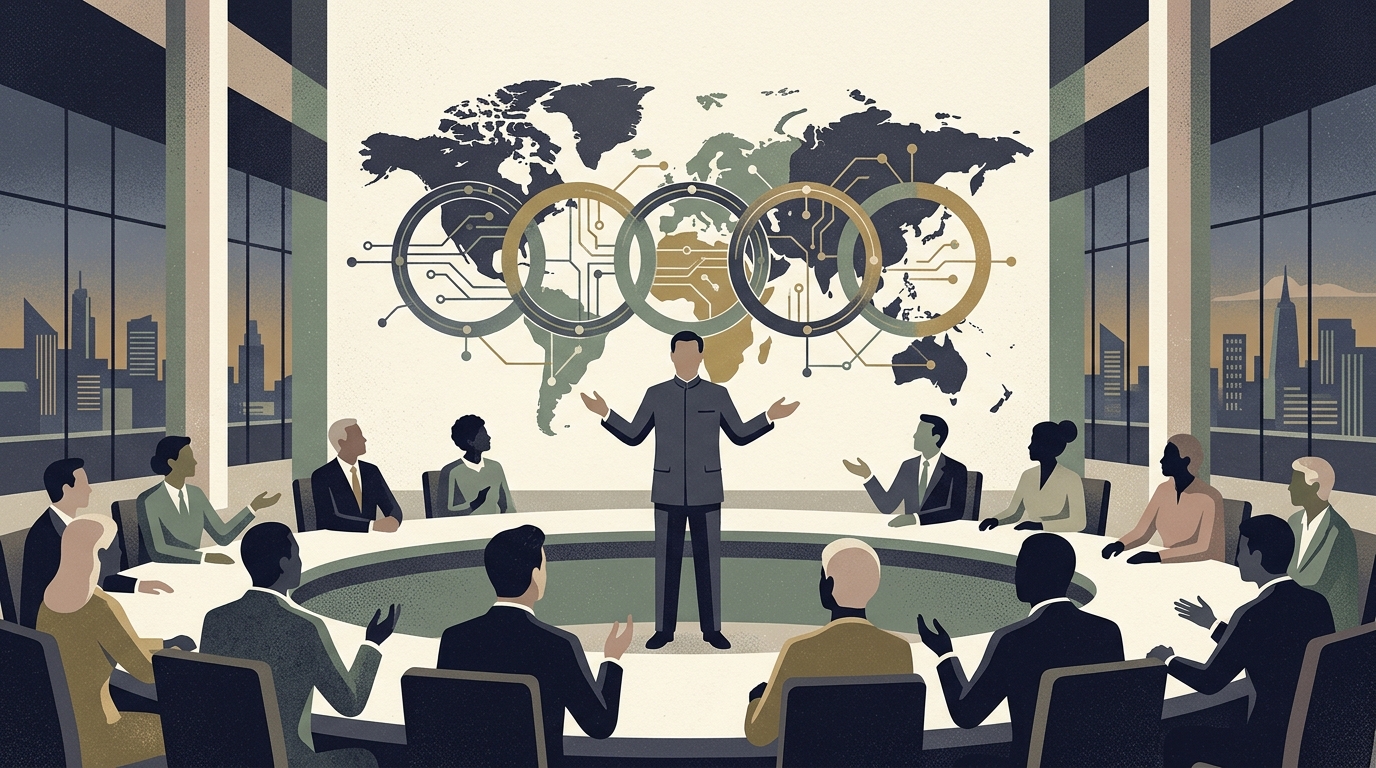
The implications of this breakthrough extend far beyond the corporate boardrooms of Silicon Valley and Beijing’s Zhongguancun tech hub. The ability of an AI to autonomously detect security holes is a quintessential "dual-use" technology. On the defensive side, it can be deployed to harden critical infrastructure, such as power grids, financial systems, and telecommunications. Conversely, it represents a potent offensive asset, allowing state actors to develop sophisticated cyber-weapons with a fraction of the traditional human effort.
Zhipu AI’s success highlights a significant trend in the 2026 tech race: Chinese researchers have become exceptionally adept at optimizing models to perform on less powerful hardware. While American firms have leaned into the raw compute power provided by NVIDIA’s B200 and Blackwell architectures, Zhipu and Kai-Fu Lee’s 01.AI have invested in architectural efficiency. They are proving that intelligence is not solely a function of transistor count but of how elegantly those transistors are utilized.
Western Response and the Trust Deficit
Washington is reportedly monitoring these developments with increasing concern. If Chinese AI models become the premier tools for global cybersecurity, a profound crisis of trust emerges. Would a Western corporation dare use a Chinese-developed AI to audit its proprietary code, knowing that the analysis results—and the discovered vulnerabilities—could potentially be mirrored to foreign intelligence agencies? This dilemma, of course, mirrors the concerns Beijing has regarding the use of Claude or GPT-5 by Chinese enterprises.
Furthermore, the convergence of performance between Zhipu and Anthropic suggests that we are approaching a "knowledge plateau" in LLM development, where differentiation is driven by specialized training data rather than sheer compute. Analysts warn that the next phase of the technological cold war will be fought over the provenance and exclusivity of the datasets that feed these high-end security models.
Conclusion: A Bifurcated Digital Future?
The news that Zhipu AI stands shoulder-to-shoulder with Claude Mythos is a wake-up call. China is no longer just playing catch-up; in strategic domains like cybersecurity, it may be seizing the lead. As 2026 unfolds, the urgency for international norms and "red lines" regarding AI-driven vulnerability research has never been higher. Artificial intelligence is no longer just a productivity tool; it is the ultimate sword and shield of the digital age, and the shield is now being forged with equal strength on both sides of the Pacific.