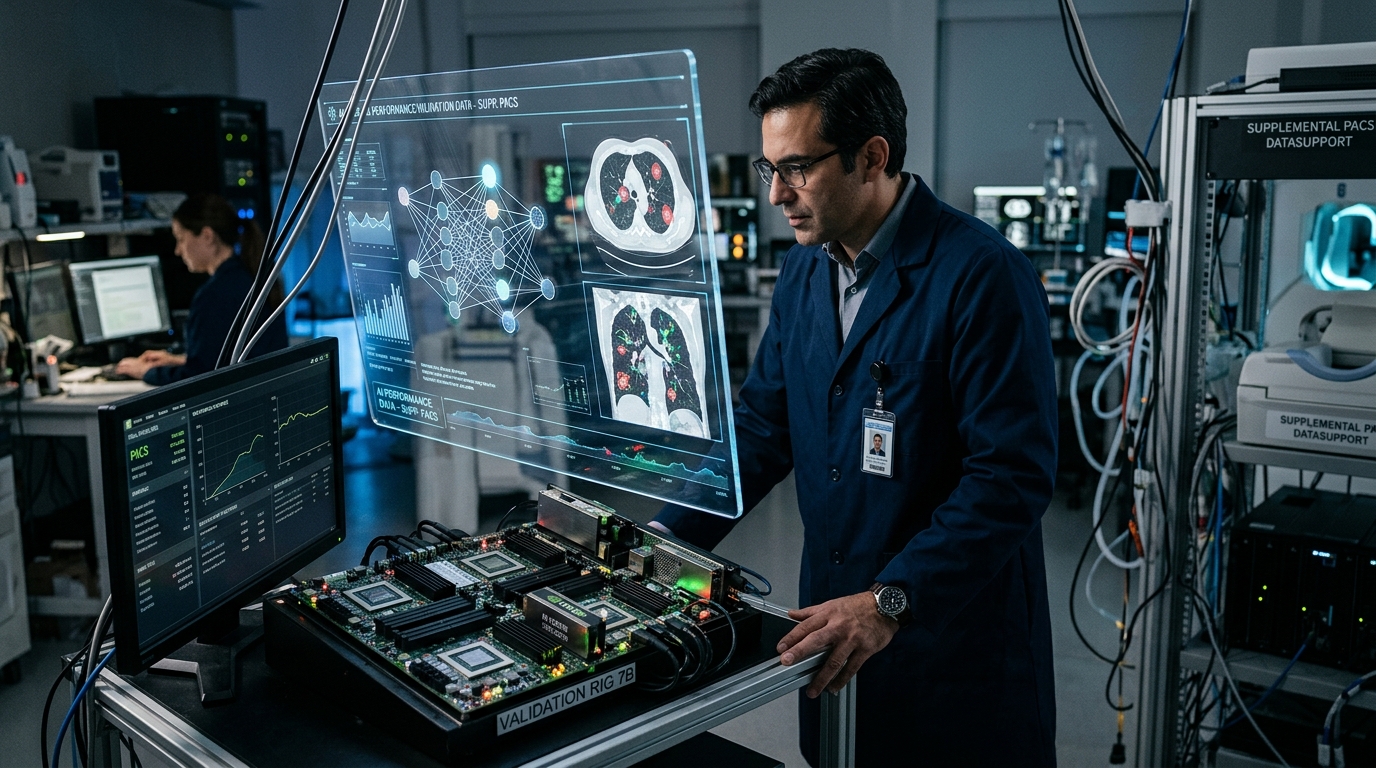
In modern medical imaging, the advent of Artificial Intelligence (AI) promises a revolution in the speed and accuracy of diagnosis. However, the transition from the laboratory to clinical practice carries significant risks. At the recent Society for Imaging Informatics in Medicine (SIIM) conference, experts emphasized that direct integration of AI algorithms into primary Picture Archiving and Communication Systems (PACS) may be premature and hazardous. The proposed solution is the use of "Supplemental PACS," which function as an intermediate validation and testing environment.
The Challenge of Clinical Integration
For decades, the PACS has been the heart of the radiology department—a digital space where X-rays, CT scans, and MRIs are stored and analyzed. When a new AI algorithm is introduced into this environment, there is a risk of "polluting" the workflow with incorrect results or causing confusion among physicians. Algorithms often exhibit different behavior on real-world clinical data compared to their training data, a phenomenon known as "algorithm drift."
Supplemental PACS offer a "shadow" infrastructure. In this environment, the algorithm can process images in real-time, but its results are not immediately visible in the primary diagnostic system. This allows IT managers and radiologists to compare AI predictions with actual physician diagnoses without compromising patient safety. As highlighted at SIIM, validation is not a one-time process but a continuous quality assurance cycle.
Technical Architecture and Interoperability
Implementing a supplemental PACS requires a high level of interoperability, based on standards such as DICOM and HL7. This architecture allows images to be routed from the primary PACS to the supplemental one, where the AI performs its analysis. The results are stored there, creating a rich database for retrospective study. This approach enables hospitals to check if the AI is biased against specific demographic groups or if its performance is affected by the model of the imaging machine.
- Risk Isolation: Protecting the primary clinical database from unstable or unverified algorithms.
- Comparative Evaluation: The ability to simultaneously test multiple algorithms from different vendors.
- Staff Training: Radiologists can familiarize themselves with AI tools in a low-risk environment.
Furthermore, the use of supplemental systems facilitates compliance with data protection regulations, as it provides a controlled framework for third-party AI providers to access medical data. SIIM argues that this "security architecture" will become the standard for every modern digital hospital in the coming years.
The Future of Diagnostic Accuracy
As Artificial Intelligence becomes more complex, the need for transparent and auditable systems becomes imperative. Supplemental PACS are not just a technical choice but an ethical commitment to the correctness of medical practice. The ability to "prove" the value of an algorithm before it receives final approval for clinical use is key to building trust between physicians and technology.
"AI in medicine should not be a black box. It must be a tool that is monitored, challenged, and ultimately improved through continuous comparison with human experience," it was noted at the conference.
In conclusion, the adoption of supplemental PACS systems is a critical step for the maturation of AI in healthcare. It allows medical institutions to innovate safely, ensuring that technology serves humanity and not the other way around. The challenge now shifts from simply developing algorithms to creating the infrastructure that will make them reliable partners in the diagnostic room.