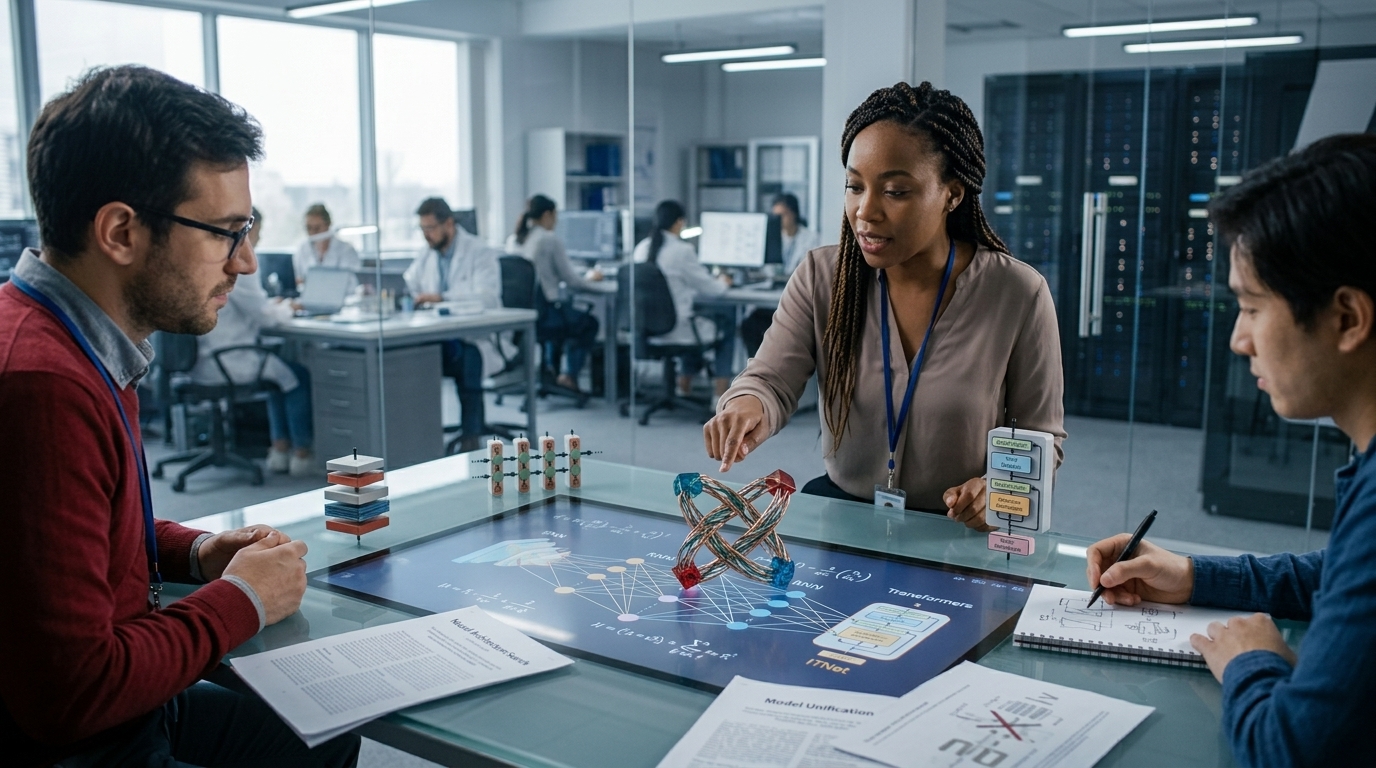
For over a decade, the artificial intelligence landscape has been fragmented into architectural silos. Convolutional Neural Networks (CNNs) dominated computer vision through their mastery of spatial locality. Recurrent Neural Networks (RNNs) were the undisputed rulers of sequence and memory. More recently, Transformers have conquered nearly every domain via the Attention mechanism, enabling the modeling of global dependencies. However, a revolutionary new study released on ArXiv (2606.19538) titled "ITNet" promises to end this fragmentation, proving that these three seemingly distinct approaches are, in fact, special cases of a single, unified mathematical transform.
The Quest for AI's 'Grand Unified Theory'
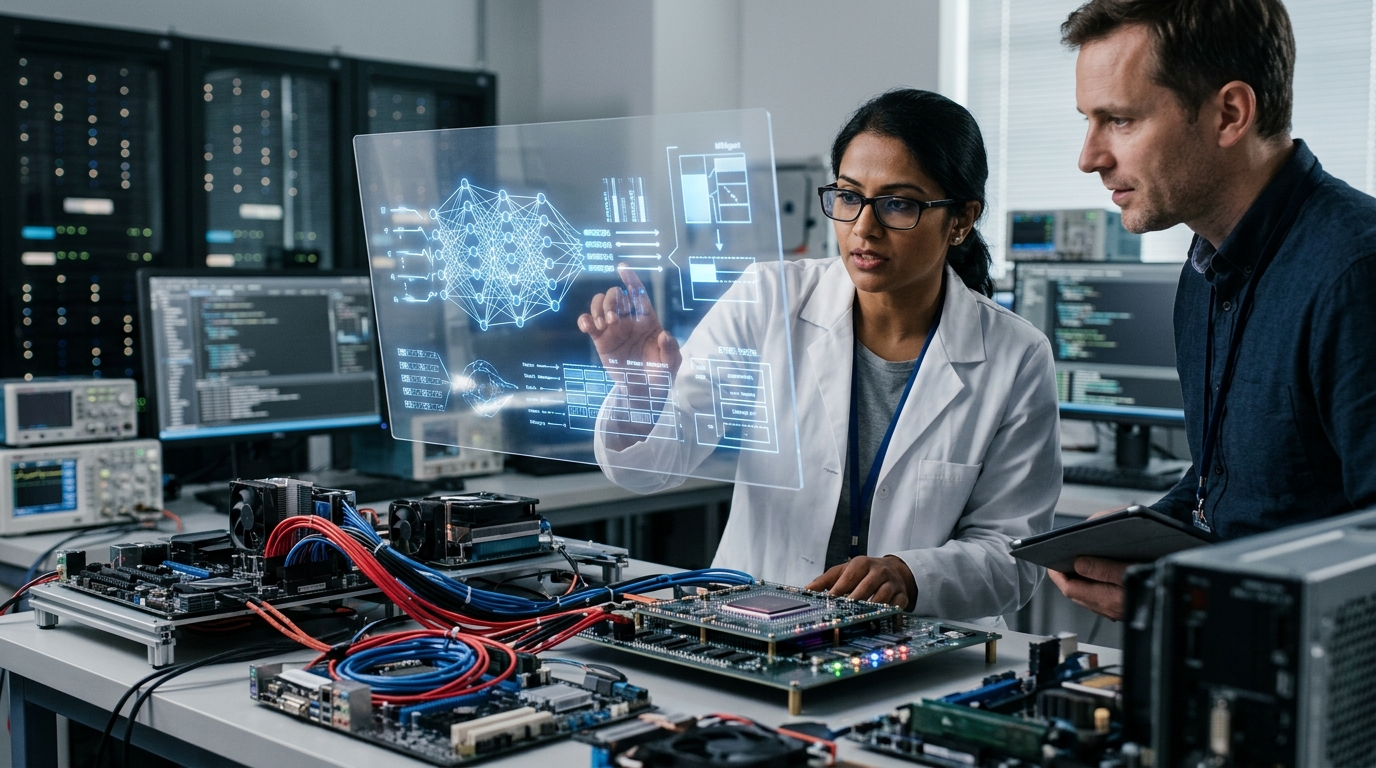
In physics, the search for a theory that unifies the fundamental forces of the universe is the ultimate goal. In AI, ITNet (Integral Transform Network) appears to achieve something similar for deep learning architectures. The researchers propose that instead of designing different layers for different tasks, we can utilize a "learnable" integral transform. This transform employs a kernel that can be dynamically adapted during training.
When the ITNet kernel is restricted to local shifts, the network behaves like a CNN. When it adopts a causal, state-dependent structure, it morphs into an RNN. And when the kernel becomes dependent on the input content, the familiar attention mechanism of Transformers emerges. This flexibility is not merely a theoretical elegance; it allows the model to select the optimal inductive bias for any given problem without the human architect needing to pre-determine the structure.
Breaking the Efficiency Barriers
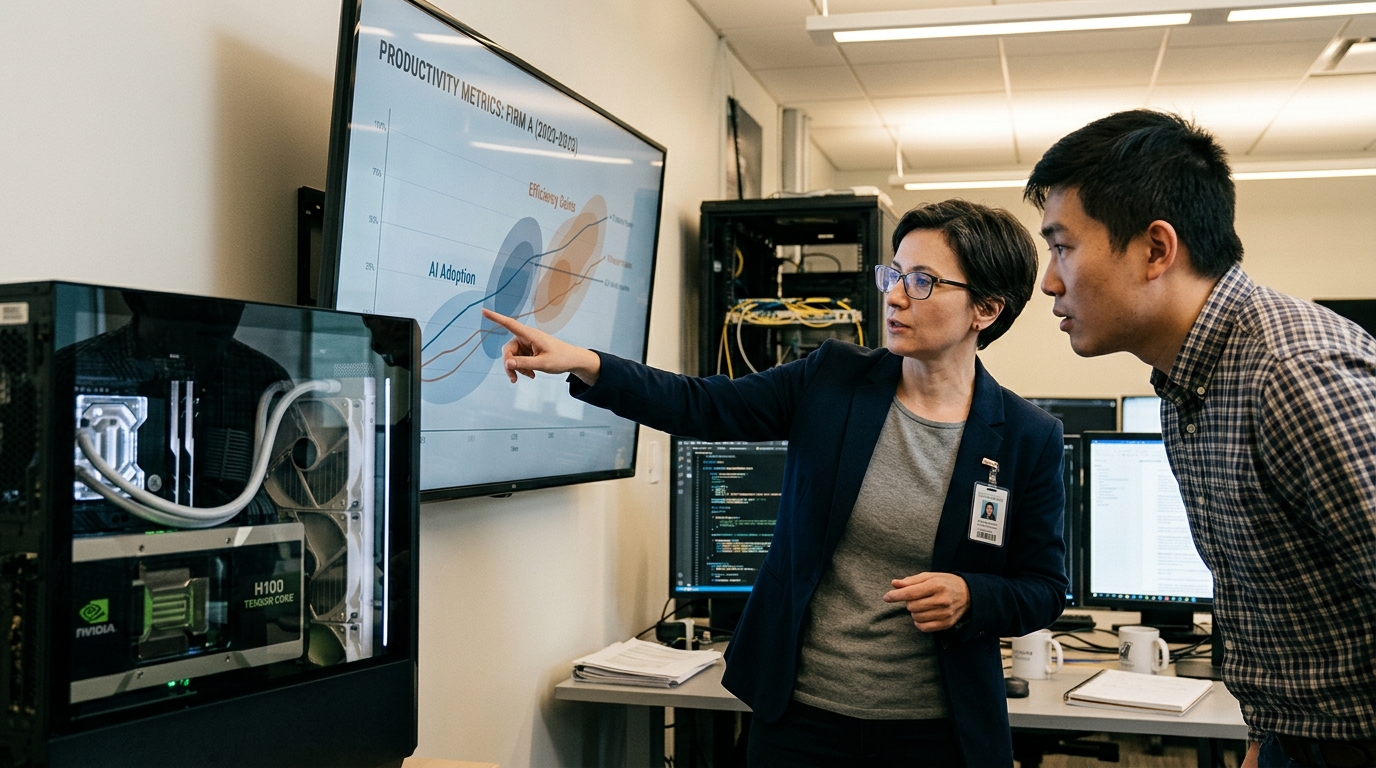
One of the primary bottlenecks of modern Transformers is their computational cost, which scales quadratically with sequence length. ITNet offers a viable path forward. Because it is rooted in integral transforms, it can leverage advanced techniques from numerical analysis and signal processing, such as Fast Fourier Transforms (FFTs) or low-rank approximations.
- Convolution: Ideal for image processing and local feature extraction.
- Recurrence: Essential for continuous data streams with limited memory footprints.
- Attention: Superior for long-range context and complex relationship mapping.
ITNet enables the creation of hybrid layers that combine the strengths of all three. For instance, a model could utilize "convolutional attention" at certain hierarchical levels and "recurrent memory" at others, all under the same mathematical umbrella. This drastically reduces the need for specialized hardware and allows complex models to run on more constrained resources.
"We haven't just discovered a new architecture; we've uncovered the common ancestor of existing ones. ITNet is the connective tissue that allows us to view the AI landscape as a continuous field rather than a collection of disjointed tools," the researchers state in their paper.
Implications for the Future of Machine Learning
The emergence of ITNet comes at a time when the industry is desperately seeking alternatives to the dominance of Transformers, which, while powerful, are increasingly viewed as energy-hungry and rigid. The possibility of unification means that transfer learning between different data types—from medical imaging (CNN) to natural language (Attention) and financial time series (RNN)—will become significantly more fluid.
Furthermore, the mathematical clarity of ITNet paves the way for better interpretability. If we can analyze the kernel of the integral transform, we can understand exactly which processing strategy the model chose for a specific problem. It is a victory for mathematical rigor over the "black box" approach that often prevails in empirical AI research.
In conclusion, ITNet is not just another paper on ArXiv. It is an invitation to re-evaluate the foundations of deep learning. As we move toward 2027, the ability of our systems to adapt their structure dynamically will be the key to achieving more efficient, robust, and versatile artificial intelligence.