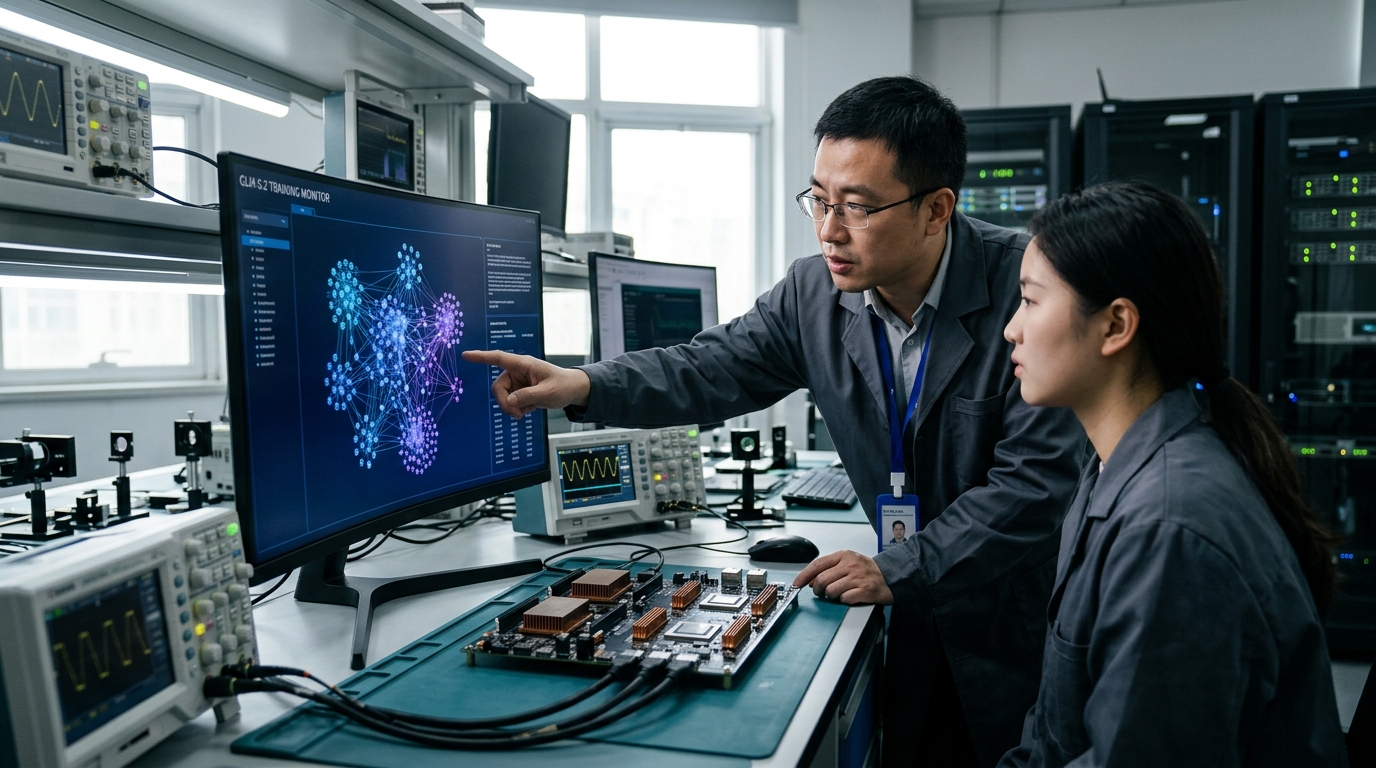
In the ever-shifting landscape of global artificial intelligence, the center of gravity is steadily tilting toward the East. The recent release of GLM-5.2 by the Chinese firm Zhipu AI is not merely another entry in the long list of Large Language Models (LLMs); it is a bold statement of intent that has sparked intense debate within the corridors of Silicon Valley. While American giants like OpenAI and Google remain tethered to closed, proprietary systems, Zhipu AI has chosen the path of open-source (or at least open-weights), delivering performance that stands toe-to-toe with GPT-4o and Claude 3.5 Sonnet.
The Architecture of Excellence: Inside GLM-5.2
GLM-5.2 represents the pinnacle of research conducted at Tsinghua University—often referred to as the "MIT of China." The model is built upon a sophisticated Mixture-of-Experts (MoE) architecture, which allows it to maintain exceptional efficiency during inference by activating only the necessary segments of the neural network for any given query. This makes it not only faster but also significantly more accessible for enterprises that lack the gargantuan computational resources of major cloud providers.
One of the most striking features of GLM-5.2 is its prowess in complex reasoning and programming. In coding benchmarks, the model achieves scores that surpass many Western counterparts, proving that the Chinese AI school has placed a massive emphasis on precision and logical problem-solving. Furthermore, its support for a massive context window enables the processing of entire books or extensive technical manuals in a single prompt, making it an indispensable tool for scientific research and legal analysis.
Open Source as a Geopolitical Tool
Zhipu AI’s strategy to release GLM-5.2 with open weights is a direct challenge to the revenue models of American AI firms. When a model of this caliber is available for local deployment and fine-tuning, companies worldwide begin to question the necessity of paying expensive API fees to the likes of OpenAI. This "democratization" of high-end AI serves as a catalyst for adoption in emerging markets, where Chinese solutions are gaining traction due to their cost-effectiveness and flexibility.
However, this move also carries deep political implications. At a time when the United States is imposing strict export controls on advanced chips—such as NVIDIA’s H100 and B200 series—the development of models like GLM-5.2 demonstrates that Chinese researchers have mastered the art of doing more with less. Algorithmic optimization has become the primary response to hardware scarcity, and GLM-5.2 is living proof that intellectual momentum cannot be easily halted by trade embargos or geopolitical barriers.
The Silicon Valley Reaction
In San Francisco, the unease is palpable. Leading engineers, including figures like Andrej Karpathy, have noted the astonishing speed at which China is closing the gap. GLM-5.2 is not an isolated success; it follows the breakthrough performance of DeepSeek and Alibaba’s Qwen series. Silicon Valley is realizing that the "two-year lead" it once believed it held has shrunk to a matter of months, and in certain specialized domains, it has vanished entirely.
The question now is whether the West will be forced to pivot its strategy. If open-source Chinese models become the industry standard for global developers, OpenAI and Google risk becoming "walled gardens" reserved for those who can afford the premium, while the bulk of real-world innovation happens within an open ecosystem powered by Chinese expertise. The narrative of American exceptionalism in AI is being tested by the sheer pragmatism of Beijing's tech champions.
Conclusion and Future Outlook
GLM-5.2 is more than a technological milestone; it is a symbol of the new era of multipolar artificial intelligence. As we progress through 2026, the dominance of a single nation or corporation in the AI sector appears increasingly unlikely. The battle for machine intelligence will be fought on the grounds of efficiency, accessibility, and the ability of models to reason beyond the narrow confines of their training data. Zhipu AI has set a high bar with GLM-5.2, and the world is now watching to see how the established players in the West will respond to this Eastern resurgence.