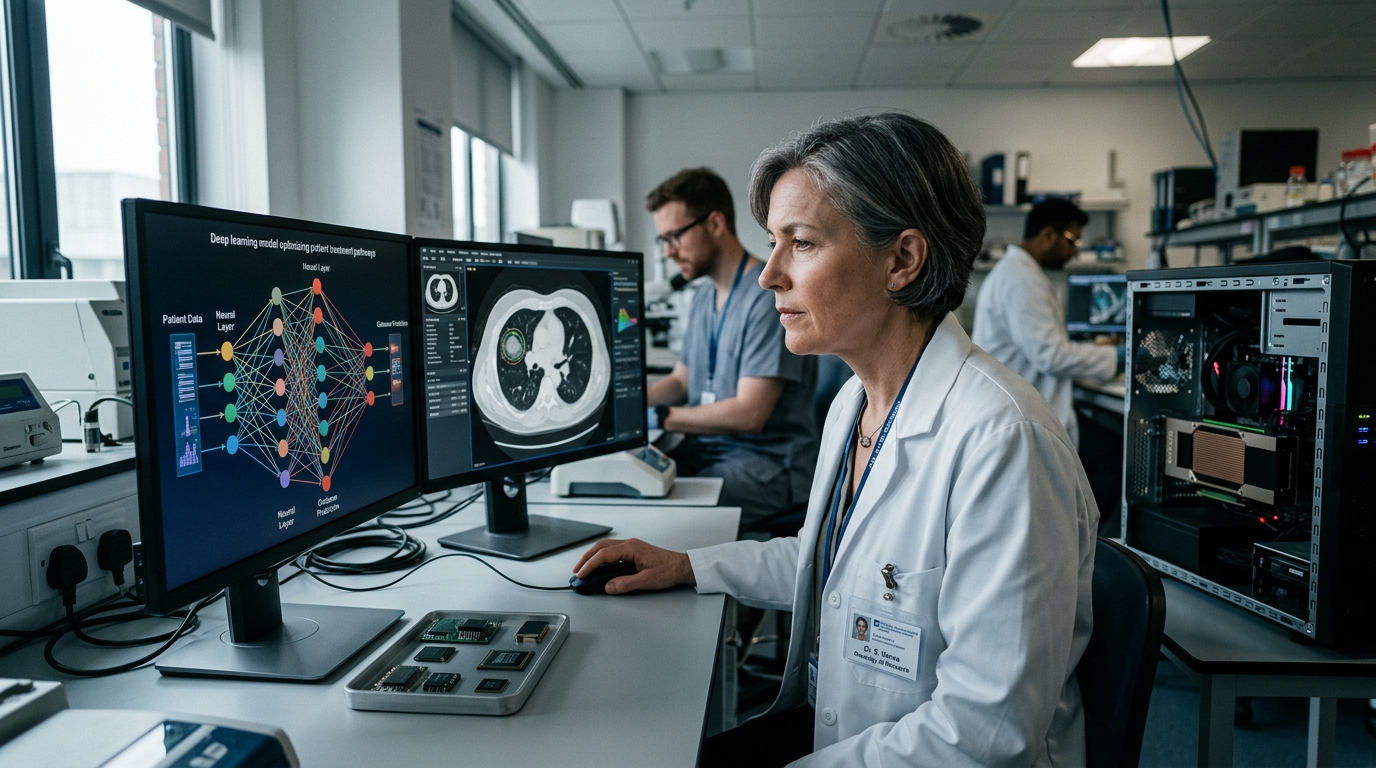
As we navigate the mid-2020s, oncology is witnessing one of the most profound transformations in medical history. Artificial Intelligence (AI), once viewed as a peripheral support tool, has evolved into a central pillar of the fight against cancer. The integration of advanced machine learning algorithms and Large Language Models (LLMs) is not only altering diagnostic precision but also fundamentally changing how new therapies are developed and how patients are managed within clinical workflows.
Revolutionizing Clinical Trials and Accelerating Innovation
One of the most significant bottlenecks in oncological progress has traditionally been the duration and cost of clinical trials. AI is disrupting this landscape by optimizing patient selection. By leveraging predictive models that analyze genomic data, medical history, and biomarkers, researchers can now identify patients most likely to respond to a specific experimental therapy. This drastically reduces failure rates and accelerates the regulatory approval of life-saving drugs.
Furthermore, the emergence of 'synthetic control arms' marks a major milestone. Rather than requiring a large cohort of patients to receive a placebo, AI can generate digital models based on historical trial data and Real-World Data (RWD). This not only speeds up the process but also addresses ethical dilemmas, allowing more participants to access active treatments. AI's ability to process vast amounts of data in real-time enables the identification of adverse events much earlier than traditional methods, significantly enhancing participant safety and trial integrity.
Streamlining Clinical Workflows and Mitigating Burnout
In daily clinical practice, oncologists are often overwhelmed by an ocean of information. AI-powered digital pathology and radiology act as a 'second reader' with unfailing attention to detail. Computer vision algorithms can detect microscopic lesions in CT scans or histological slides that the human eye might miss due to fatigue or cognitive load. This leads to earlier diagnosis, which in oncology is often the thin line between cure and palliative care.
However, the impact of AI extends beyond diagnostics. Clinical Decision Support Systems (CDSS) integrate the latest guidelines and emerging research, providing physicians with personalized treatment recommendations for each patient. This reduces the administrative burden and mental fatigue on doctors, allowing them to dedicate more quality time to patient communication. The automation of documentation through AI-driven ambient scribes is transforming the doctor's office visit from a typing exercise back into a meaningful human interaction.
Precision Medicine and the Future of Outcomes
Precision oncology is the ultimate goal, and AI is the key to unlocking it. By analyzing multi-omic data—including genomics, proteomics, and metabolomics—AI can predict how a specific tumor will evolve and which therapeutic strategy will be most effective. This means moving away from the 'trial and error' approach that often plagues cancer treatment, sparing patients from the toxic side effects of drugs that would ultimately prove ineffective.
Despite the immense potential, several challenges must be addressed. Data quality and algorithmic transparency (the 'black box' problem) remain critical concerns. The medical community must ensure that AI models are free from biases that could lead to disparities in care. Furthermore, protecting patient data privacy in an increasingly digitized environment requires robust regulatory frameworks. The evolution of AI in oncology is not merely a technological achievement; it is a new social contract for a fairer, more effective, and more humane healthcare system.