Managing diabetes has been one of modern medicine's most persistent challenges for decades. Despite significant advancements in insulin pumps and Continuous Glucose Monitors (CGM), the burden of decision-making has largely remained on the patient and the physician, often with vast informational gaps between clinical visits. However, a groundbreaking study published in the journal Nature is set to change the paradigm, introducing the concept of a predictive "digital twin" utilizing a Human-in-the-loop (HITL) AI approach.
What is a Healthcare Digital Twin?
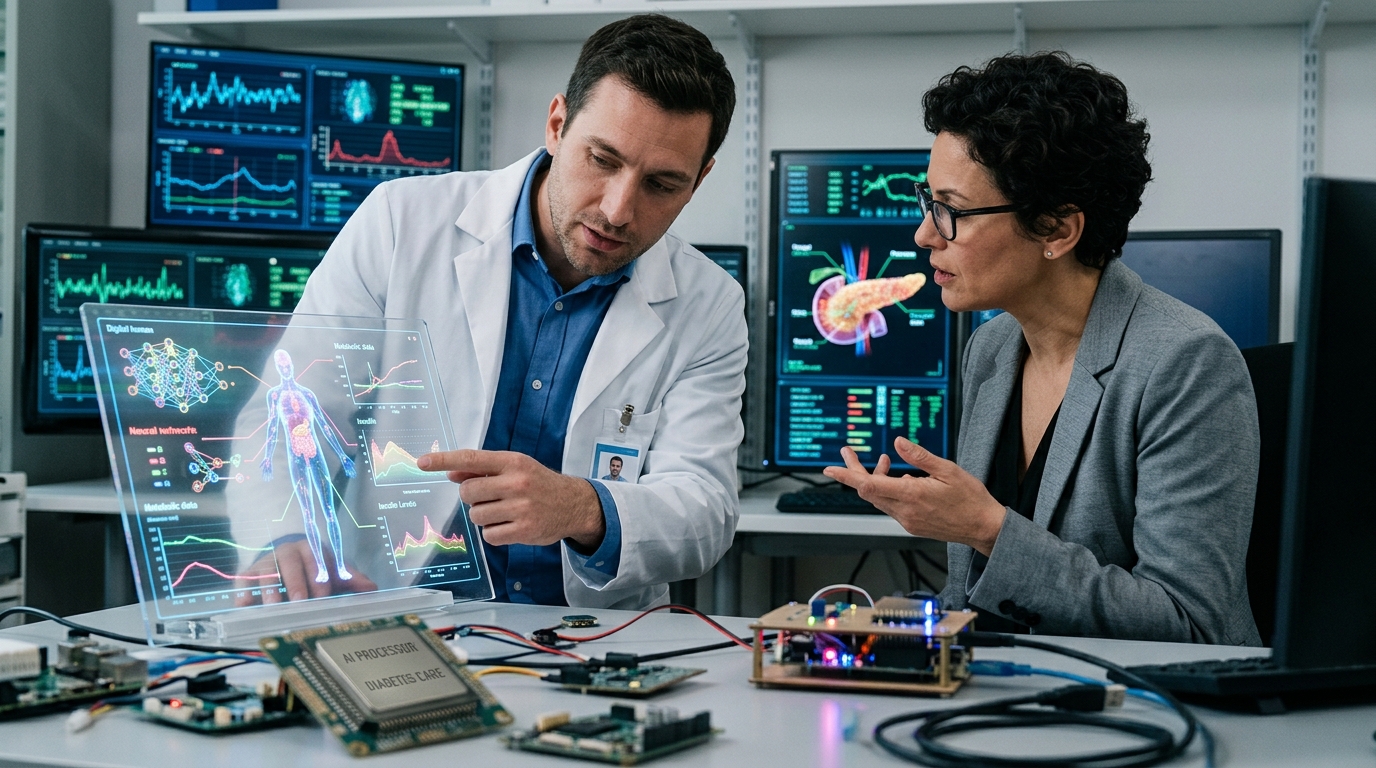
A digital twin is more than just a statistical model; it is a dynamic, virtual mirror of a specific patient's unique physiology. By utilizing real-time data from wearable devices, the AI creates a simulation capable of predicting how a patient's body will react to various stimuli—be it a high-carbohydrate meal, intense exercise, or a period of acute stress. The innovation of this research lies in integrating human judgment into the AI's feedback loop, ensuring that predictions are not only mathematically accurate but also clinically safe and contextually relevant.
According to researchers, this system enables "virtual precision care," effectively bridging the gap between quarterly doctor visits. Instead of waiting months to adjust insulin dosages, the digital twin suggests micro-adjustments on a daily basis, which are then validated by healthcare professionals or the patients themselves through an intuitive interface.
The Critical Role of 'Human-in-the-loop'
One of the primary hurdles in adopting AI within healthcare is the lack of trust and the notorious "black box" problem. The Human-in-the-loop (HITL) approach described in Nature addresses this head-on. The AI does not act in isolation; it functions as a highly sophisticated assistant. It processes massive volumes of data that would be impossible for a human to synthesize, yet leaves the final validation to the clinician.
- Significant reduction in hypoglycemic episodes through early prediction.
- Optimization of Time in Range (TIR) for blood glucose levels.
- Personalization of nutrition and exercise based on individual metabolic responses.
- Mitigation of "diabetes burnout" by reducing the cognitive load on patients.
This collaborative approach allows the system to learn from physician corrections, constantly refining its accuracy. It is a process of mutual learning: the AI masters the patient's biology, while the physician learns to leverage data for more effective, proactive intervention.
Challenges and Future Horizons
Despite the optimism, the widespread implementation of digital twins faces significant obstacles. Data privacy is paramount; the continuous stream of biometric data to the cloud requires robust cybersecurity frameworks. Furthermore, there is a risk of a "digital divide"—will this technology be accessible to all patients, or only those with the financial means and technical literacy to navigate it?
"Precision medicine is no longer just about our DNA; it's about how we live every minute of our lives," the study emphasizes.
In the future, this model could expand to other chronic conditions, such as cardiovascular disease or hypertension. The ability to "test" a treatment on a digital self before applying it to the actual patient represents the Holy Grail of modern biomedicine. As we progress through 2026 and beyond, the convergence of data science and clinical practice promises a life with fewer limitations for the millions of people worldwide living with diabetes.