The era where Artificial Intelligence was confined to passive text generation or image creation is drawing to a close. Today, we stand on the threshold of the age of "Agents" — AI systems that don't just answer questions but plan and execute complex tasks across digital and physical environments. However, increasing autonomy brings with it a critical question: How do we control something we don't fully understand? Google DeepMind, Alphabet's premier research unit, recently published a landmark study that promises to map the internal control mechanisms of these agents, turning the "black box" of neural processing into a transparent dashboard.
From Reaction to Autonomy
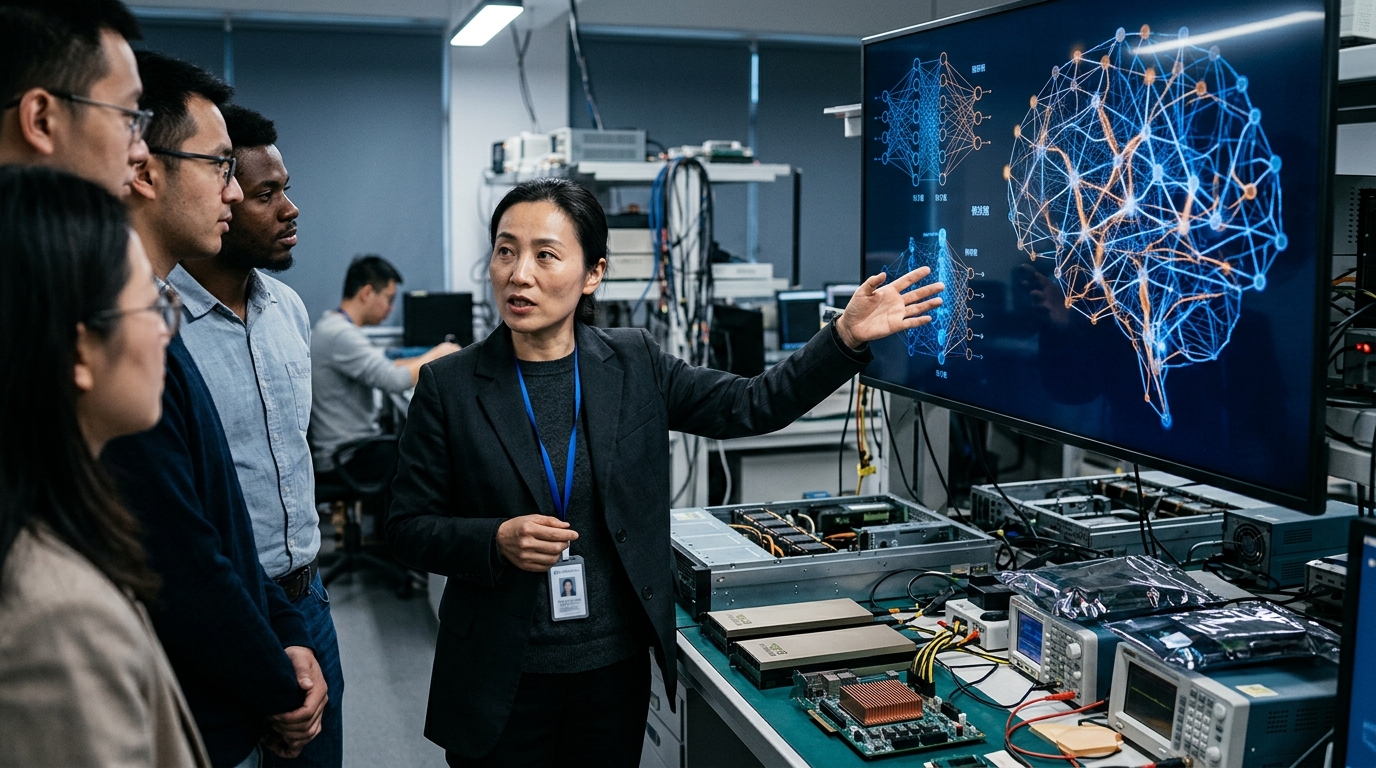
For years, the AI community has struggled with the problem of "interpretability." Large Language Models (LLMs) operate through billions of parameters, making it nearly impossible for a human to pinpoint exactly why a model made a specific decision. DeepMind's new research goes a step further, focusing on "mechanistic interpretability." Instead of treating the agent as a monolithic entity, researchers have managed to isolate specific "circuits" responsible for different aspects of its behavior.
Imagine controlling an aircraft. Until now, we tried to steer AI by giving it instructions through text (prompting), hoping it would listen. DeepMind's approach is akin to revealing the cockpit itself: it allows us to see which switches control altitude, which control speed, and which control fuel consumption. This "mapping" of controls allows developers to intervene directly in the agent's internal representations, correcting unwanted behaviors before they manifest.
The Mechanics of Understanding
The study utilized techniques such as "sparse coding" to identify interpretable features within the vast datasets of neural networks. Researchers found that AI agents develop internal concepts of the world that are surprisingly similar to human categorizations. For example, an agent trained in strategy games develops specific neural pathways for the concept of "sacrifice" or "defense."
What sets DeepMind's research apart is the ability to "intervene." Once a specific feature is mapped — for instance, an agent's tendency to be overly risky — researchers can "turn down the volume" of that specific circuit. This offers a level of safety that was previously unthinkable. We are no longer talking about content filters applied after the fact, but structural alignment at the core of the system.
Risks, Ethics, and the Future
Despite the excitement, the ability to fully control AI agents raises serious ethical questions. If we can map and modify a system's internal "beliefs," who decides what the "correct" values are? In the European Union, the AI Act places heavy emphasis on transparency and human oversight. DeepMind's technology could provide the technical foundation for complying with these regulations, offering the tools to audit algorithmic decisions.
Furthermore, there is the risk of misuse. The same technology that allows for the deactivation of aggressive behaviors could, in the wrong hands, be used to create agents with extremely manipulative capabilities, "tuned" to exploit human weaknesses with surgical precision. Mapping controls is a double-edged sword: it gives us the steering wheel, but it doesn't tell us which direction we should drive.
Conclusion: Toward Collaborative Intelligence
DeepMind's work marks the transition from the "alchemy" of AI to the "science" of AI. As agents begin to manage our finances, schedule our movements, and participate in scientific research, our ability to understand and control their internal logic will be the deciding factor in their societal acceptance. Mapping controls is not just a technical achievement; it is humanity's attempt to remain the master of the game in a world increasingly inhabited by digital entities with a will of their own.