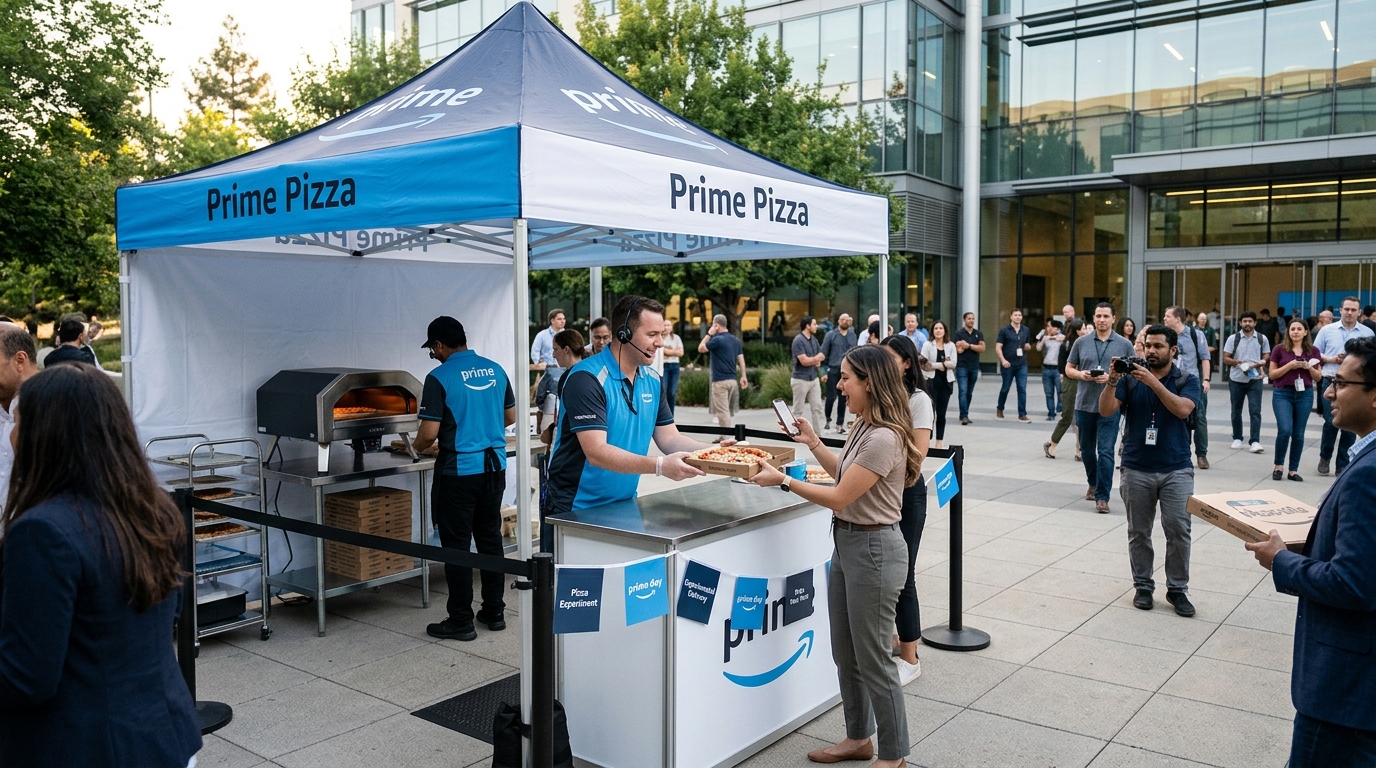
In the high-stakes world of big tech, Amazon rarely views failure as a permanent state. Despite the unceremonious shutdown of its 'Amazon Restaurants' division in 2019, the Seattle-based giant appears to have found a new way back into the kitchen. This time, the vehicle is pizza, and the occasion is Prime Day 2026.
The latest promotional blitz, offering free or heavily subsidized pizza to Prime members via a strategic partnership with Grubhub and major national chains, is far more than a simple marketing stunt. It is a sophisticated logistics and data-gathering experiment. According to market analysts, the choice of pizza is deliberate. Pizza is the most 'standardized' product in the delivery market: it travels well, has predictable prep times, and boasts massive, universal demand. For Amazon, it is the perfect test case to refine its ability to manage hyper-time-sensitive deliveries.
The Grubhub Synergy and Ecosystem Lock-in
The foundation of this renewed push is Amazon’s alliance with Grubhub, a deal that has evolved significantly since its inception. By integrating Grubhub’s services directly into the Amazon app and website, the company is attempting to transform Prime into an all-encompassing lifestyle operating system. The central question is whether Amazon can finally unseat incumbents like DoorDash and Uber Eats, who currently dominate the North American and European delivery landscapes.
The differentiator this time is Artificial Intelligence. Amazon is reportedly deploying predictive models that analyze real-time shopping behavior during Prime Day. If the system detects a user has been browsing heavy electronics deals for two hours, it might trigger a pizza promotion at precisely the moment 'decision fatigue' and hunger set in. This doesn't just sell food; it keeps the consumer anchored within the Amazon ecosystem, preventing them from closing the app to search for dinner elsewhere.
Logistics: Mastering the 'Hot and Fresh' Last Mile
Historically, Amazon’s Achilles' heel in food delivery was the 'last mile' under extreme time constraints. While the company is peerless at delivering a cardboard box within 24 hours, delivering a hot meal within 30 minutes requires a fundamentally different logistical architecture. The integration of Amazon Flex drivers with Grubhub’s existing courier network is a massive synchronization task that, if successful, could redefine the efficiency of urban logistics.
Industry experts suggest that if the 'Pizza Experiment' yields positive data regarding delivery times and customer satisfaction, Amazon could quickly scale to more complex cuisines. This would signal a seismic shift in the food delivery economy, potentially siphoning billions in GMV (Gross Merchandise Value) away from specialized delivery apps and into Amazon’s coffers.
The Economic and Regulatory Shadow
However, this expansion is not without its detractors. Small, independent restaurants fear that Amazon’s entry into the space will lead to further margin compression. Amazon possesses the leverage to dictate terms that small businesses find difficult to refuse, especially given the lure of reaching hundreds of millions of Prime members. Furthermore, the labor model of the gig economy remains a lightning-rod issue. Regulators in both the US and the EU are closely monitoring how Amazon manages its delivery partners, looking for potential antitrust violations or labor rights infringements.
In conclusion, the Prime Day pizza promotion of 2026 is a strategic opening gambit. It is Amazon’s declaration that its presence in our lives is still expanding. After conquering our bookshelves, our cloud infrastructure, and our living rooms, the company is now aiming for the dinner table, using the world’s most popular delivery food as its digital Trojan horse.