In the rapidly evolving landscape of Artificial Intelligence, 2026 is proving to be a watershed year for machine cognition. While Large Language Models (LLMs) have mastered the art of syntax and factual retrieval, they have long been plagued by a subtle yet pervasive flaw: the lack of genuine originality. A new research paper published on ArXiv, titled "CreativityNeuro: Steering Language Model Weights to Improve Divergent Thinking and Reduce Mode Collapse" (arXiv:2607.01433), introduces a radical framework to dismantle what researchers call the "artificial hivemind effect."
The Crisis of the Artificial Hivemind
Current AI training paradigms are fundamentally conservative. By optimizing for loss minimization, models are effectively incentivized to predict the most probable next token based on a massive corpus of human text. This results in "mode collapse," where the AI gravitates toward a safe, average response that mirrors the collective consensus. If you ask multiple state-of-the-art models to conceptualize a solution for urban congestion, they often provide remarkably similar, predictable answers. This intellectual homogeneity limits the utility of AI in fields requiring breakthrough innovation.
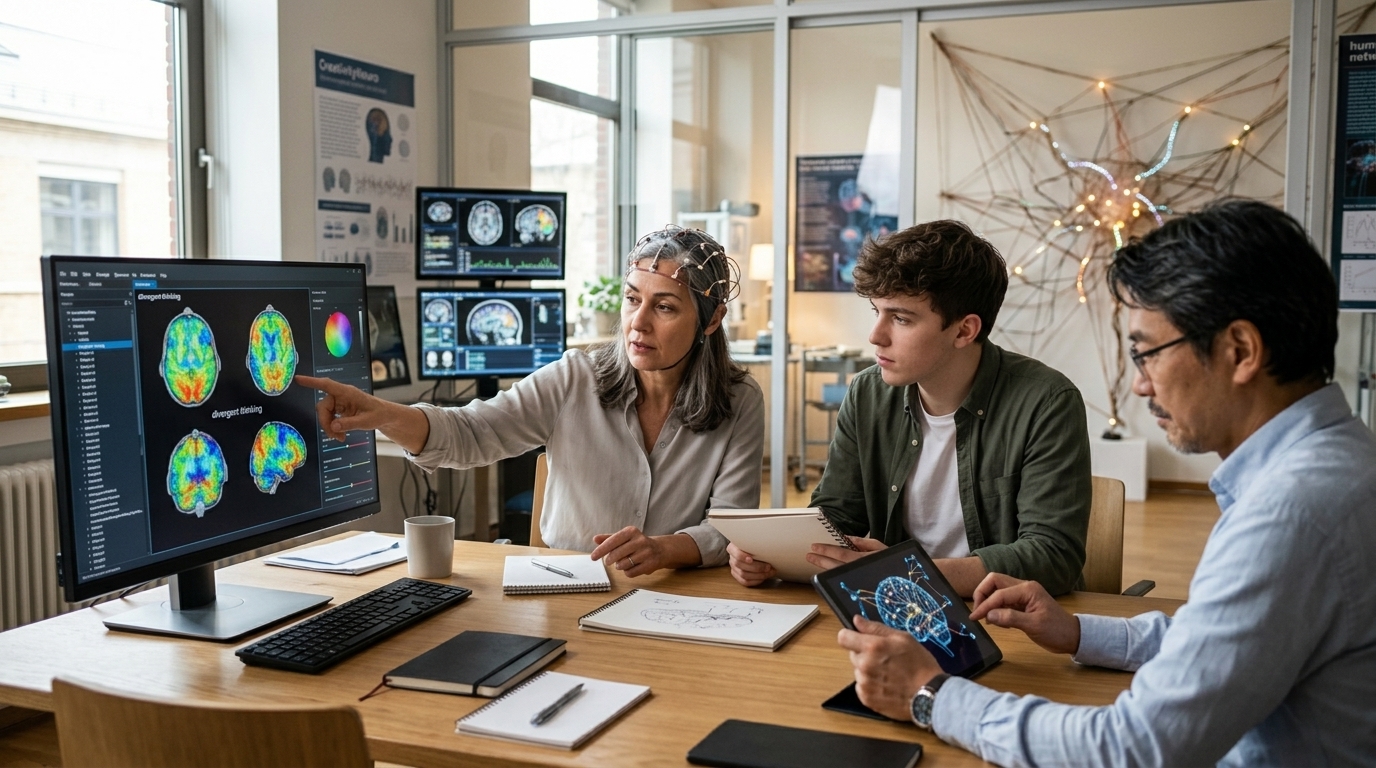
Divergent thinking—the cognitive process used to generate creative ideas by exploring many possible solutions—has remained an elusive goal for silicon-based intelligence. While humans can leap across conceptual boundaries, LLMs have historically been tethered to the statistical center of their training data.
CreativityNeuro: Beyond Prompting
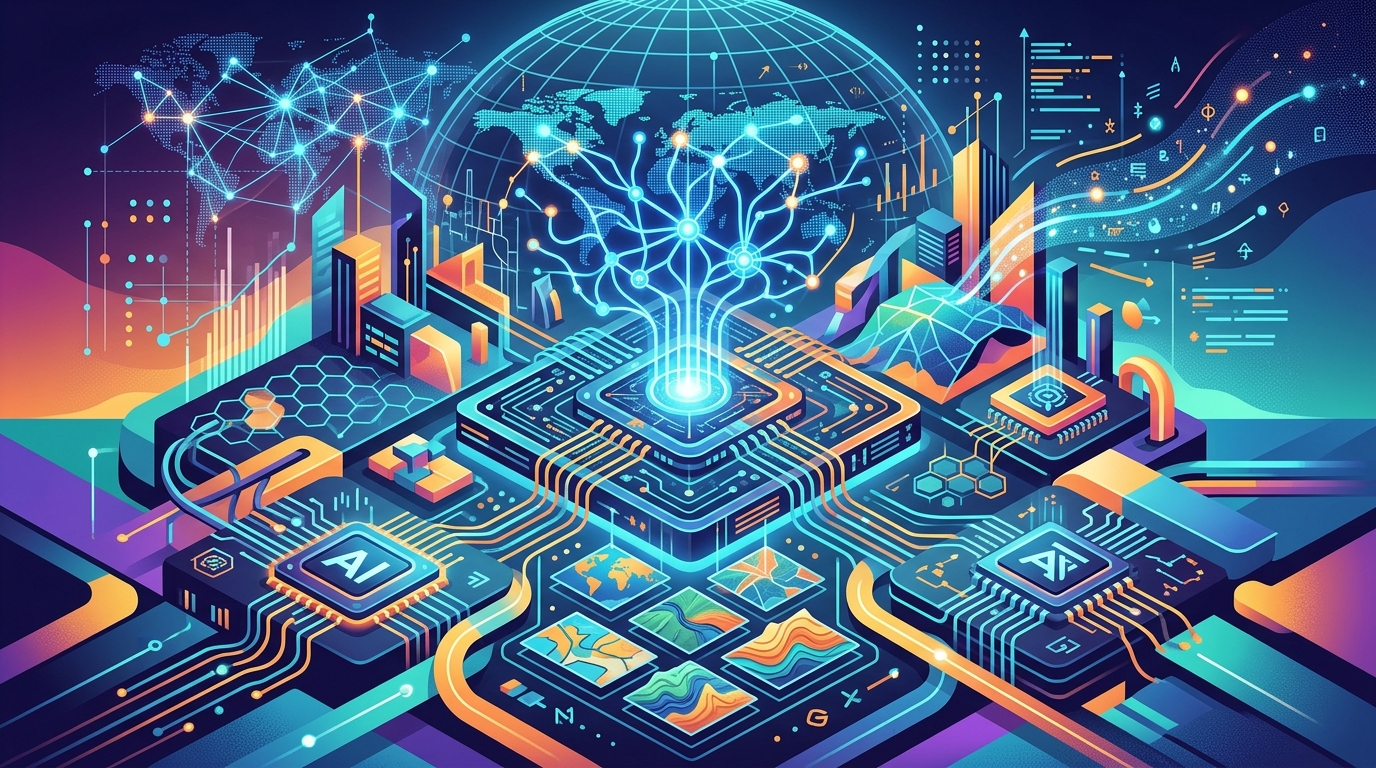
The breakthrough of CreativityNeuro lies in its methodology. Unlike traditional approaches that rely on complex prompting or adjusting the "temperature" parameter (which often just adds random noise), CreativityNeuro employs a technique known as "weight steering." By identifying and modulating specific neural pathways associated with high-probability, repetitive outputs, the system can steer the model's internal weights toward more peripheral, yet logically sound, regions of its latent space.
- Neural Pathway Modulation: Directly influences the weights that govern decision-making within the transformer architecture.
- Mitigating Mode Collapse: Actively pushes the model away from "cliché" responses and toward novel conceptual associations.
- Coherence Preservation: Utilizes a secondary feedback loop to ensure that increased creativity does not lead to a loss of factual accuracy or logical flow.
Quantifying Digital Imagination
The research team utilized the Torrance Tests of Creative Thinking (TTCT) to benchmark the performance of CreativityNeuro-enhanced models. The results were startling: models equipped with weight-steering mechanisms scored 40% higher in originality and flexibility compared to standard iterations of GPT-4 or Claude 3.5. This suggests that the AI is no longer just a mirror of existing human thought, but an active participant in the generation of novel ideas.
"Creativity is not just about novelty; it’s about meaningful novelty. With CreativityNeuro, we are moving from statistical probability to digital imagination, allowing machines to explore the 'adjacent possible' of human knowledge."
In practical terms, this means an AI can now assist an architect in designing a building with entirely new structural principles, or help a scientist hypothesize a chemical reaction that contradicts traditional intuitions but remains theoretically viable.
The Risks of Unbounded Divergence
However, the path to digital creativity is fraught with challenges. Enhancing divergent thinking can occasionally lead to "unbounded divergence," where the model's outputs become too abstract or surreal to be useful. There is a delicate balance between a creative insight and a digital hallucination. Furthermore, the ability to steer weights raises significant ethical questions regarding the bias of the "creativity" being injected. Who defines what constitutes a 'good' creative direction?
Despite these concerns, CreativityNeuro represents a significant leap forward. It signals the end of the era where AI was merely a sophisticated parrot of human data. As we integrate these steerable models into our creative workflows, we are not just using a tool; we are collaborating with a spark of synthetic genius that has finally learned how to think differently.