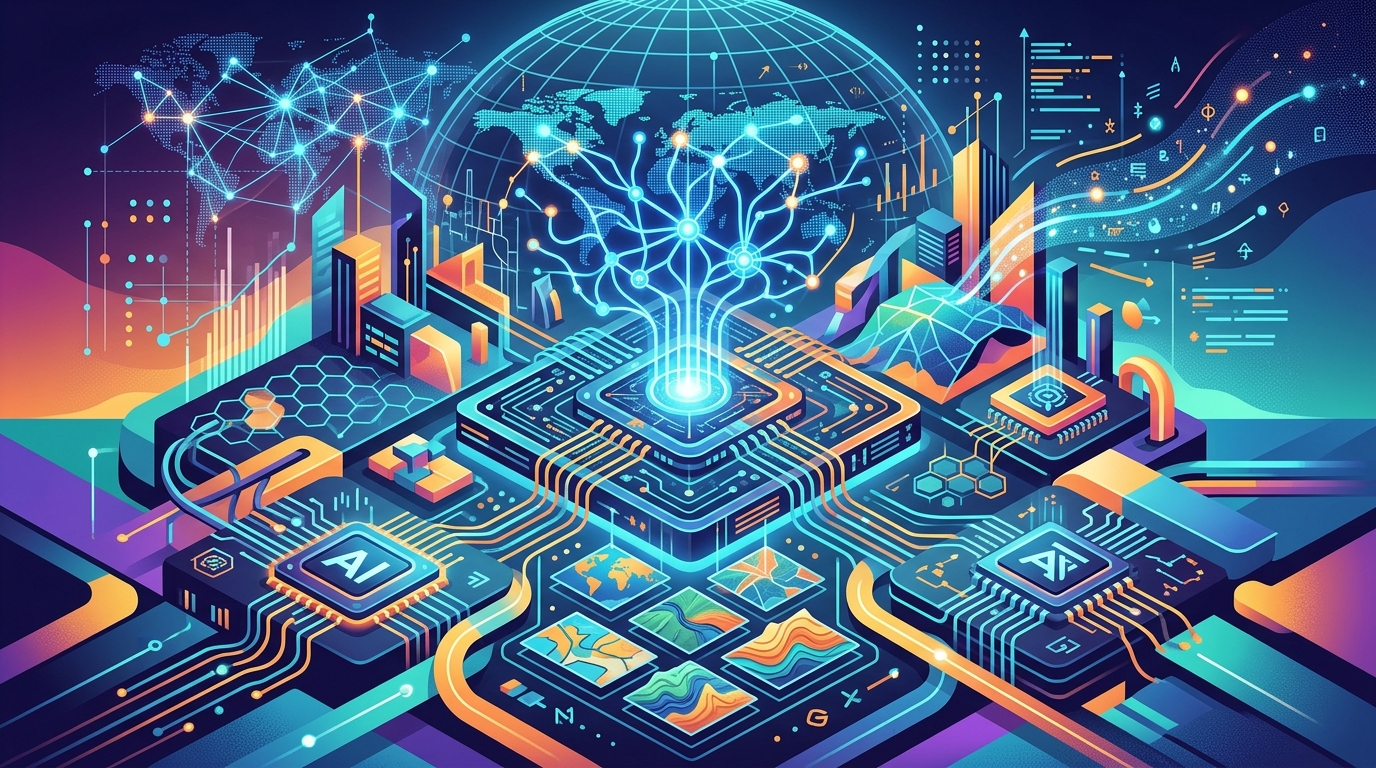
In an era where the planet's biodiversity is under unprecedented pressure, technology is emerging as nature's most unexpected ally. Traditional wildlife monitoring, which relied on simple GPS collars and months of waiting for data collection, is giving way to a new generation of 'smart' devices. AI tracking tags, equipped with machine learning algorithms, do not just record an animal's position; they 'understand' its behavior, predict risks, and intervene before a catastrophe becomes irreversible.
From GPS to Edge AI: A Paradigm Shift
The fundamental difference in these new trackers lies in their processing power. In the past, researchers had to download massive amounts of data to analyze an animal's activity. Today, Edge AI technology allows the device itself—whether an elephant collar or a tiny transmitter on a bird—to process data locally. This means the device can immediately recognize if an animal is running to escape a predator, if it has been trapped, or if its movement suggests illness.
Energy efficiency is also critical. Instead of constantly emitting GPS signals that drain the battery, AI trackers trigger data transmission only when something noteworthy occurs. This allows devices to operate for years, providing invaluable information about the entire life cycle of species without the need for frequent re-trapping of animals for battery changes—a process that causes significant stress to wildlife.
The War Against Poaching: Proactive Action Over Suppression
Poaching remains one of the greatest threats to species like rhinos and elephants. Here, artificial intelligence acts as an invisible safety net. Algorithms can be trained to recognize the sound of a gunshot or the noise of a chainsaw within a radius of several kilometers. Once a threat is detected, the system immediately sends an alert to rangers, providing them with the exact coordinates of the incident.
- Movement pattern analysis to identify unusual animal clusters indicating the presence of intruders.
- AI-powered drones that patrol autonomously and recognize thermal signatures of humans in protected areas.
- Predictive models that calculate potential poacher routes based on terrain and historical data.
According to Animal Survival International, the integration of these systems has reduced response times for protection teams by 60% in some African national parks, saving hundreds of animals from certain death.
Bioacoustics and the 'Language' of Ecosystems
Beyond tracking individual animals, AI is transforming our understanding of entire ecosystems through bioacoustics. By placing smart microphones in tropical forests, scientists can analyze the 'soundscape.' AI separates the voices of thousands of species, allowing researchers to count populations that are impossible to observe visually due to dense vegetation.
"We aren't just seeing where animals go; we are starting to understand why they go there and how they interact with their environment on a scale that was unthinkable a decade ago," a research team lead noted.
Ethical Challenges and the Risk of 'Digital Poaching'
Despite the successes, the use of AI in the wild is not without risks. One of the biggest concerns is data security. If information about the exact location of a rare animal falls into the wrong hands, poachers could use the same technology to track their victims with surgical precision. Cybersecurity is now becoming an integral part of environmental protection.
Furthermore, there is the issue of human intervention. Over-reliance on technology could lead to a 'mechanized' approach to nature, where conservation turns into the management of an outdoor zoo. The balance between necessary protection and respect for wildness remains the great challenge for 21st-century scientists.